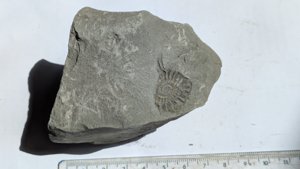
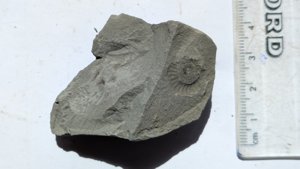
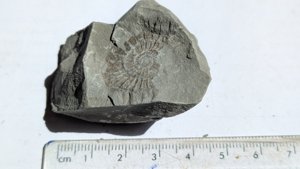
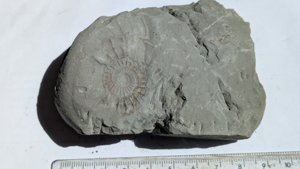
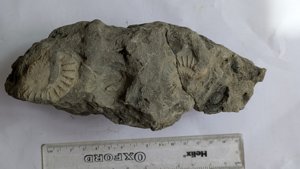
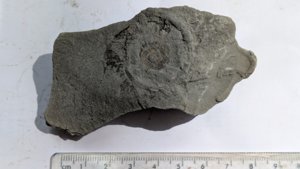
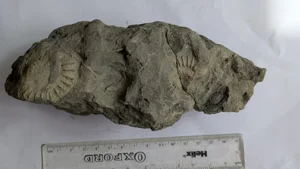
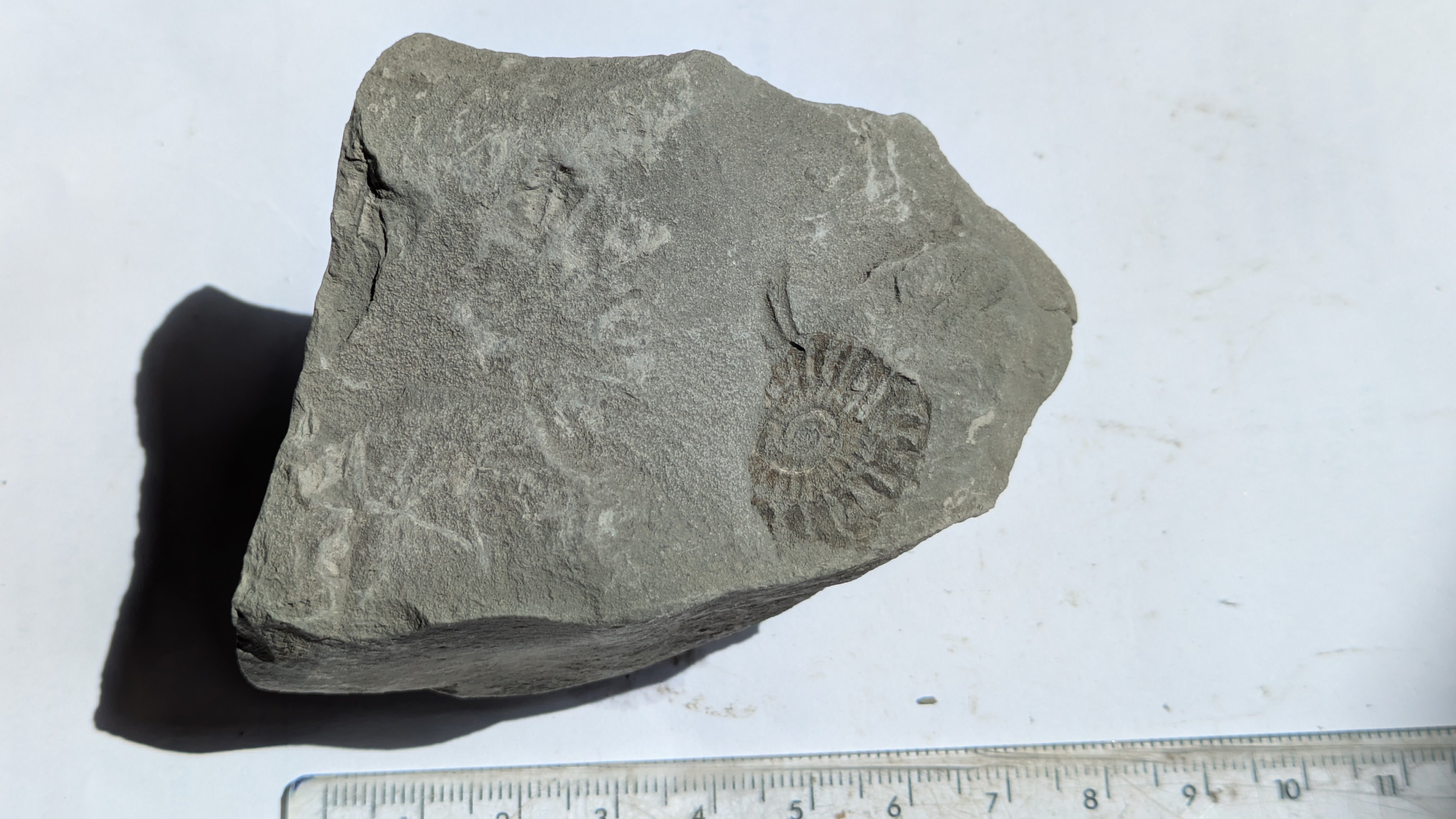
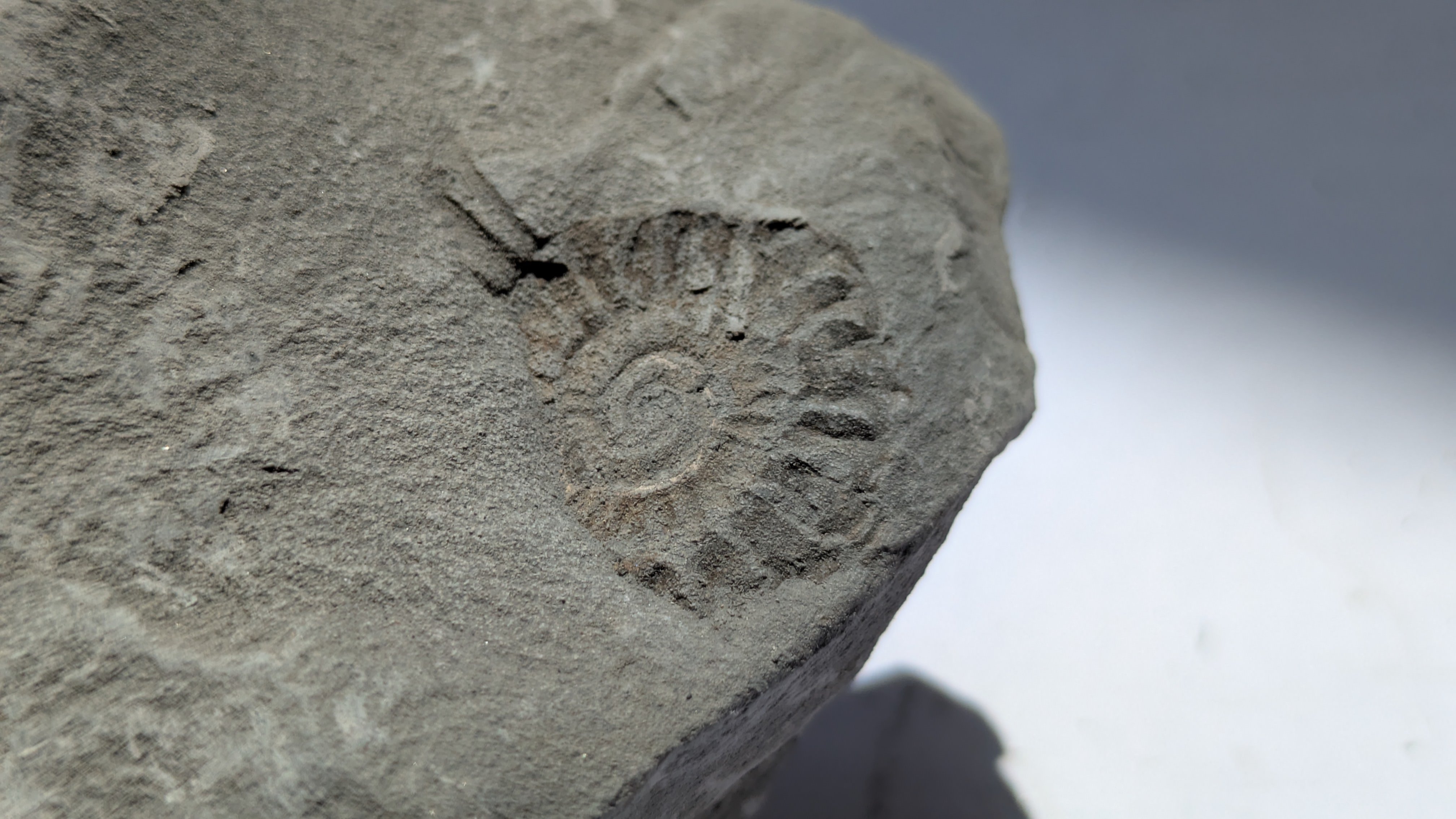
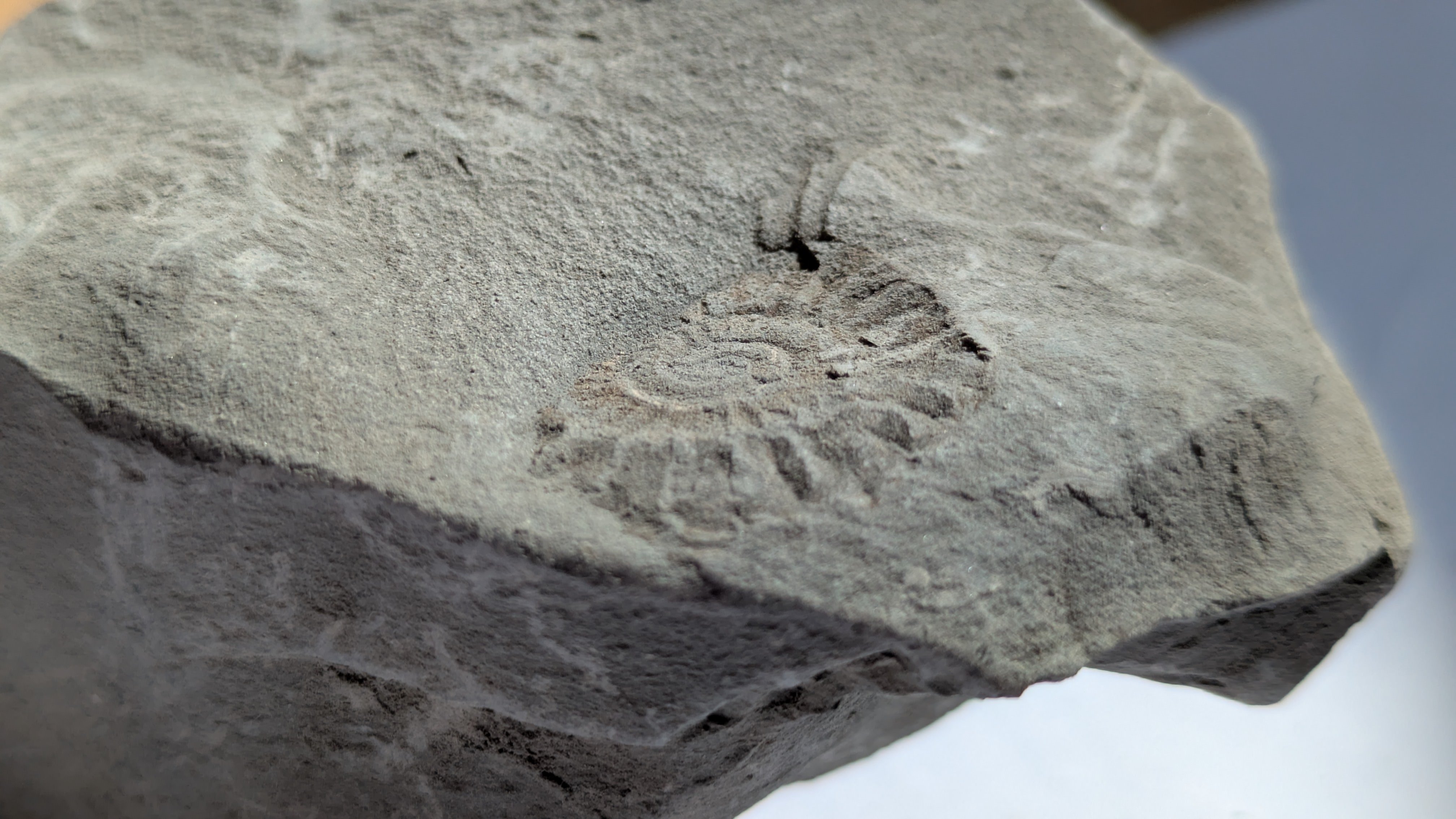
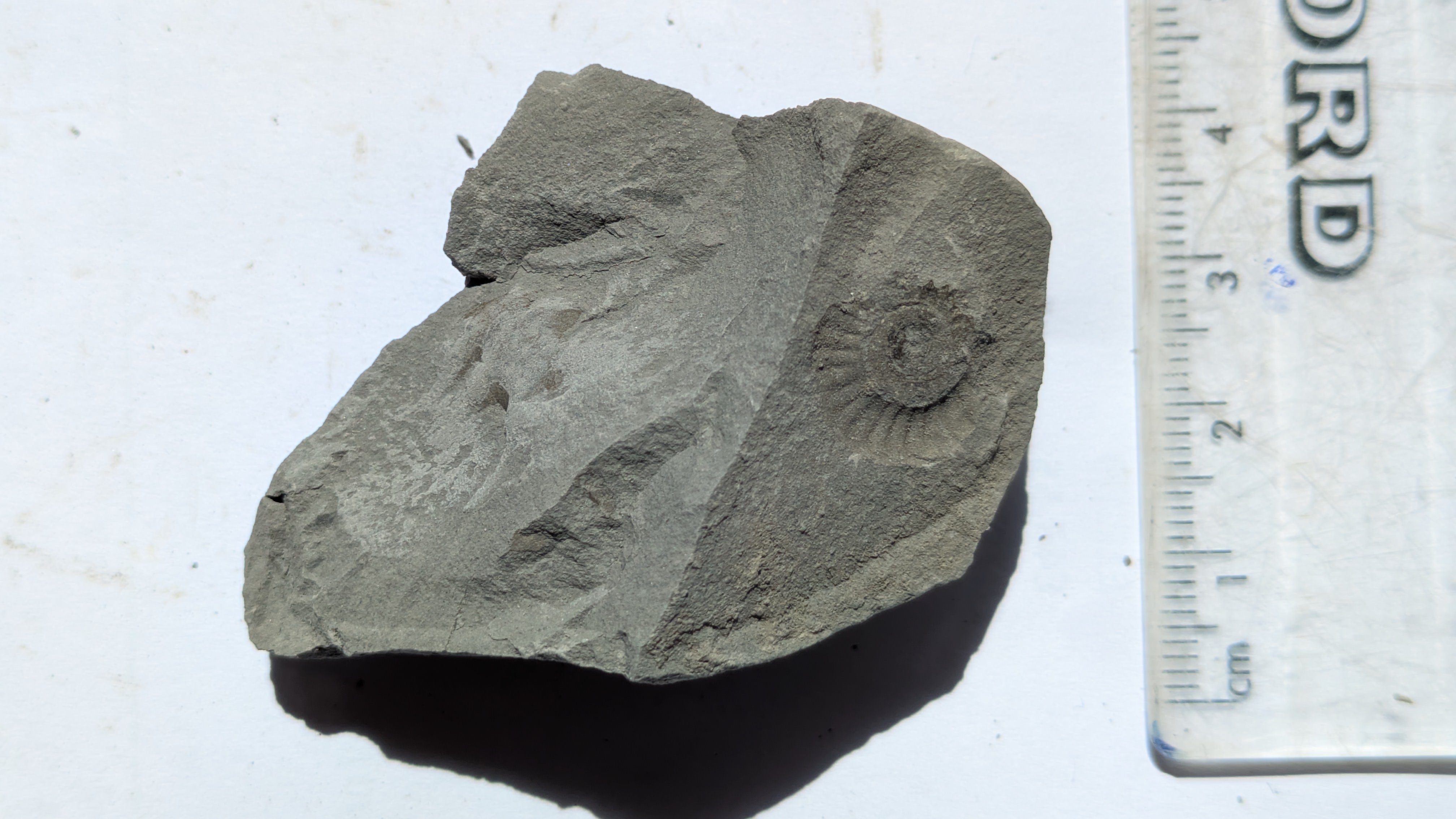
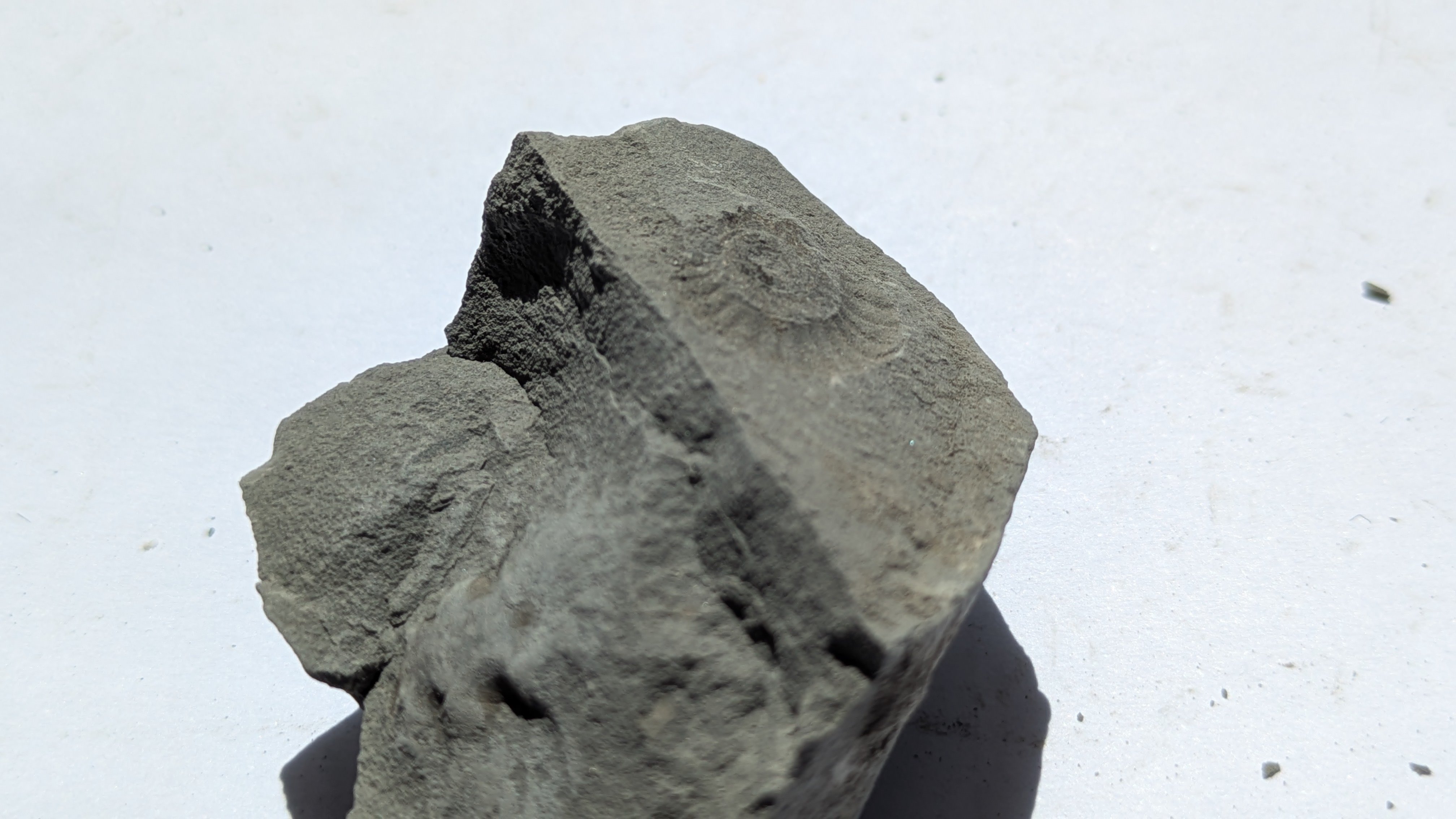
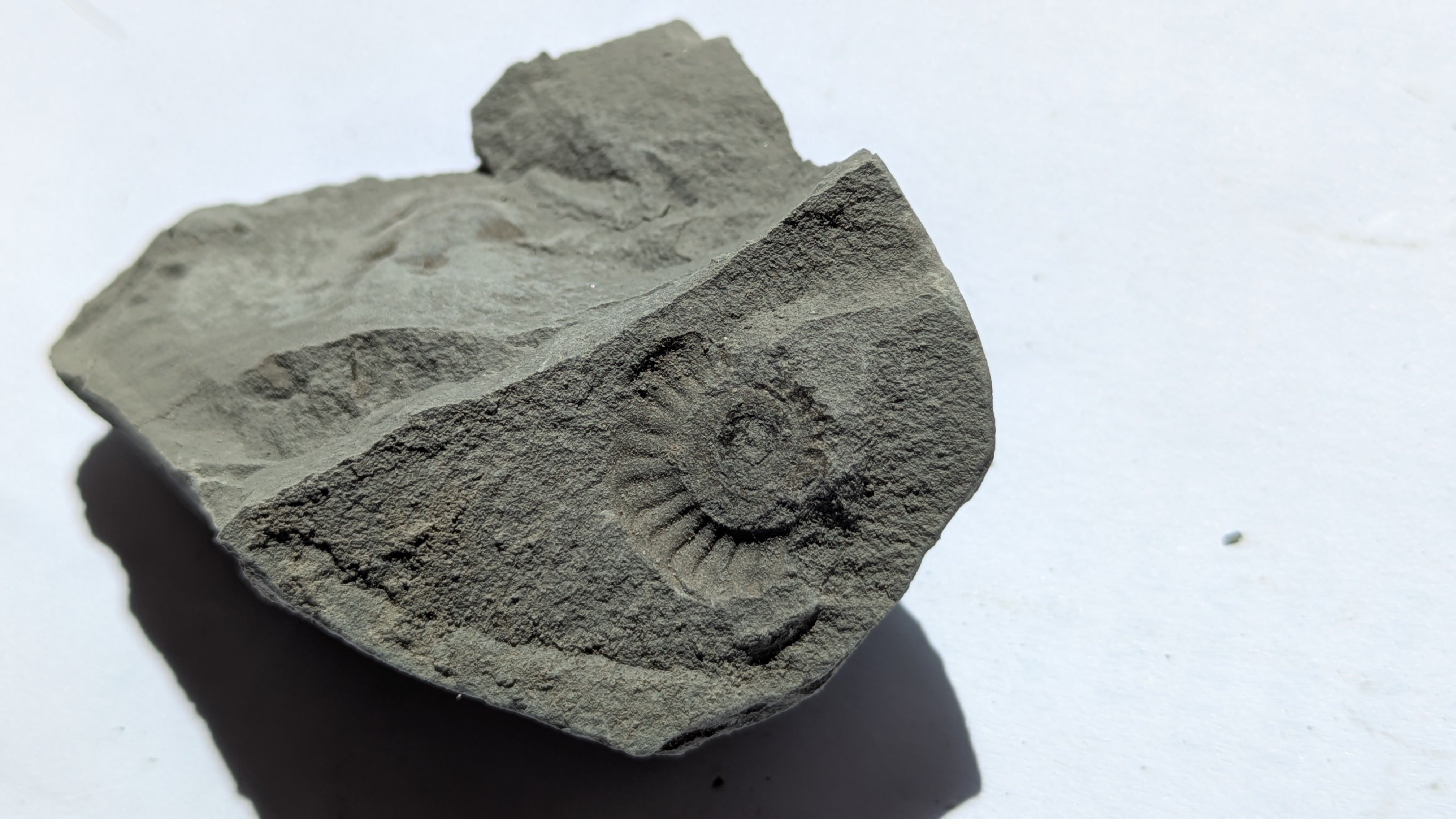
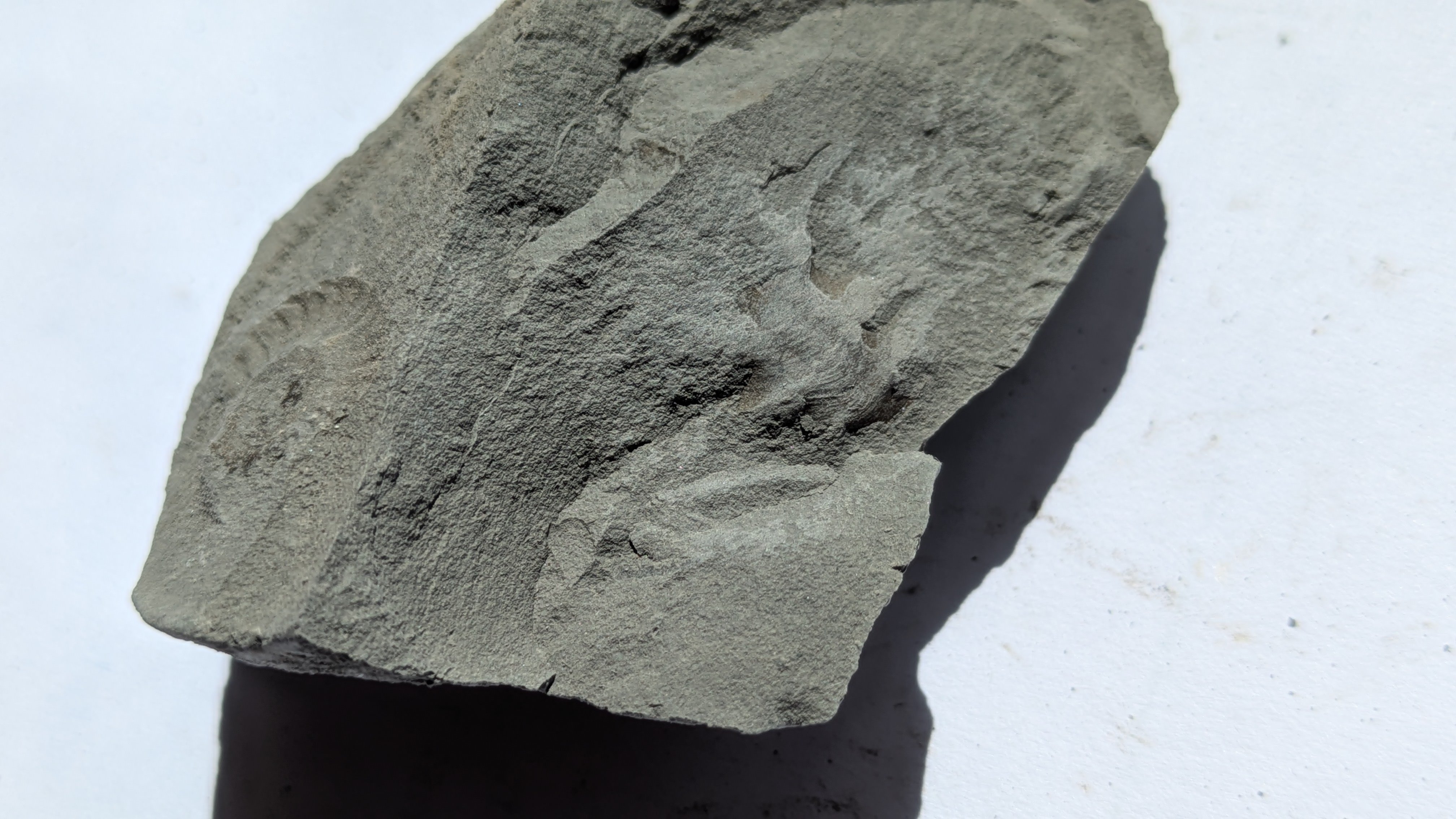
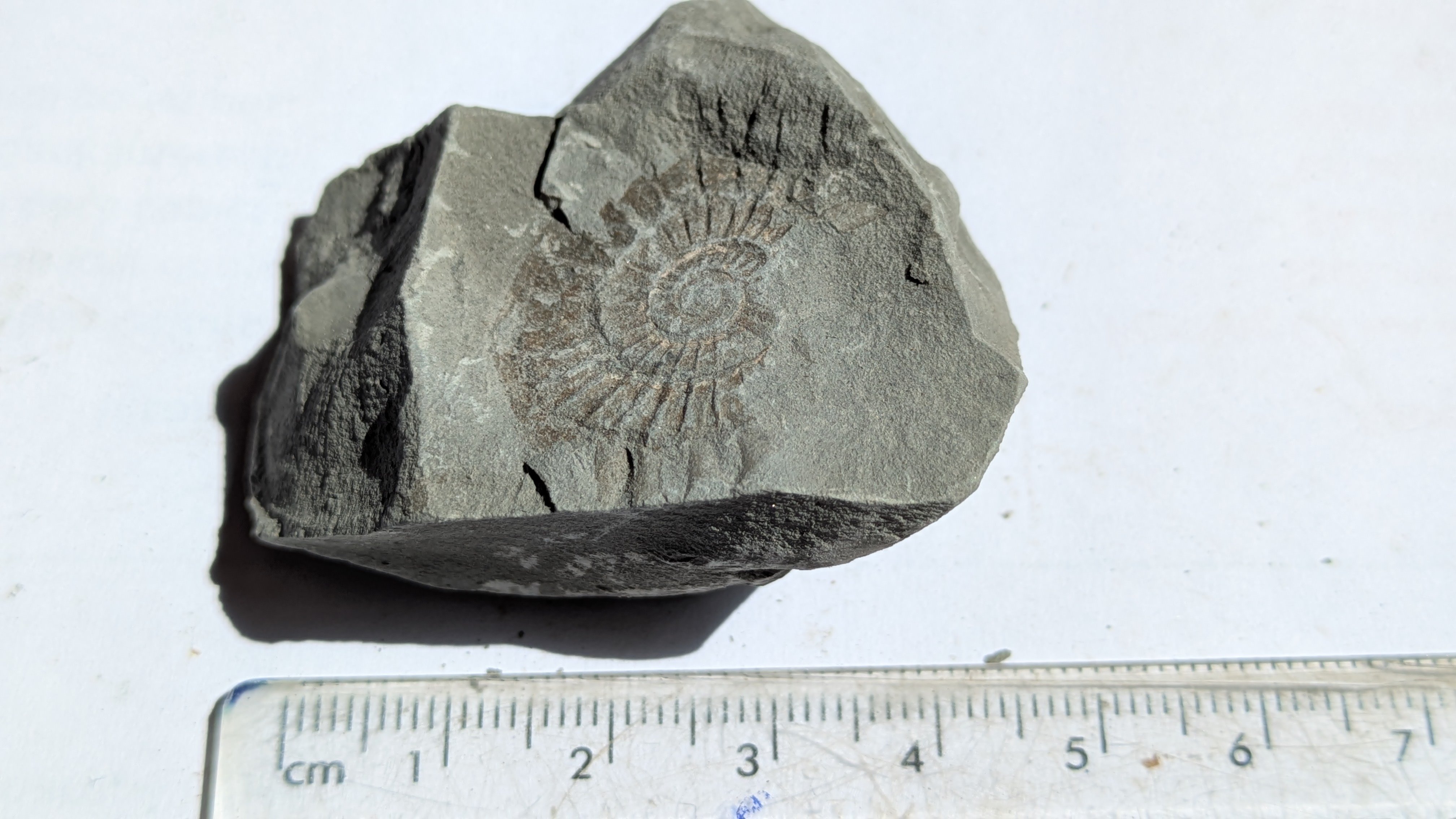
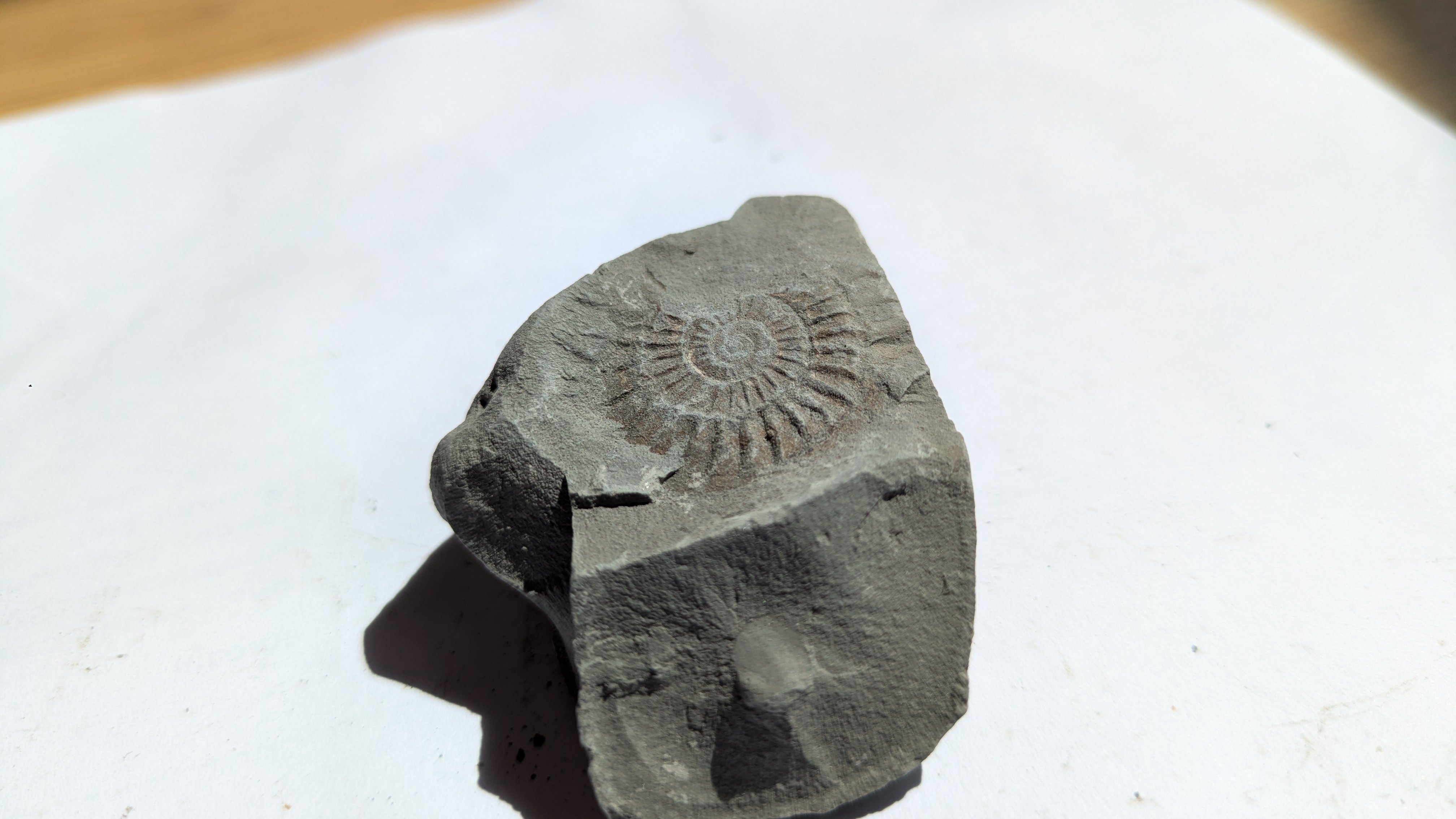
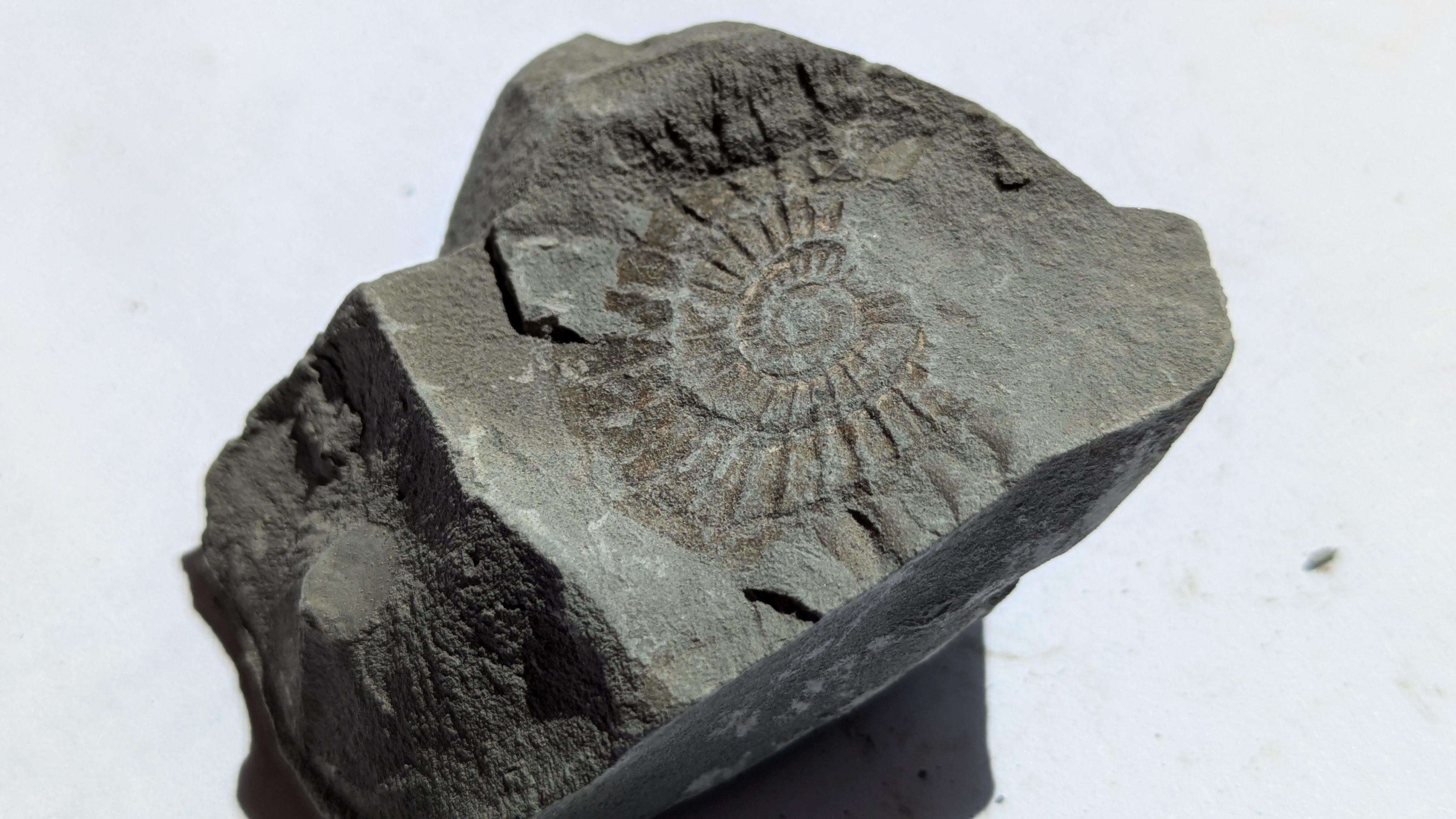
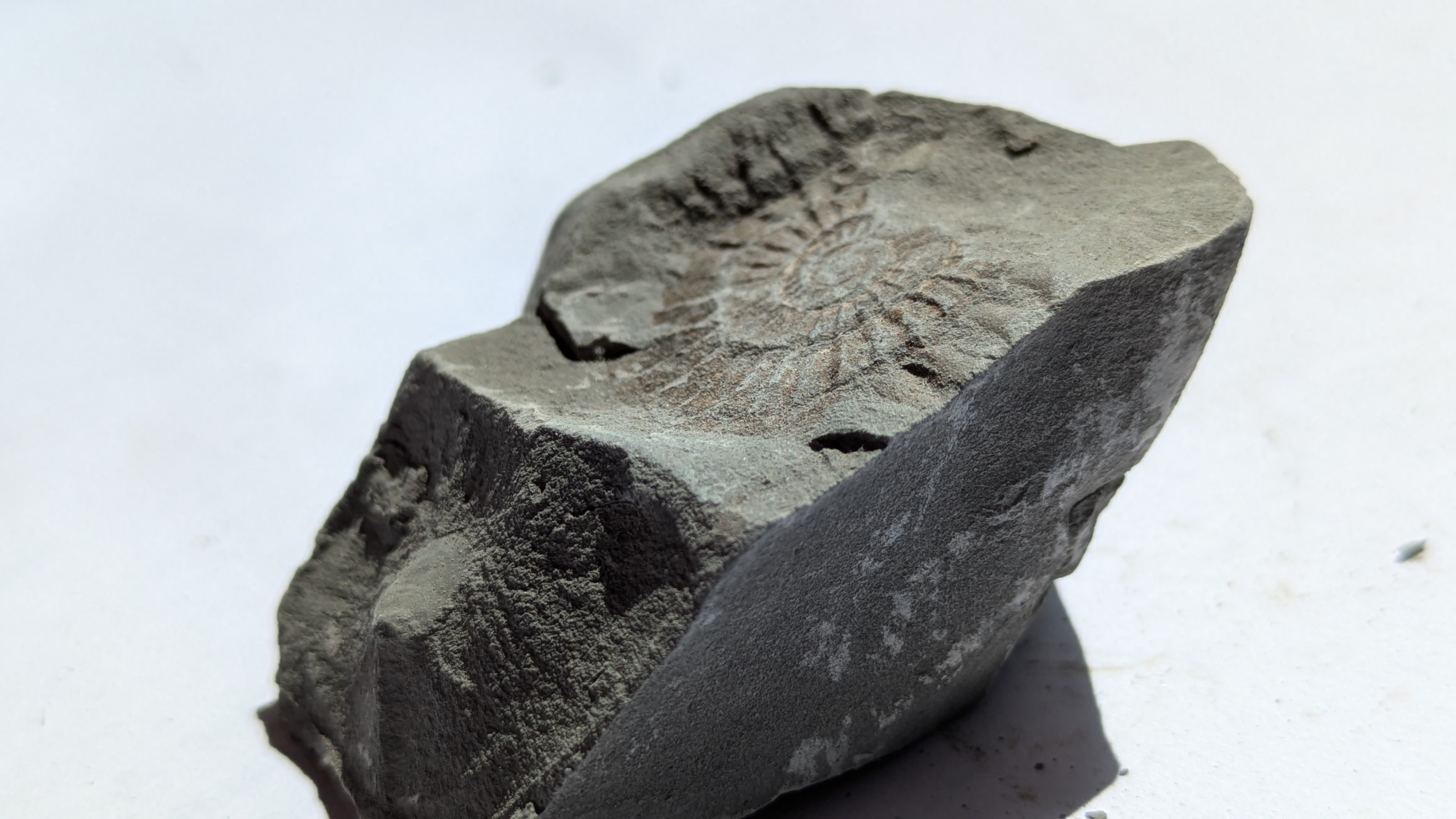
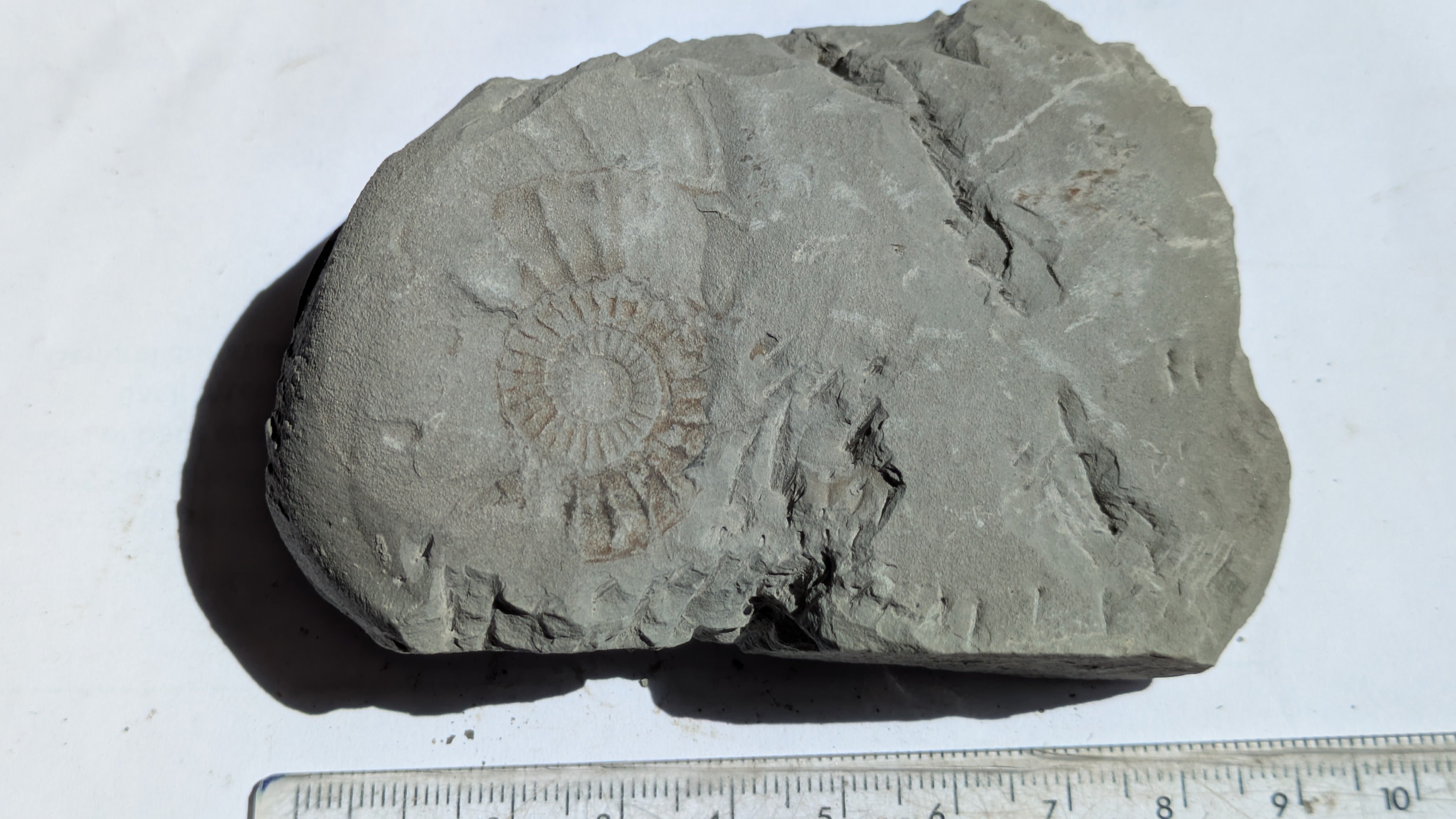
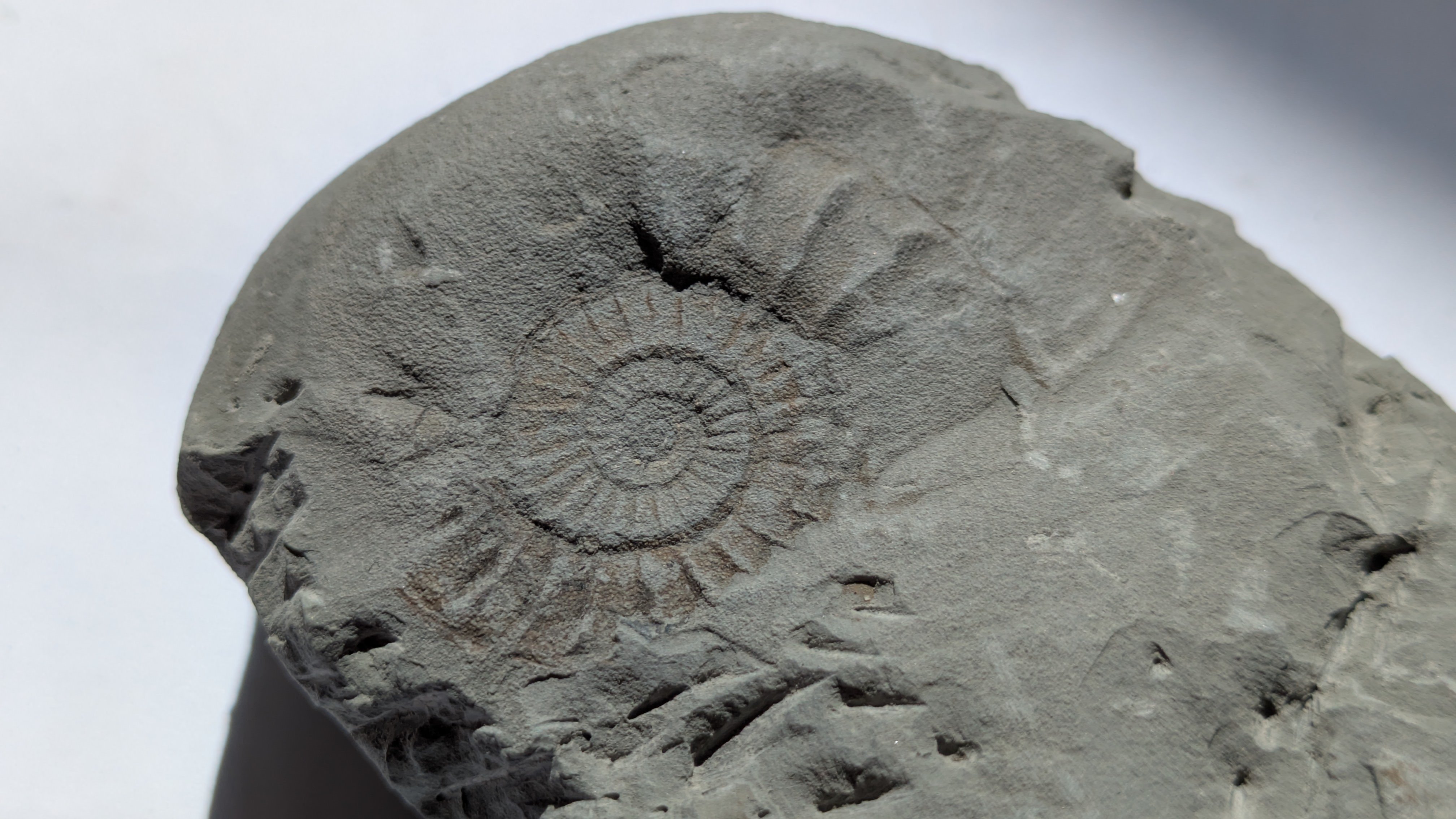
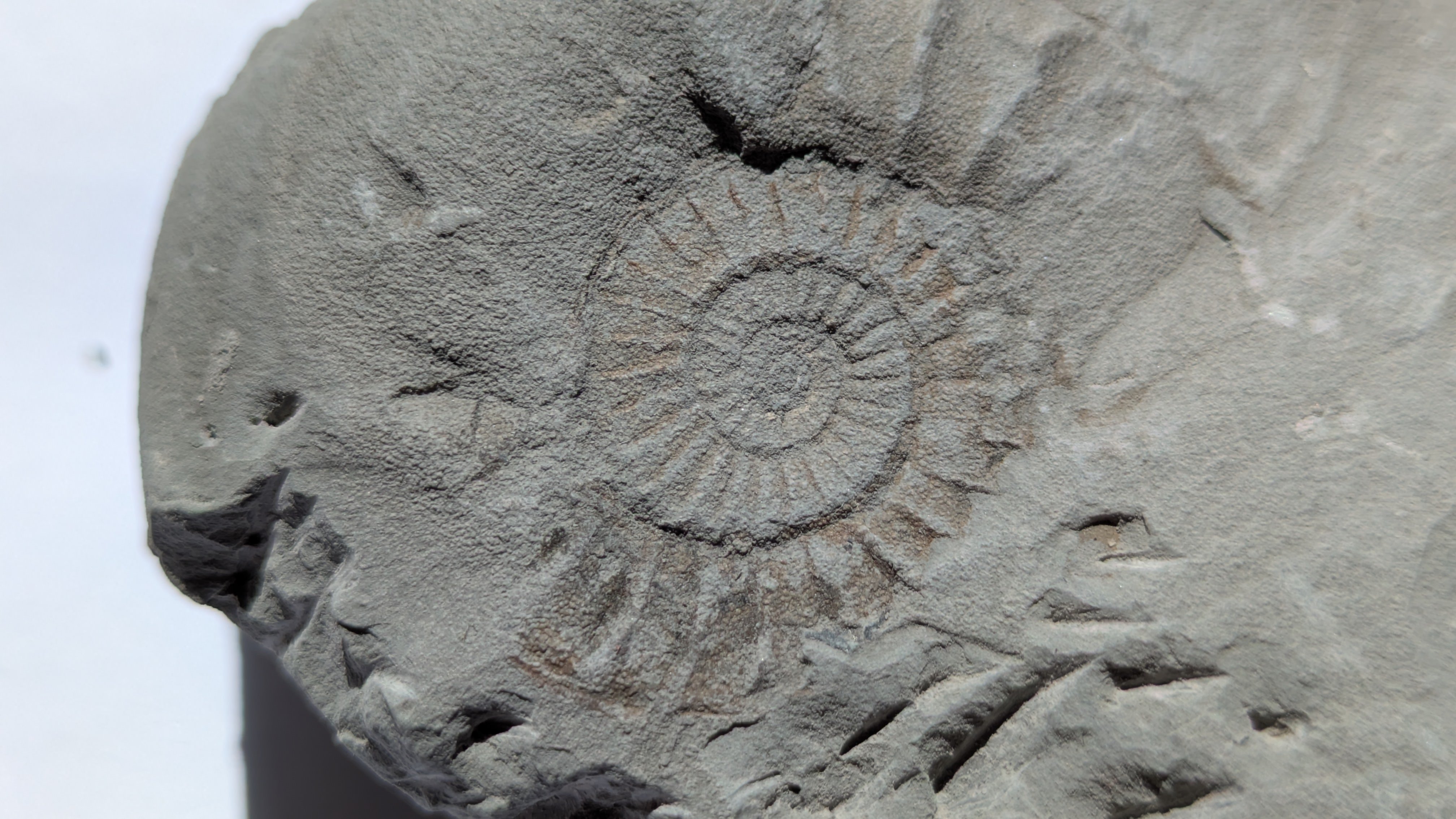
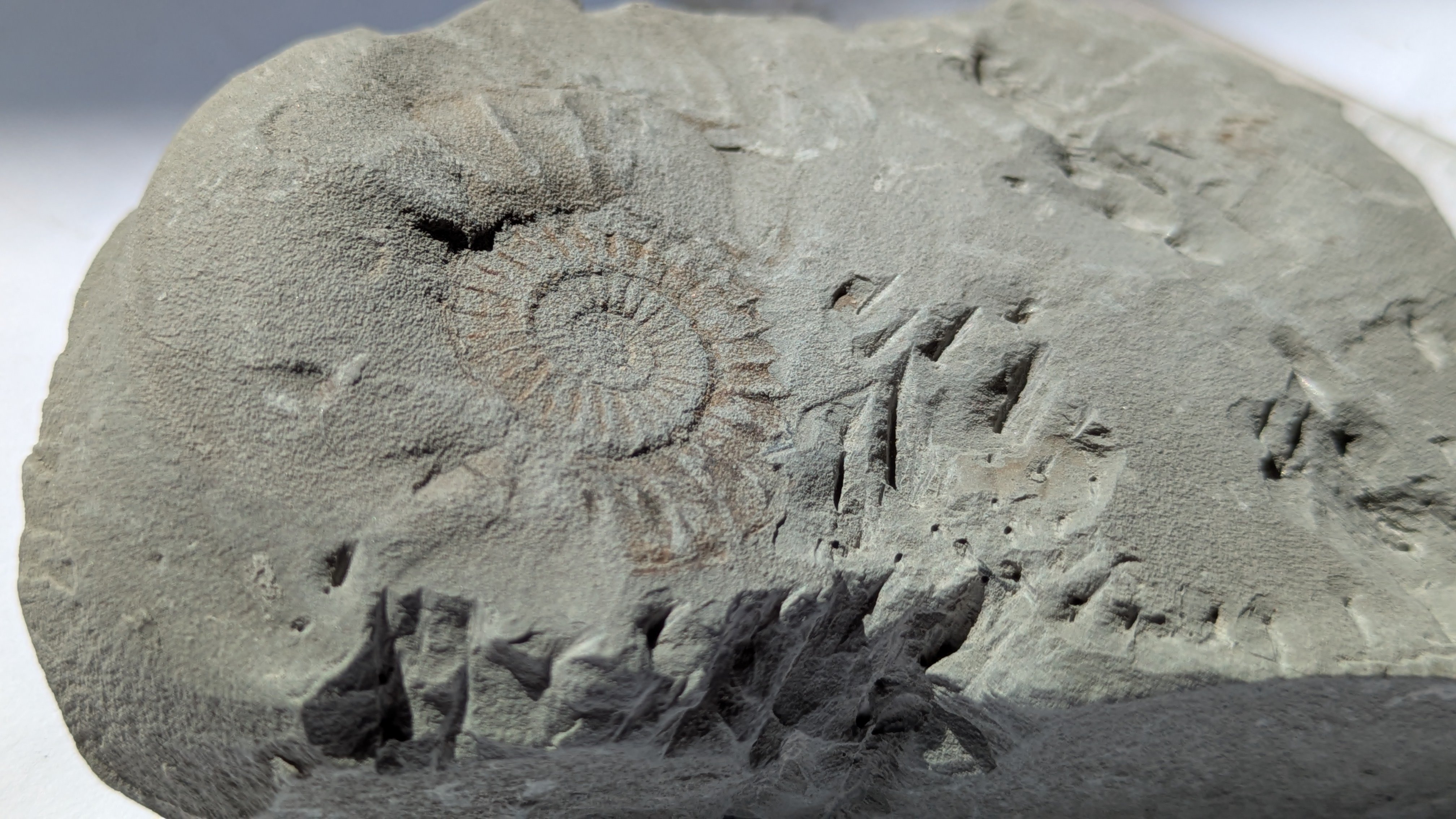
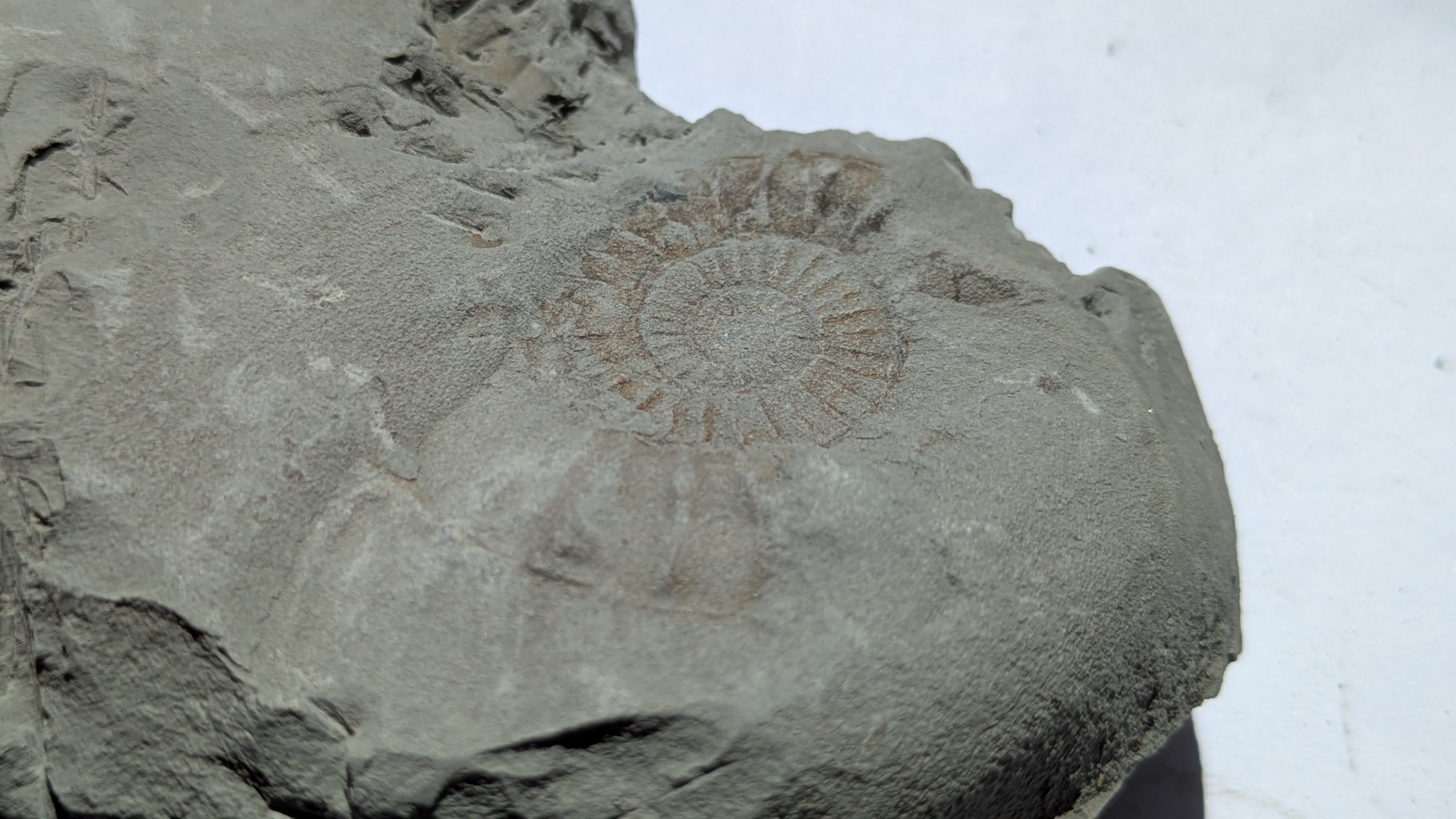
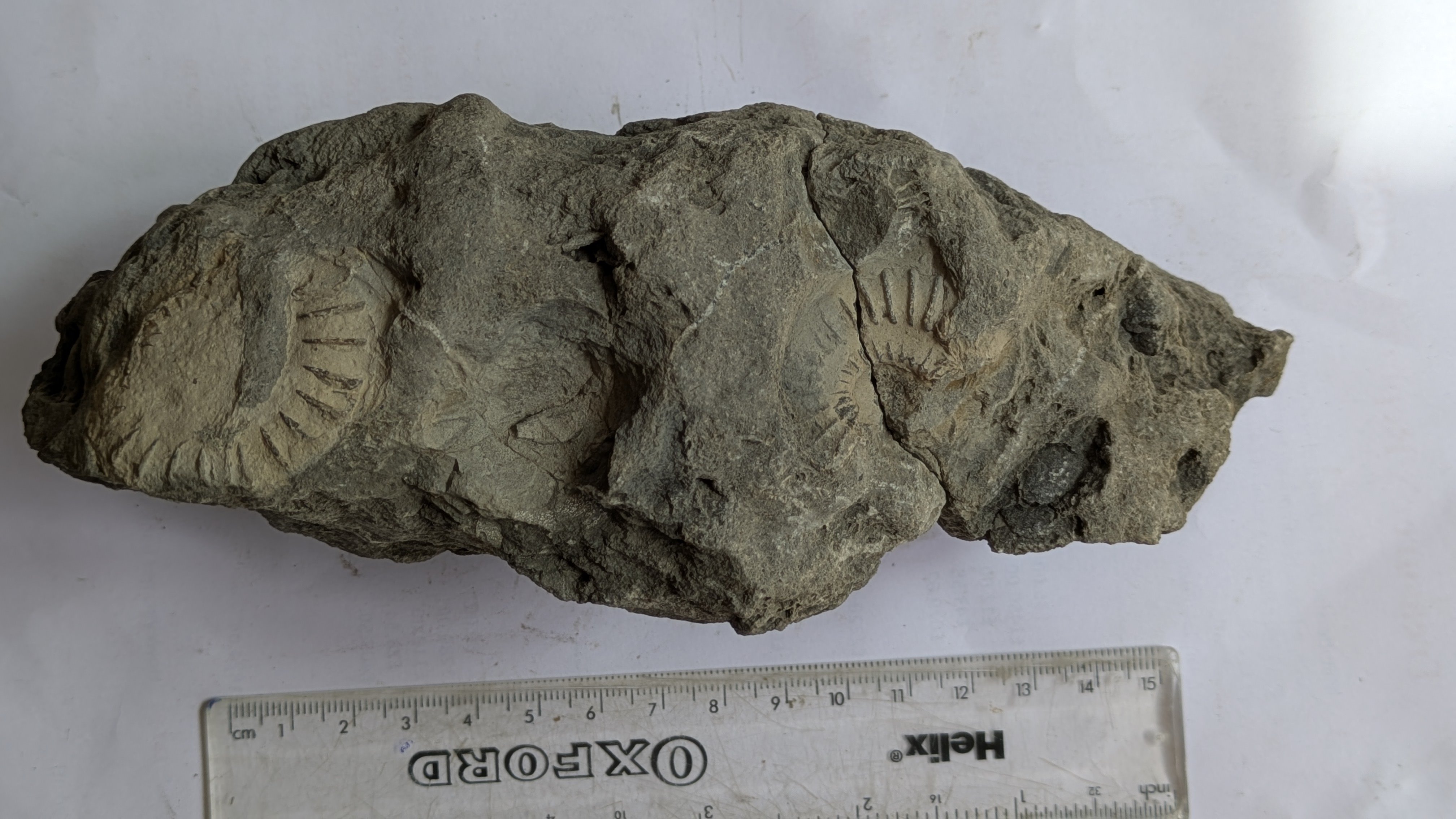
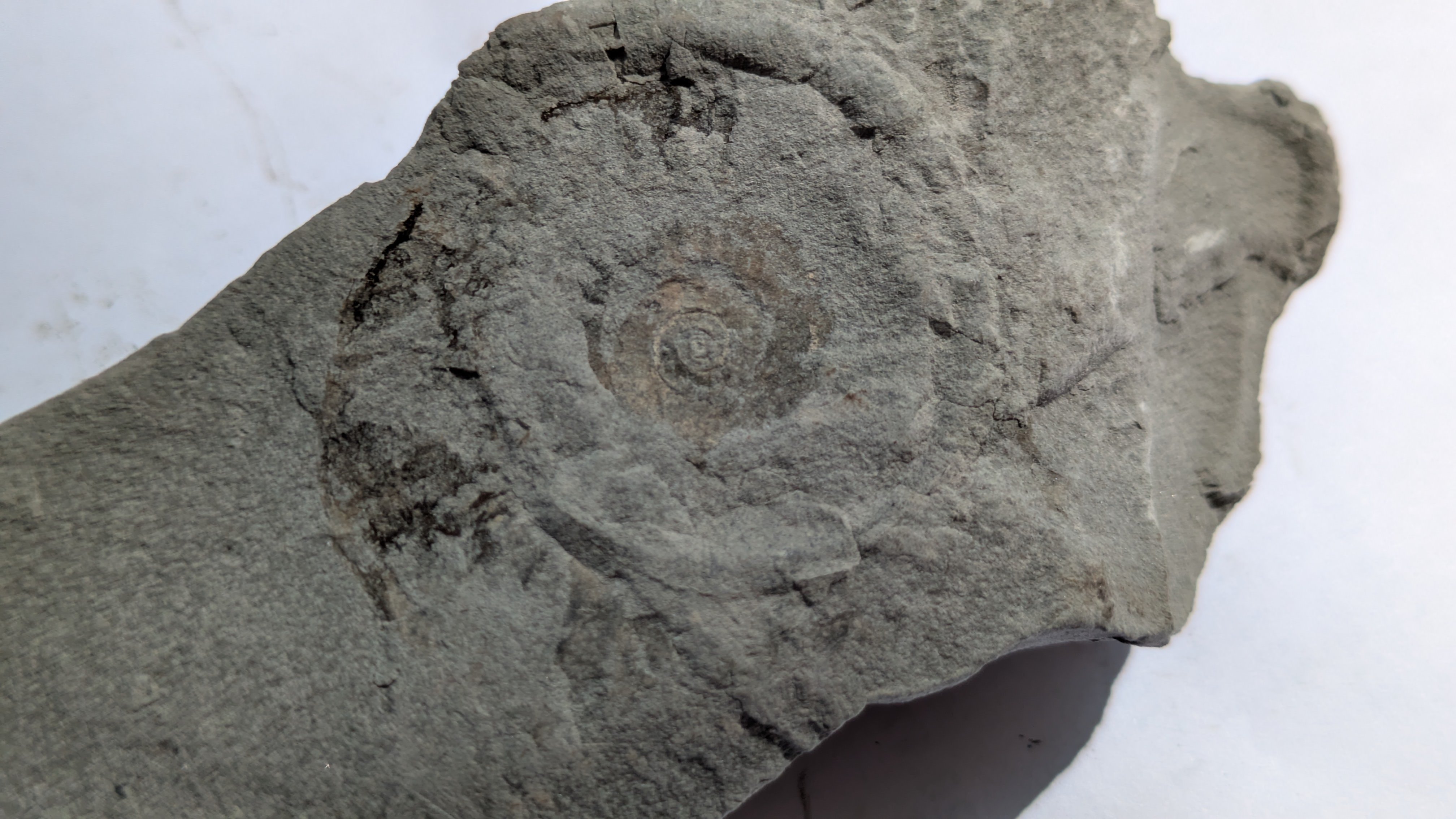
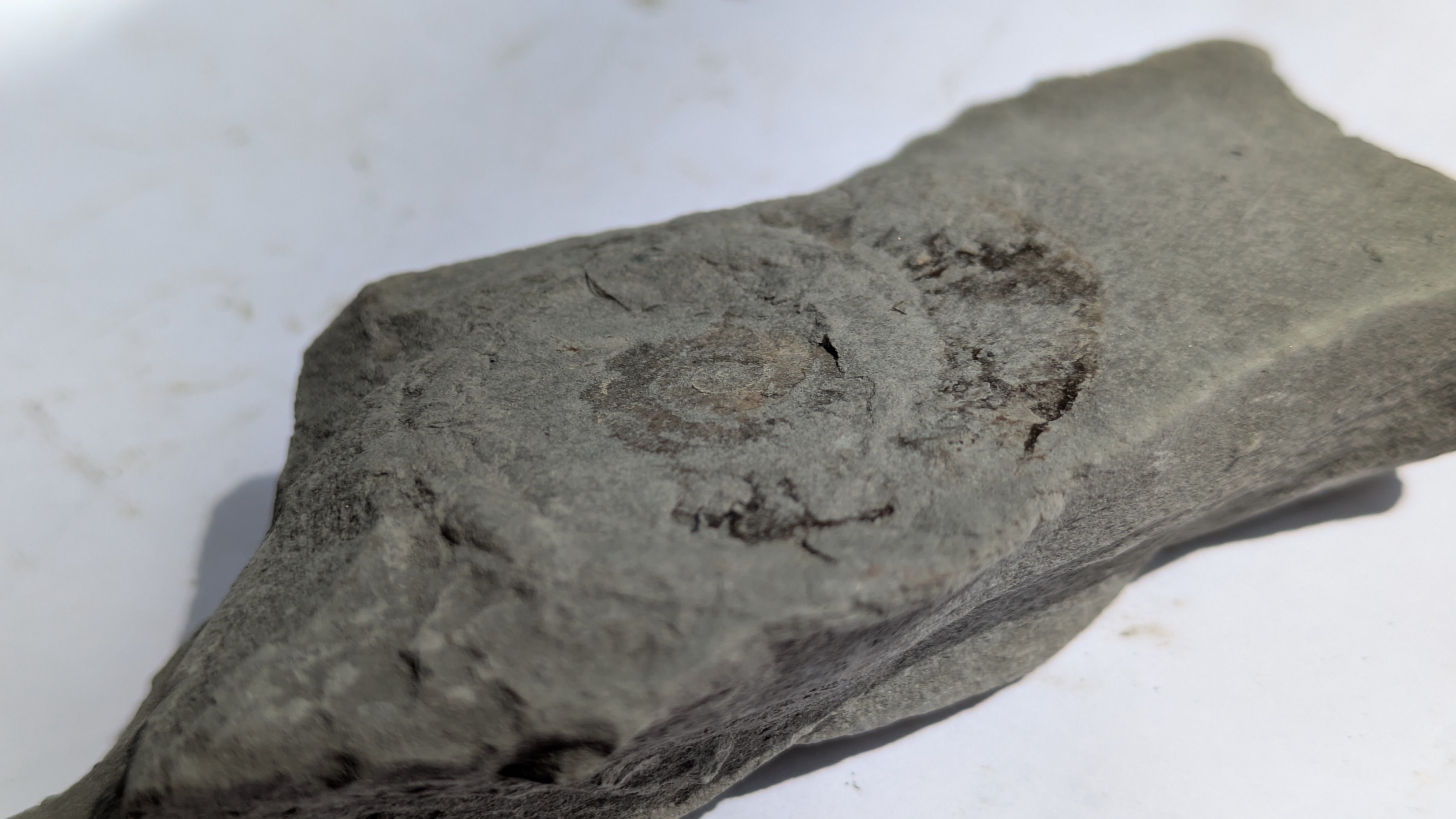
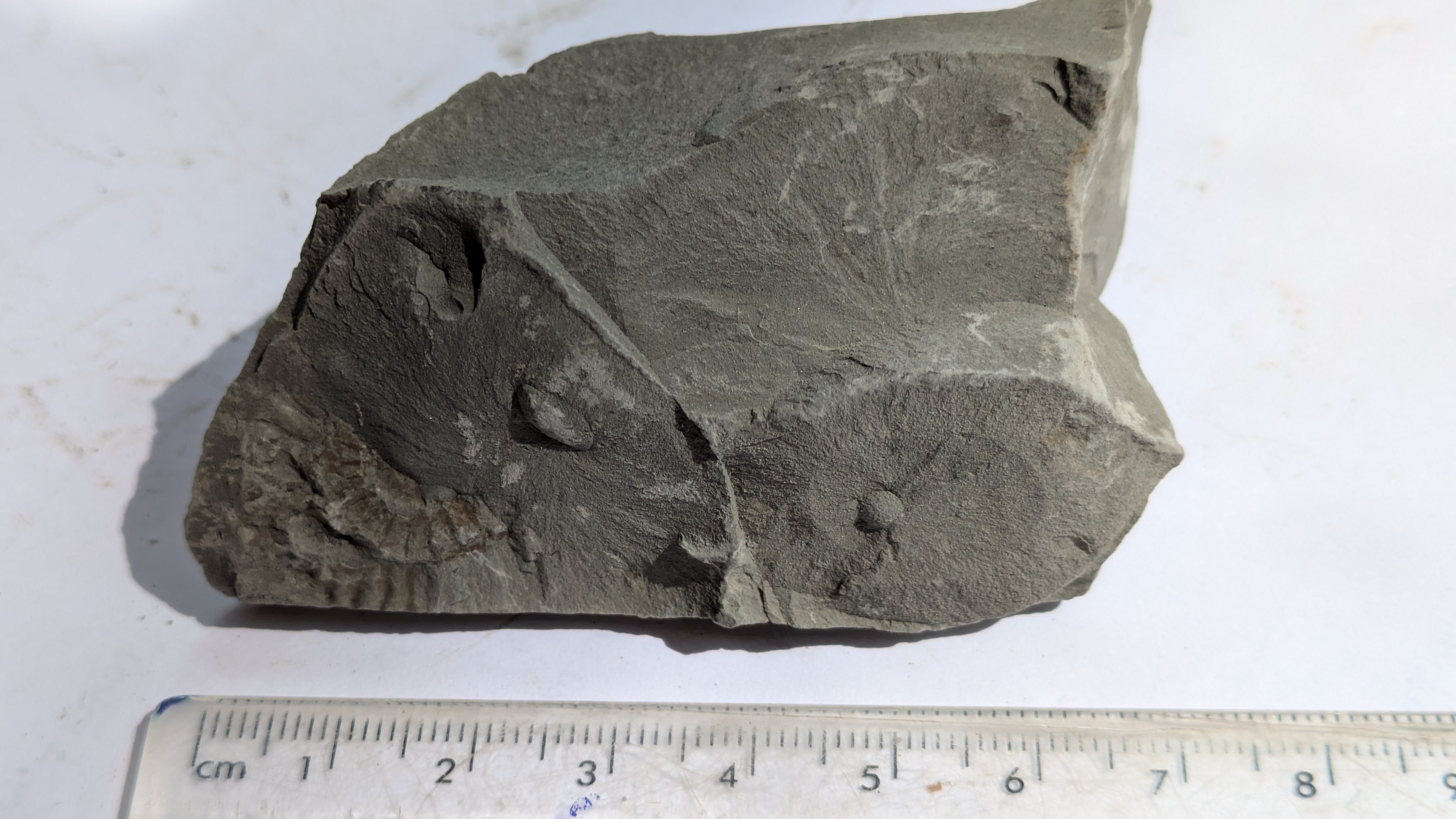
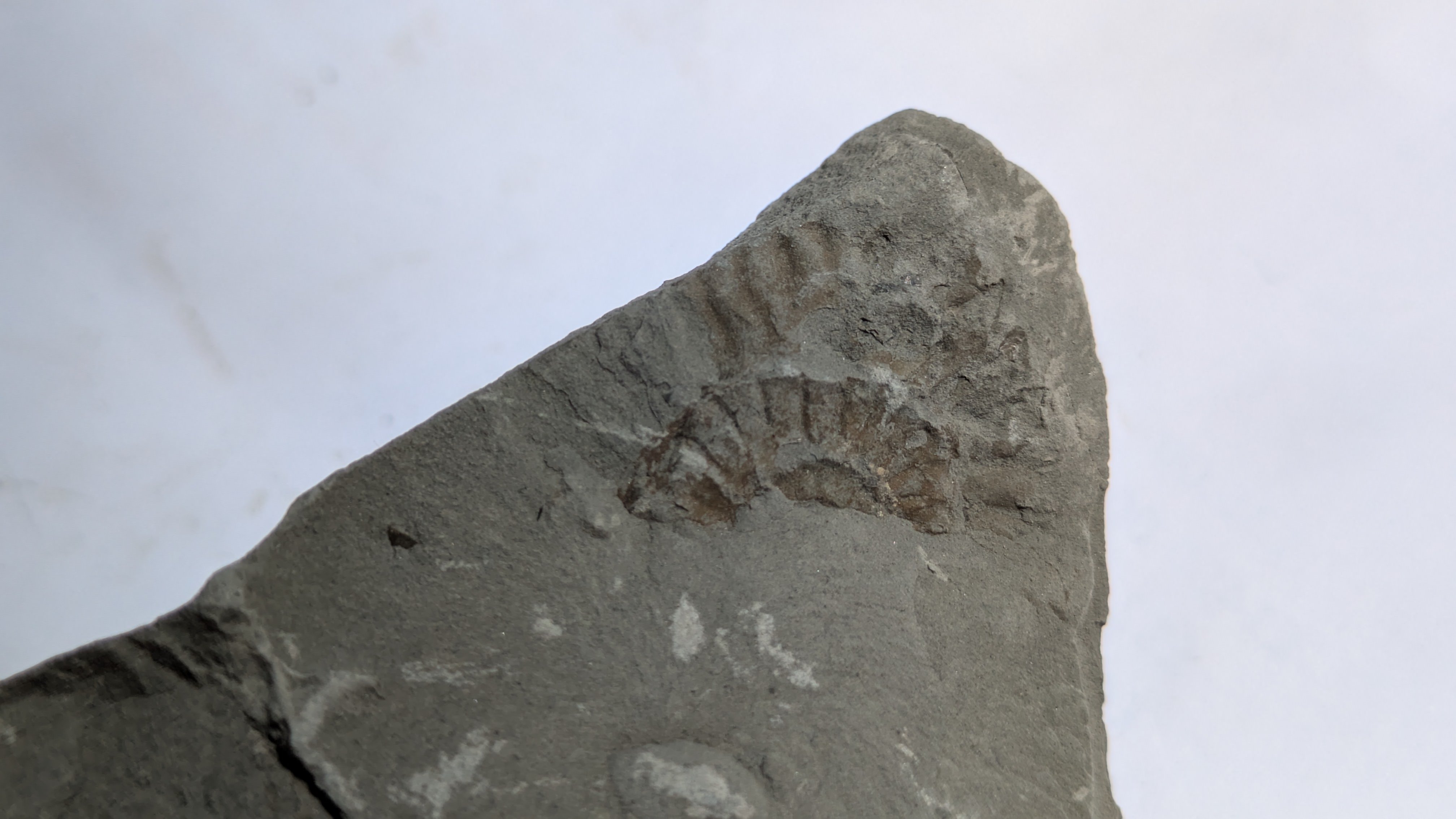
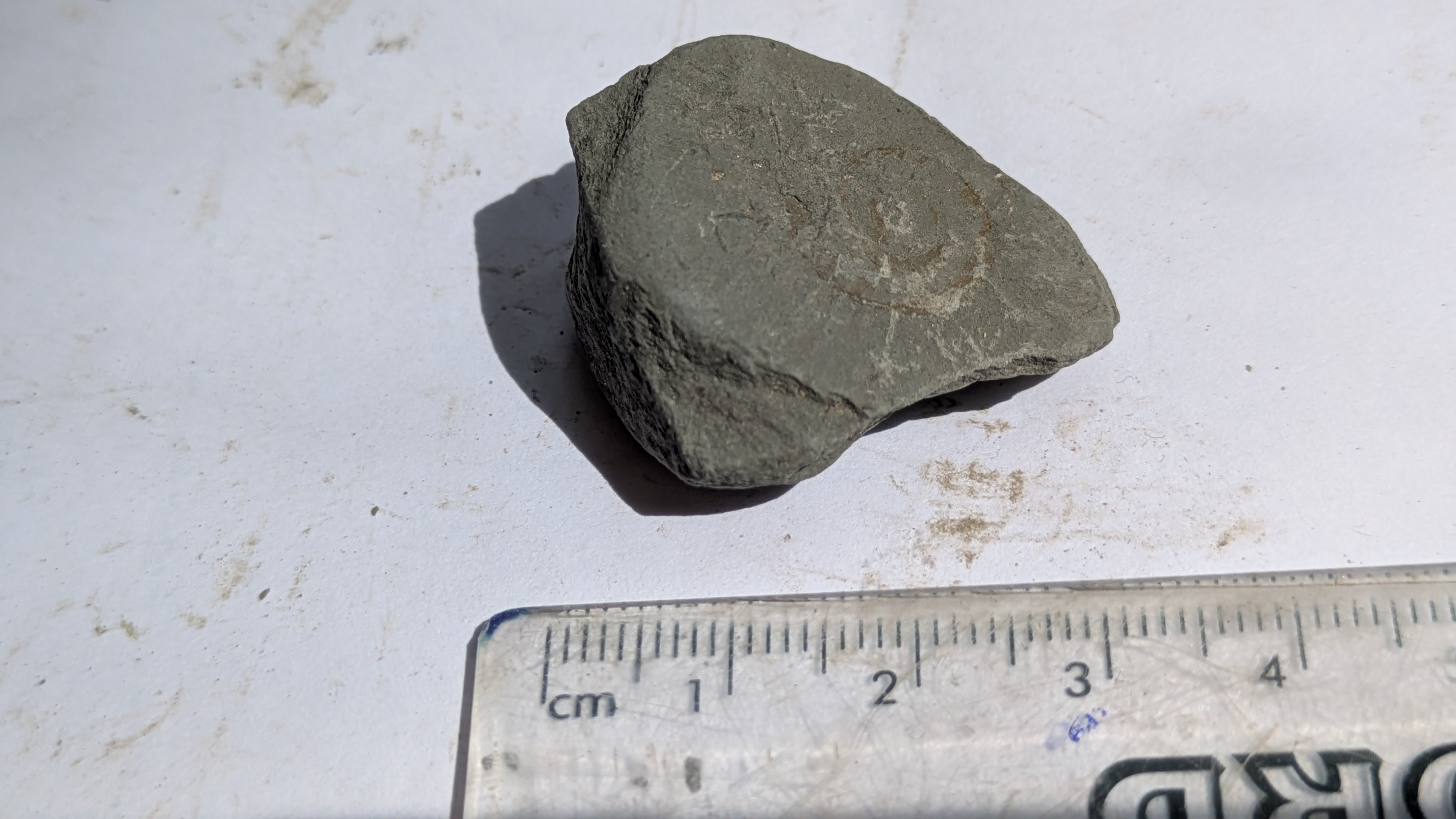
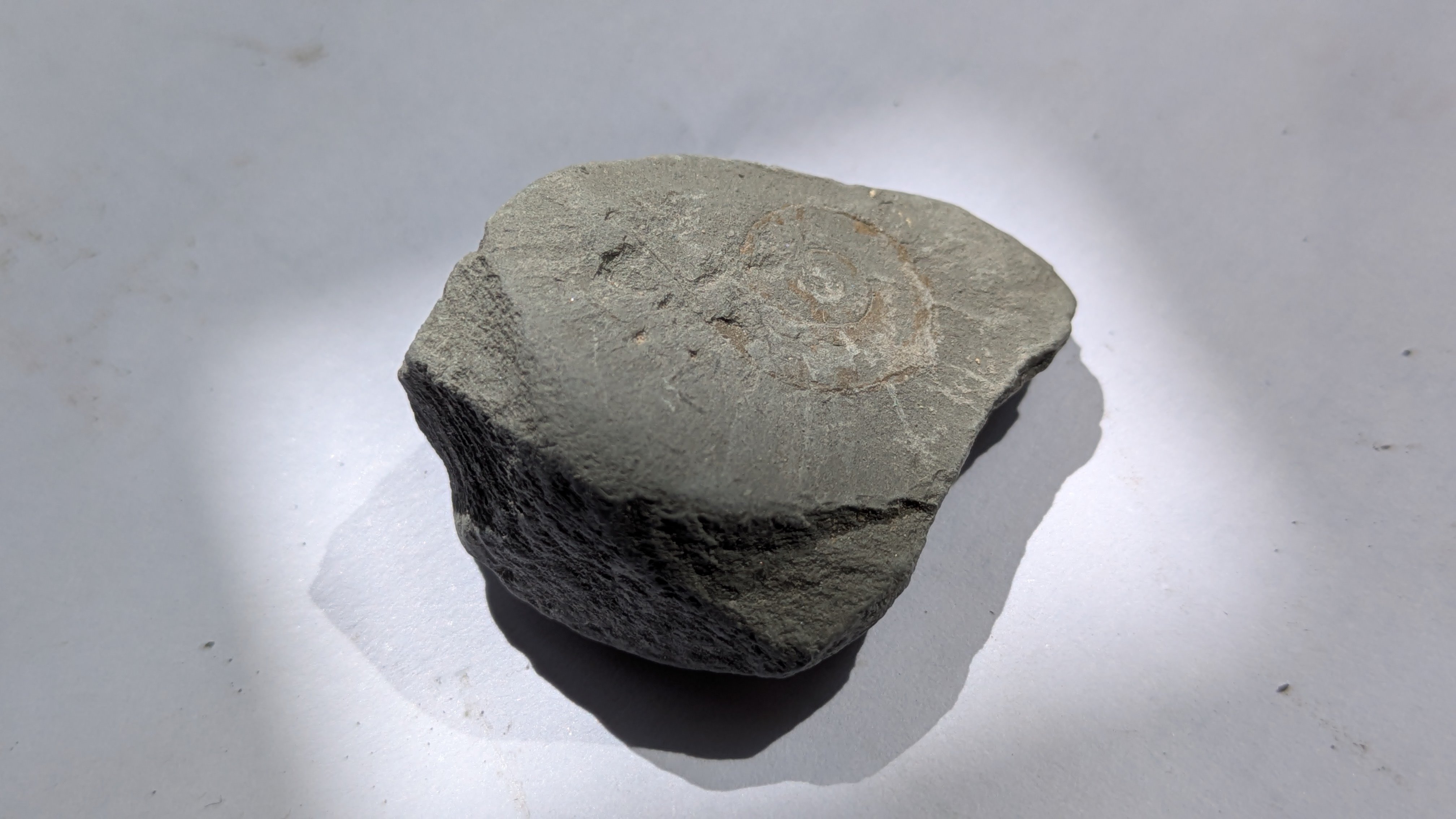
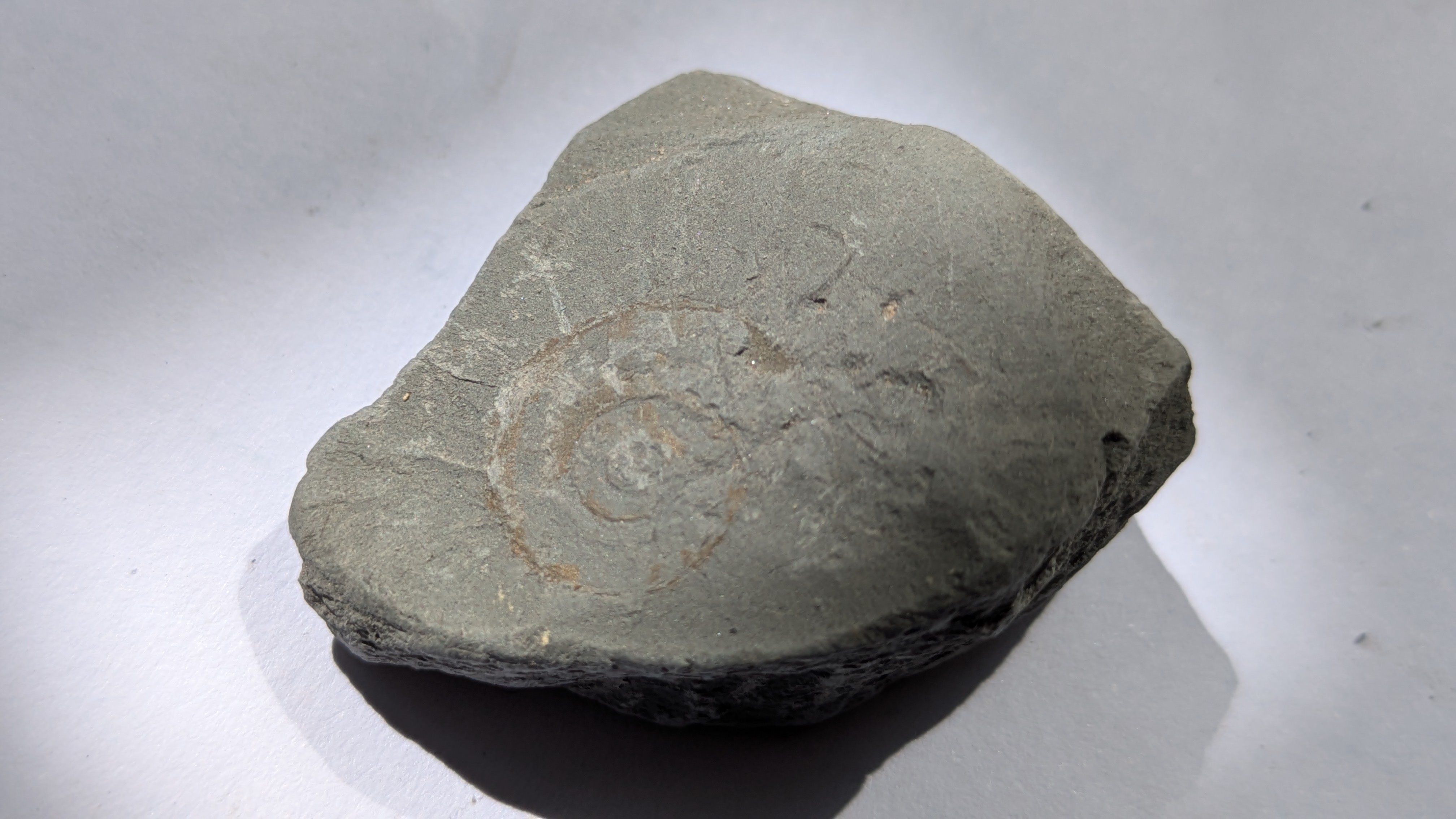
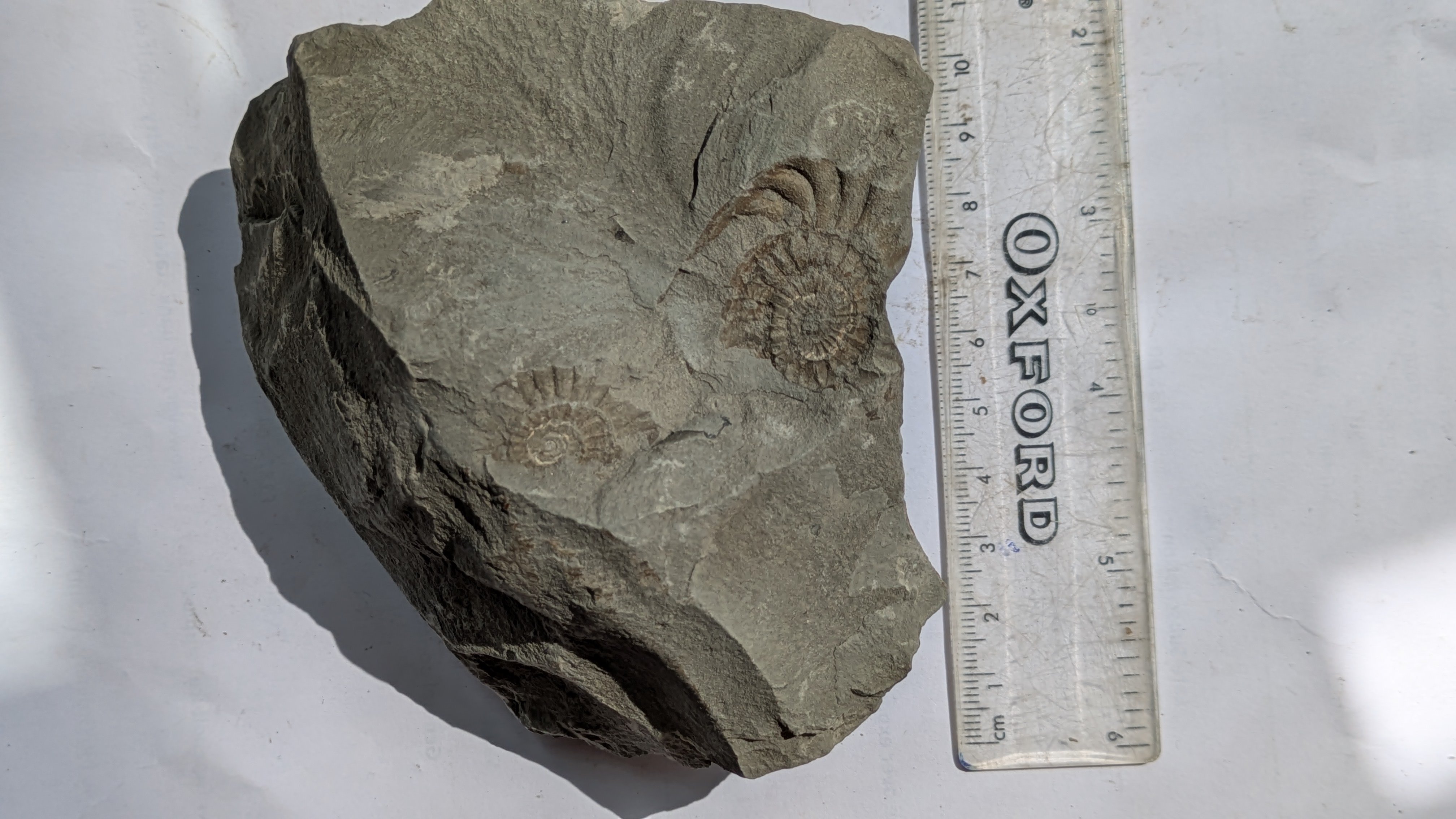
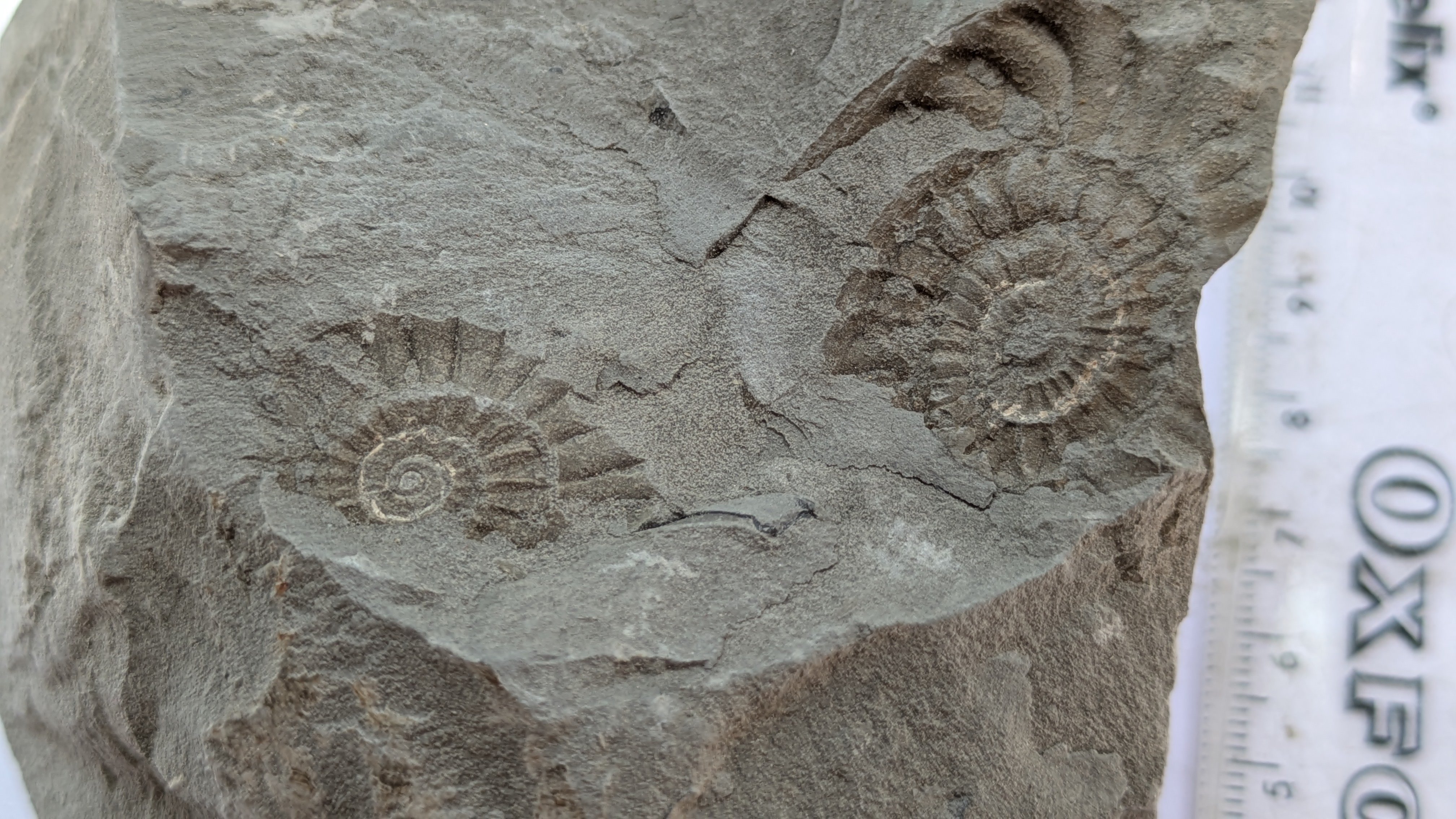
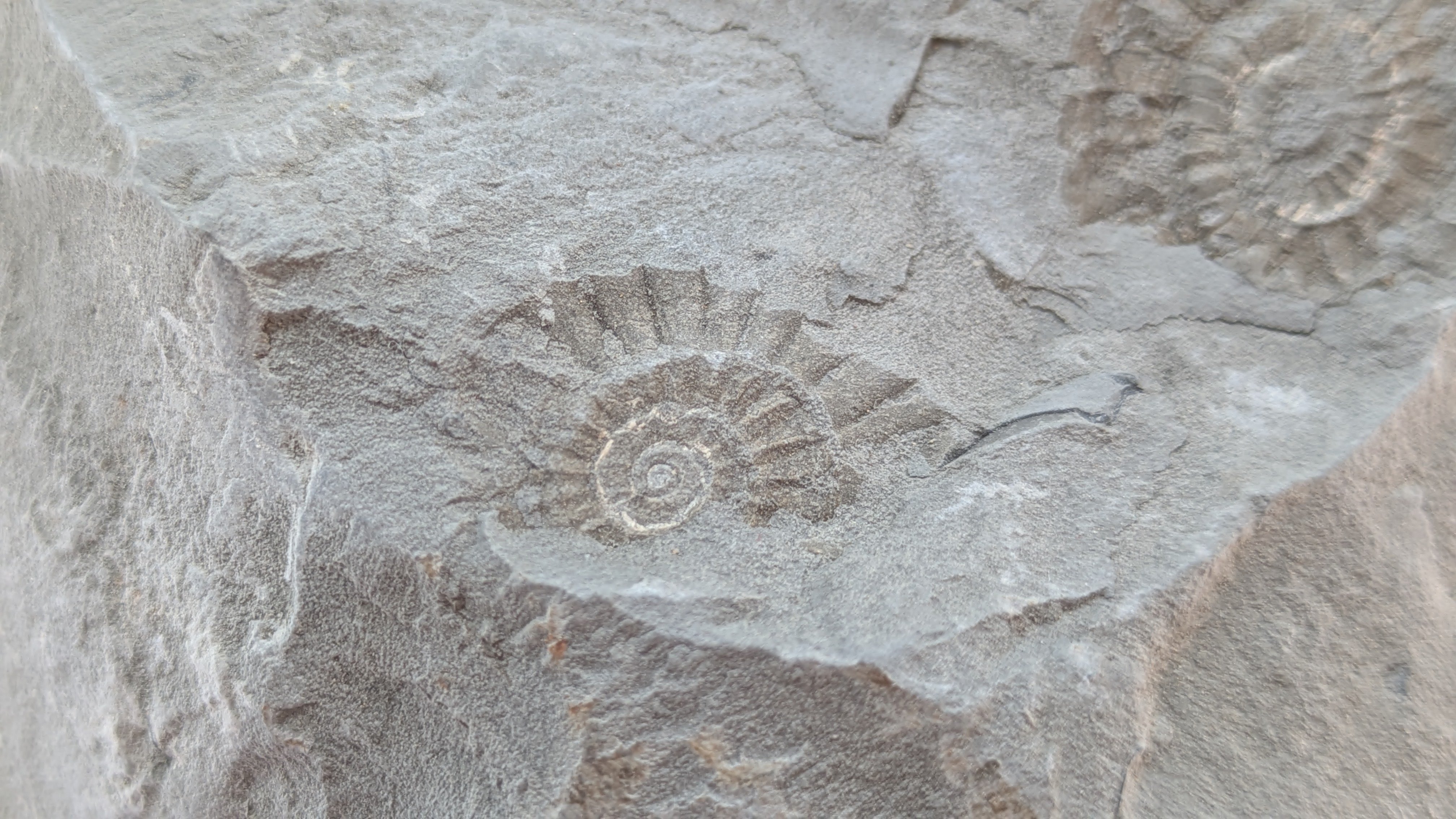
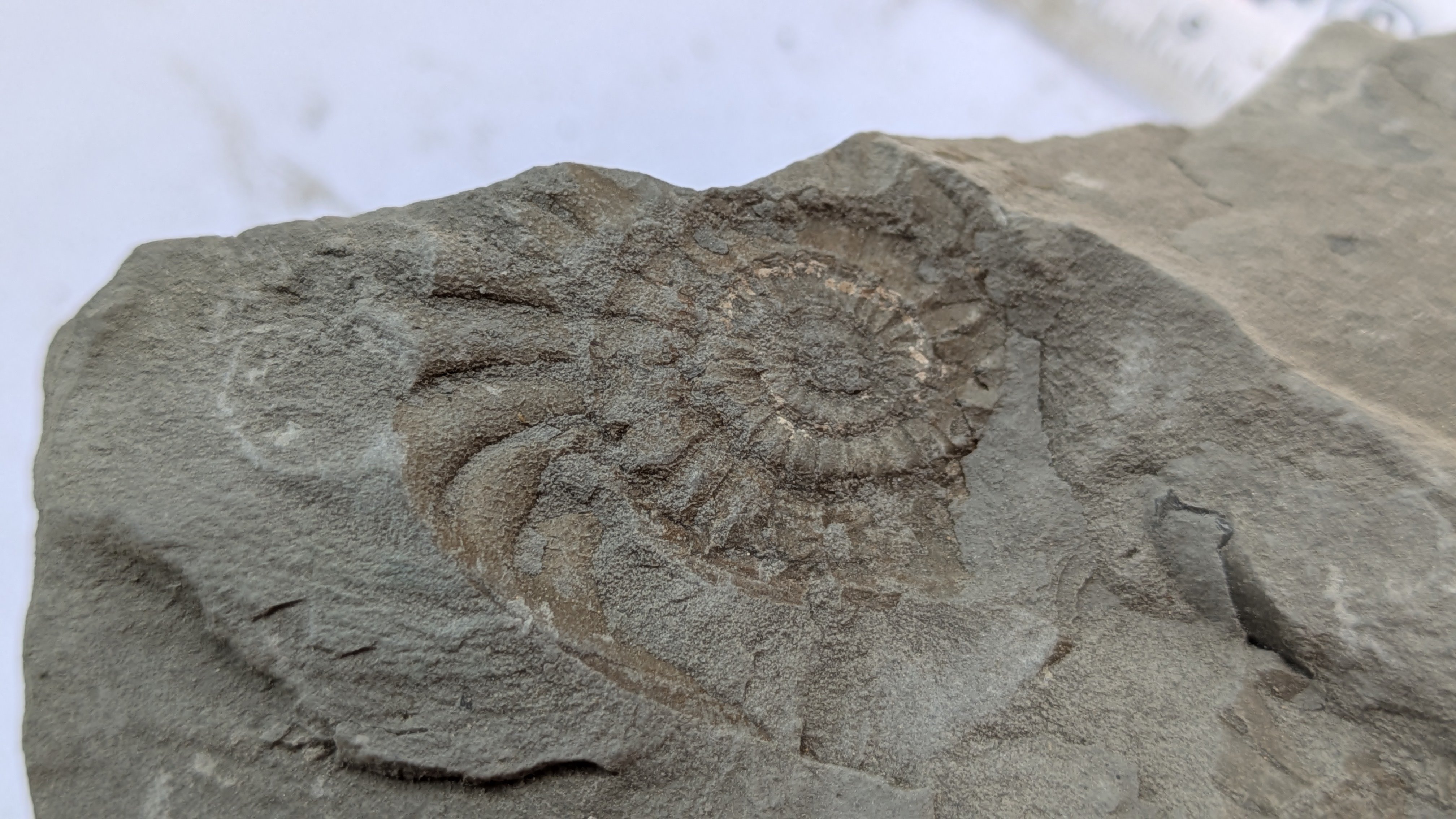
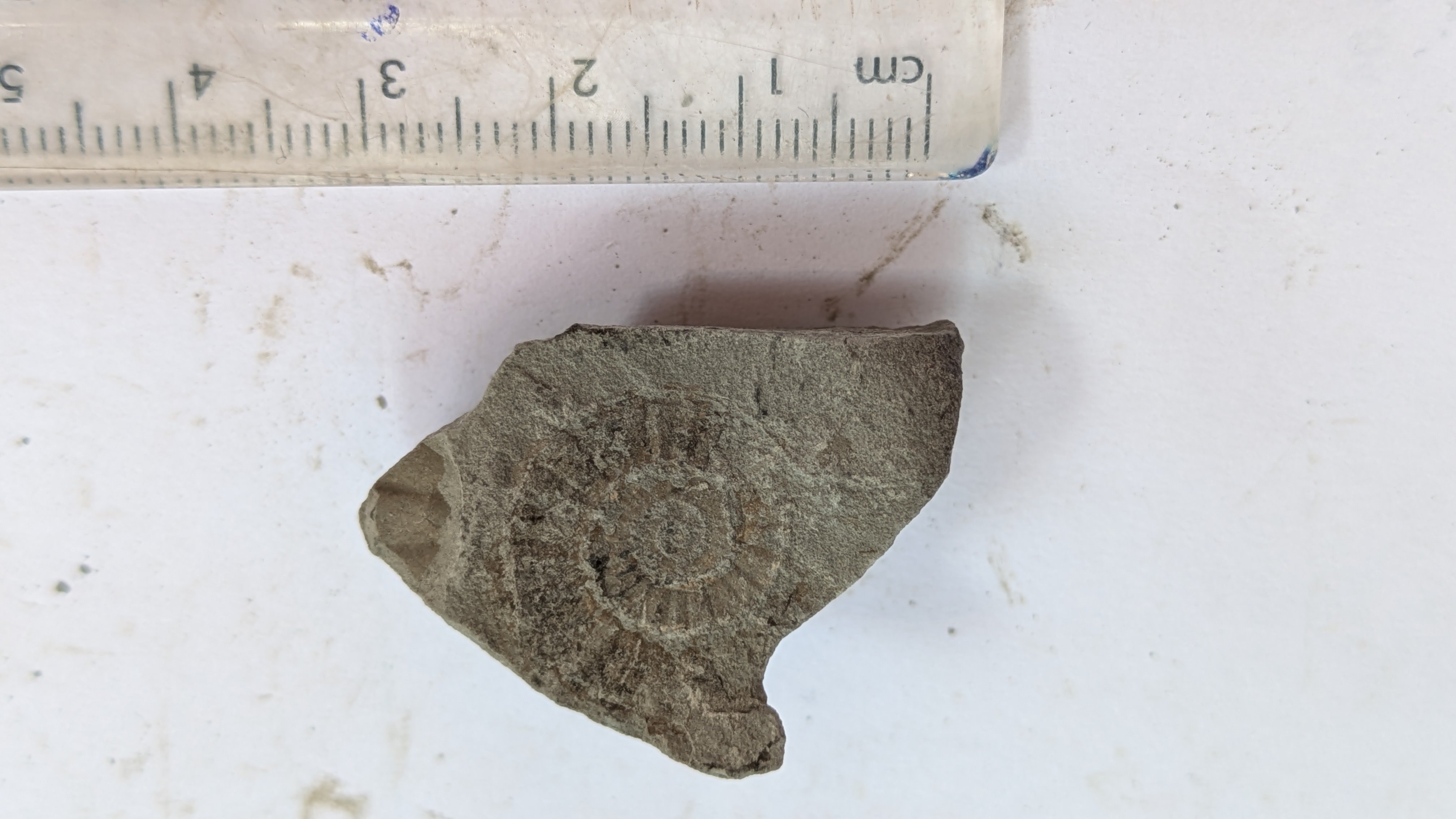
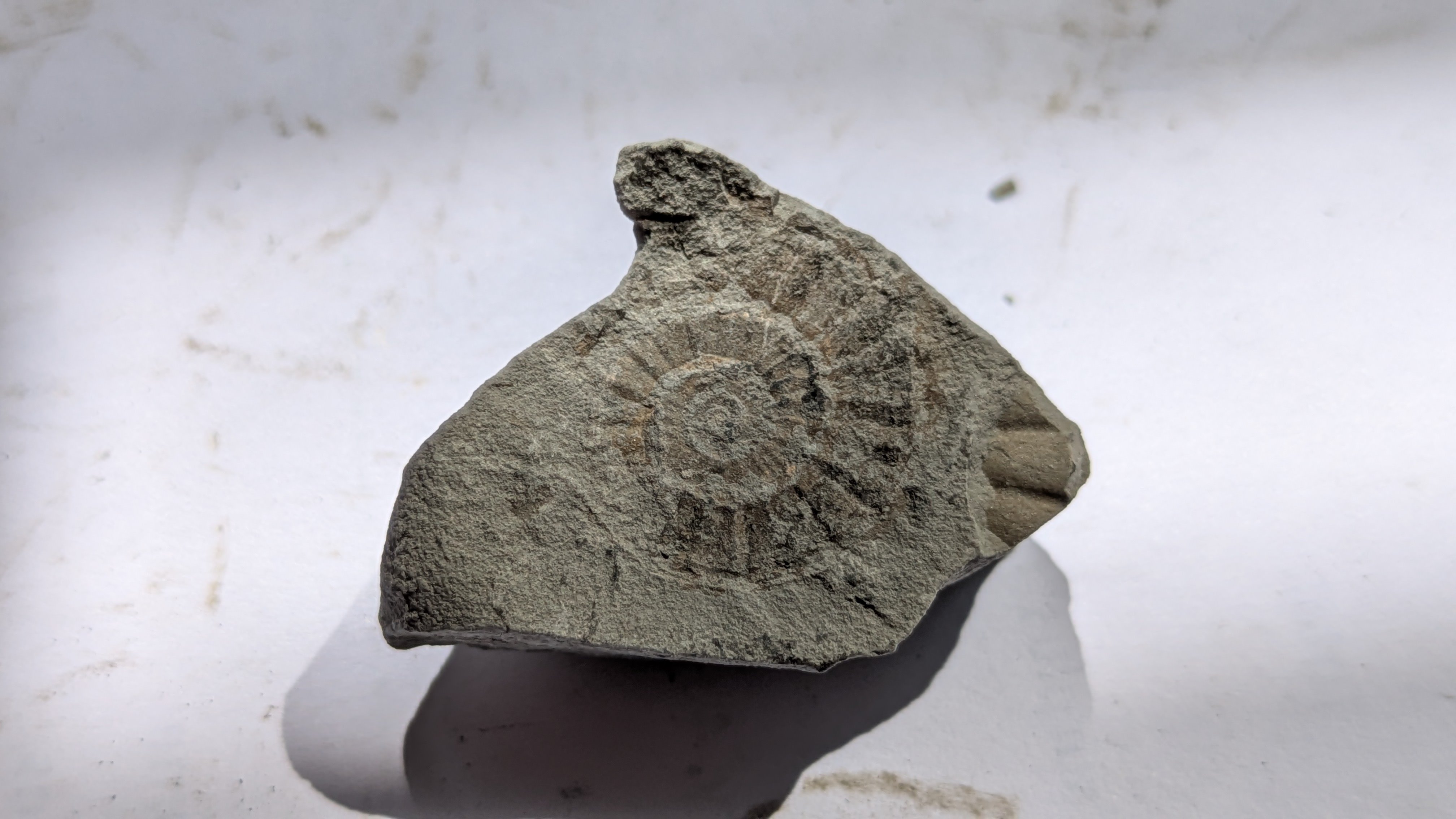
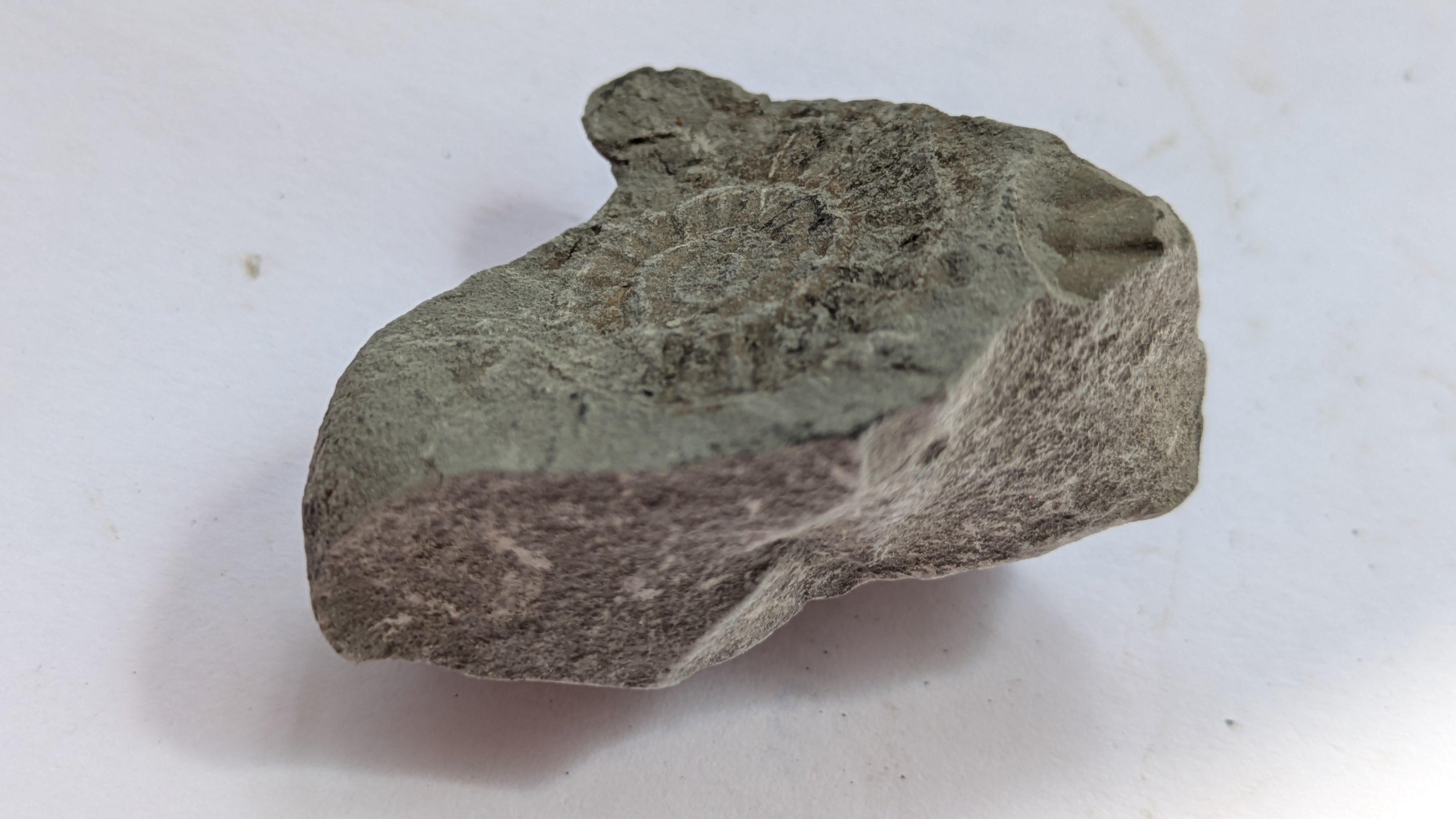
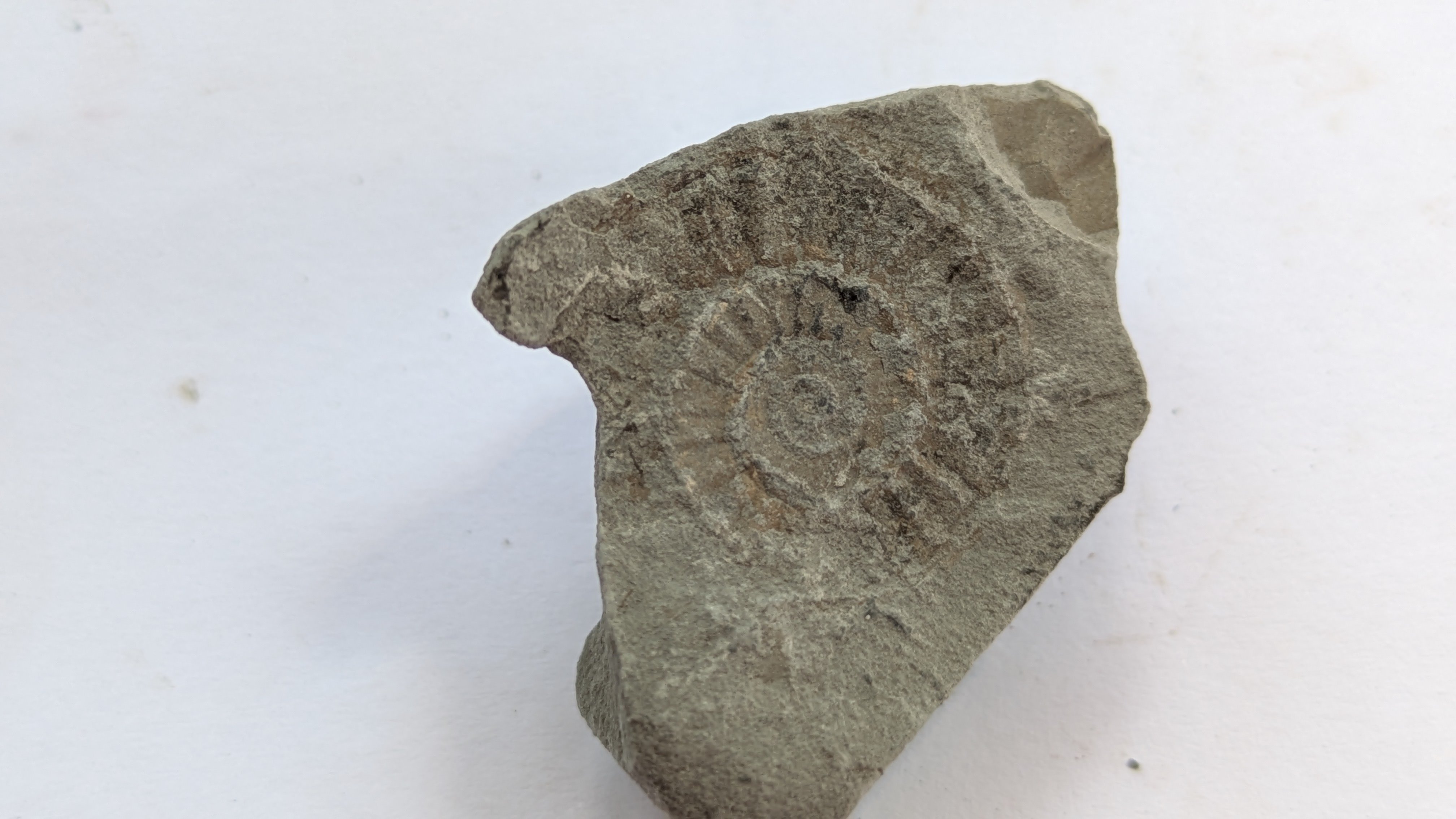
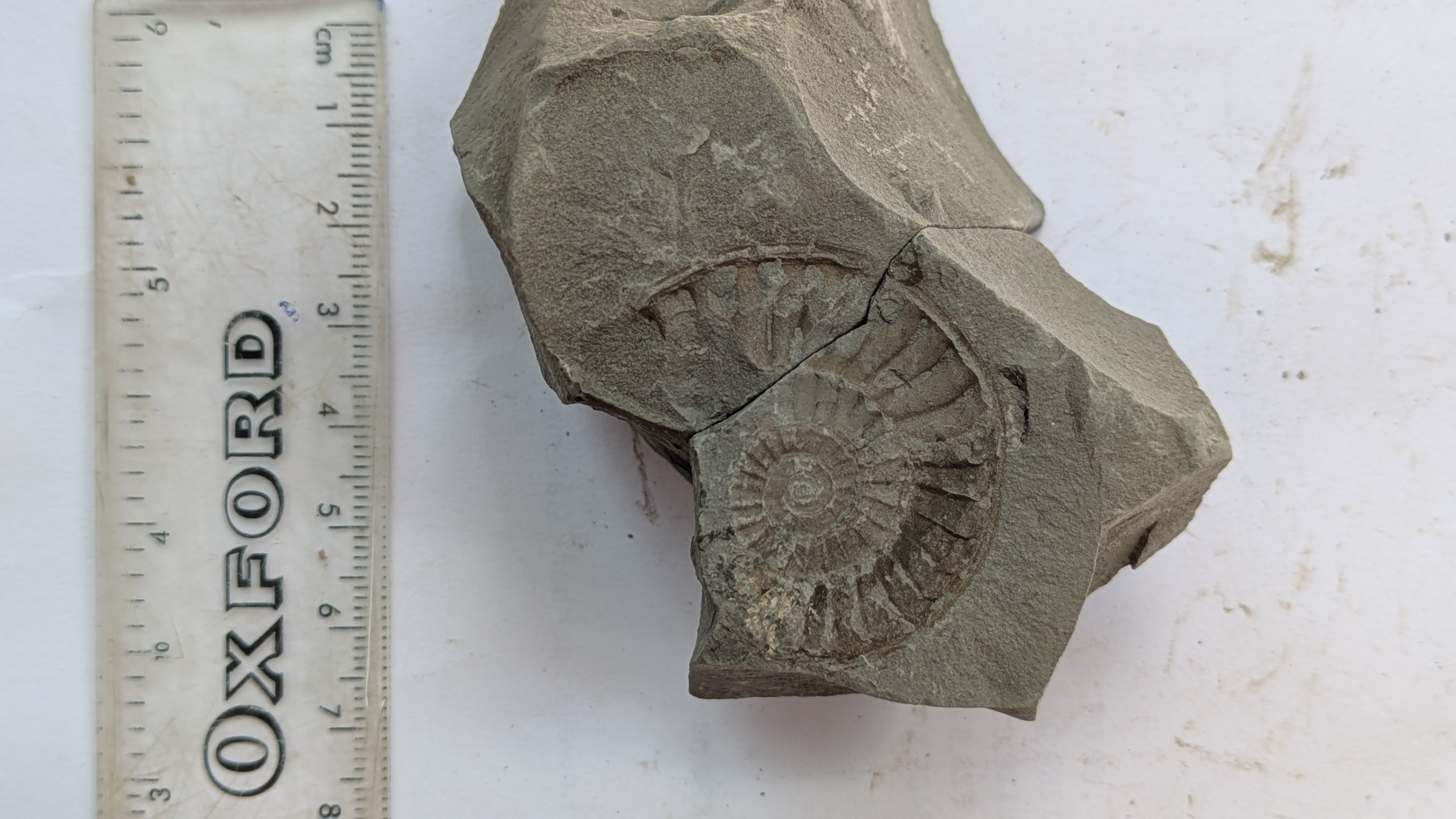
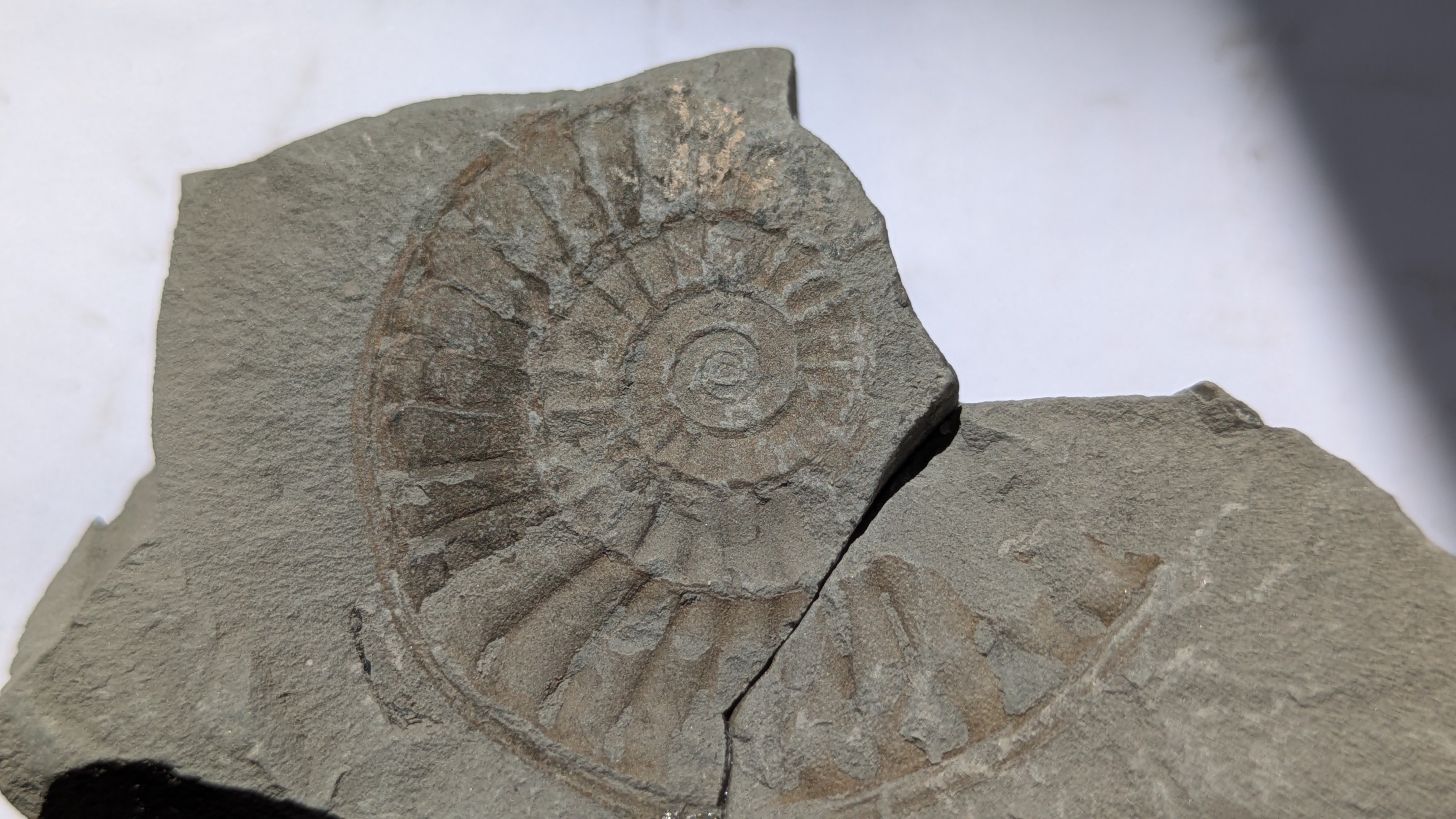
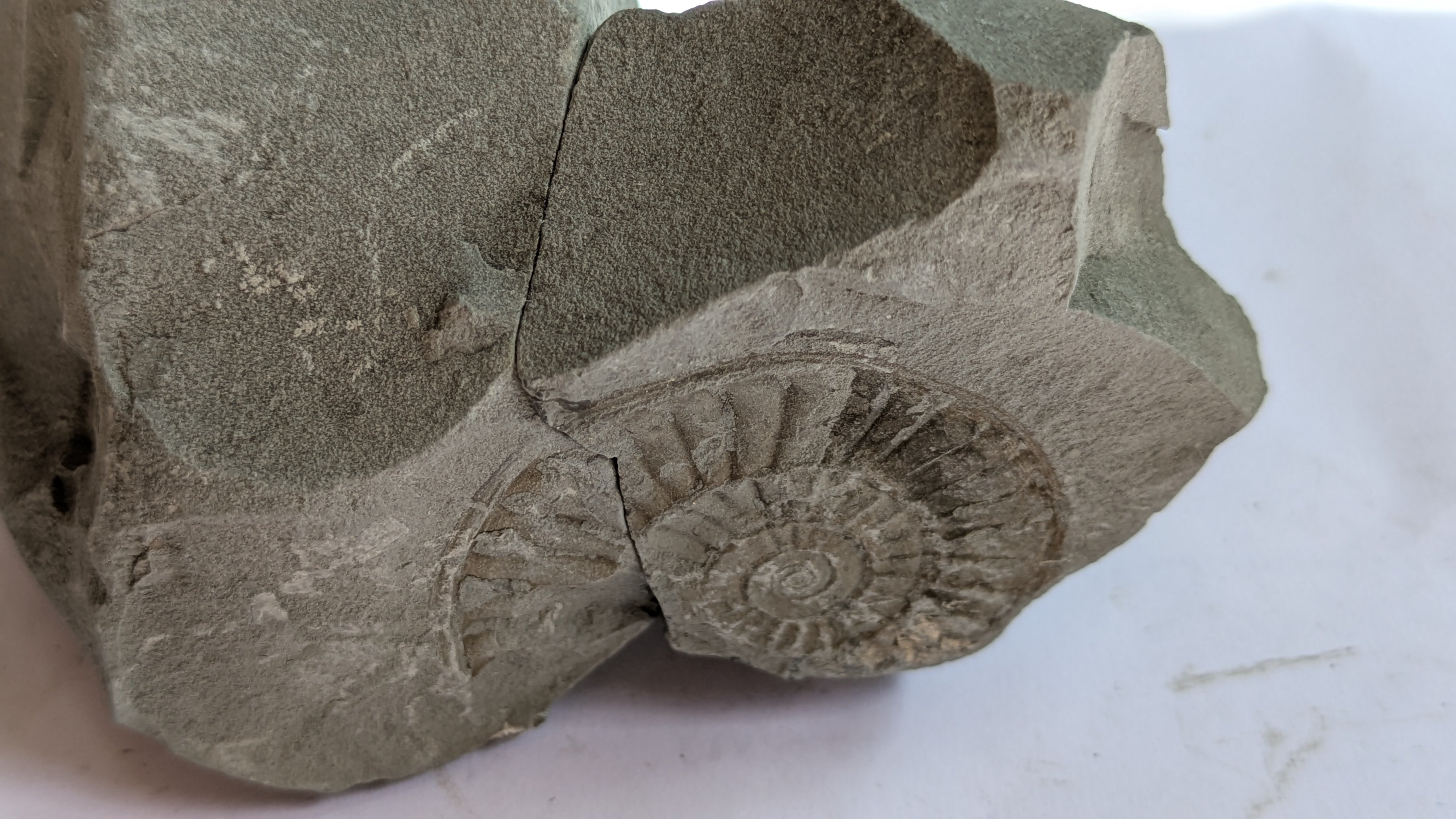
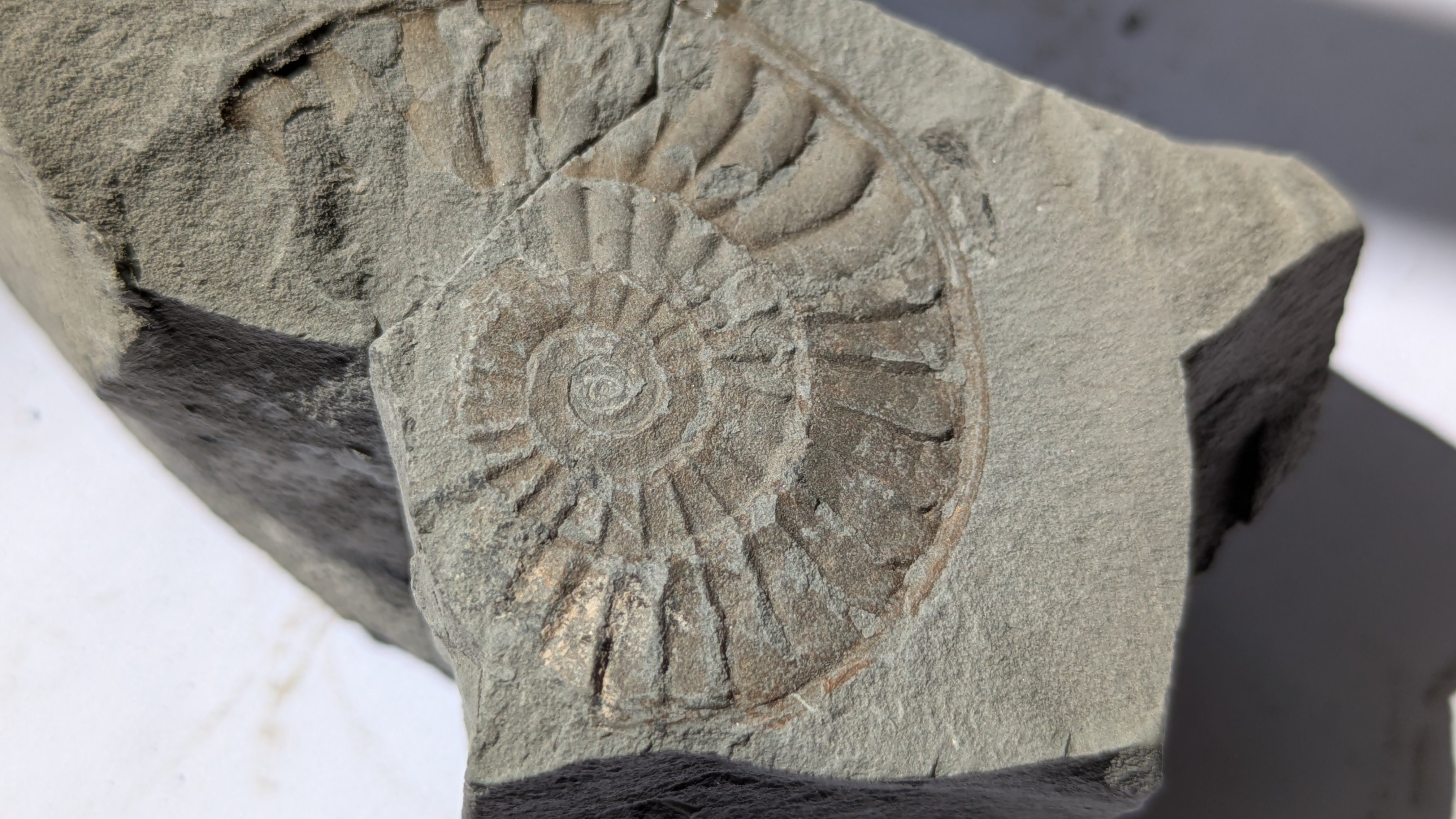
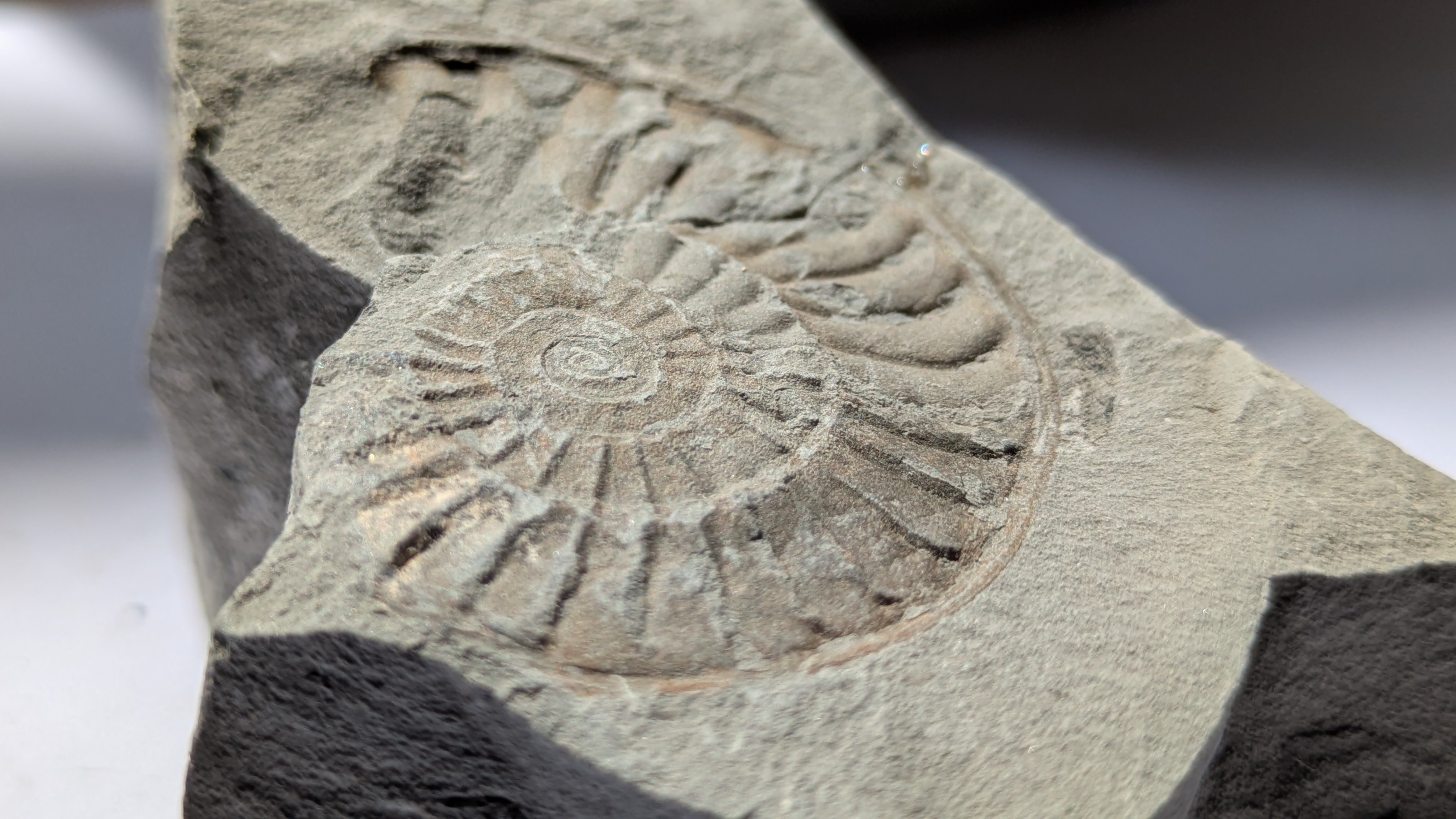
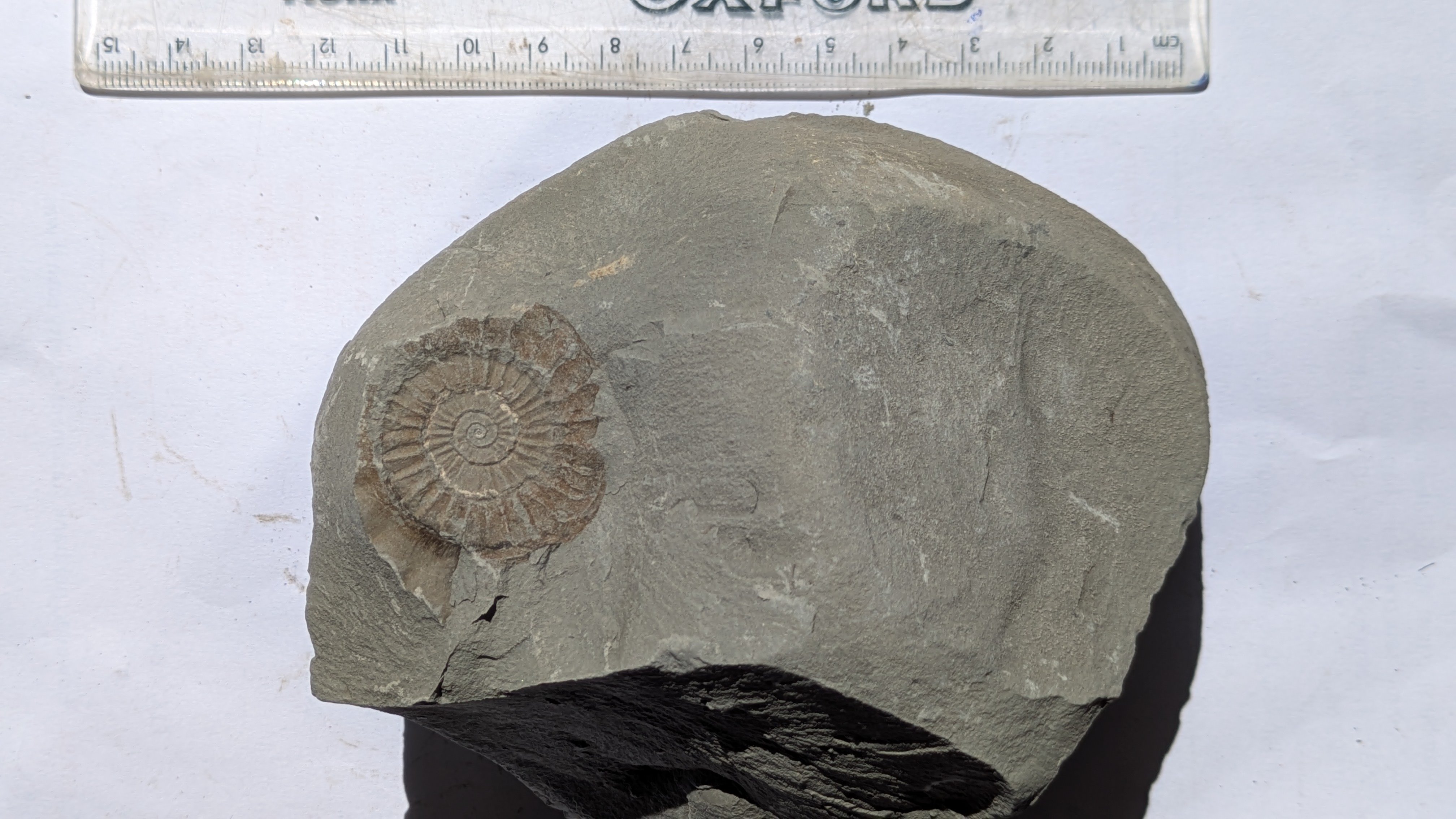
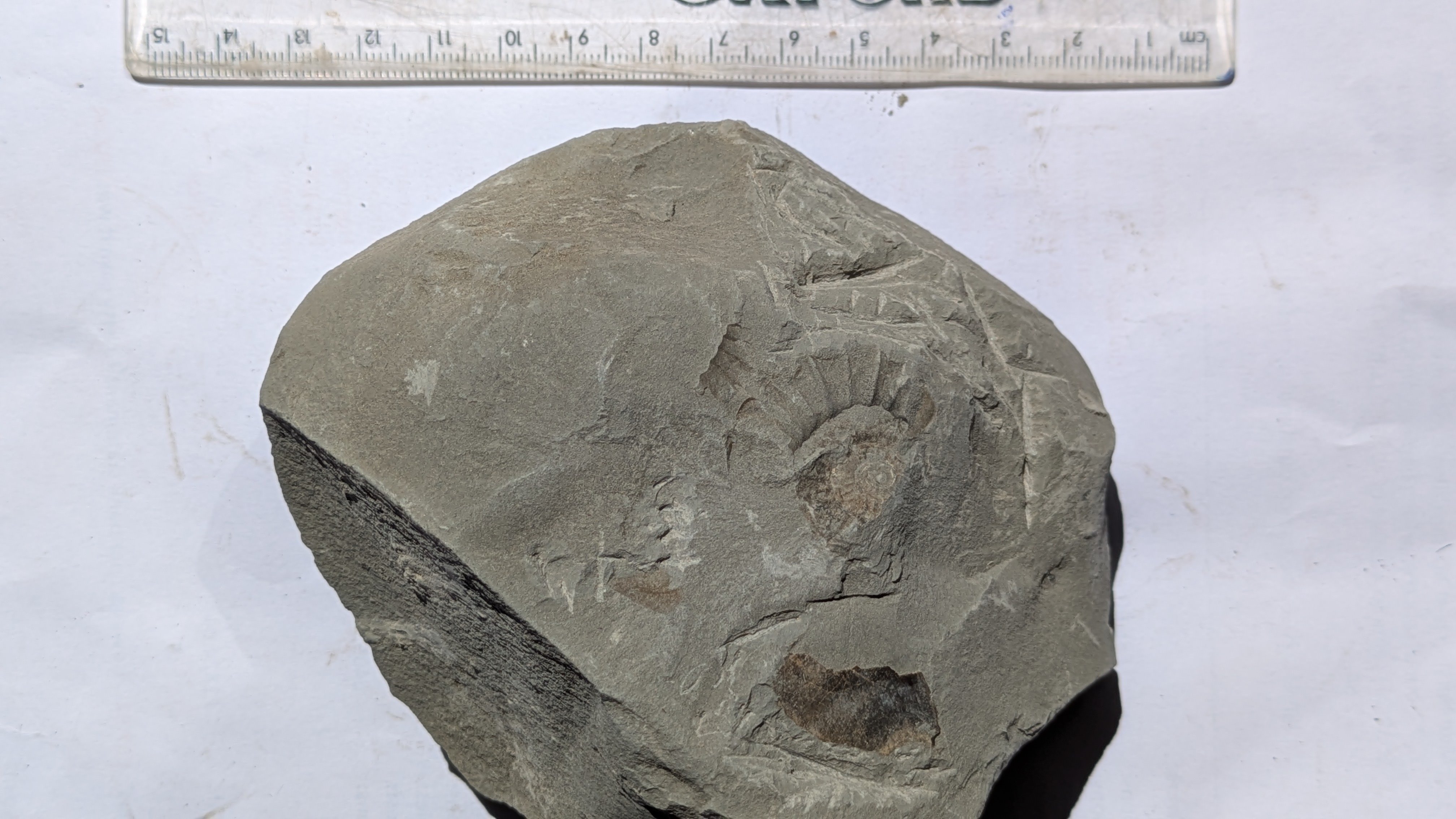
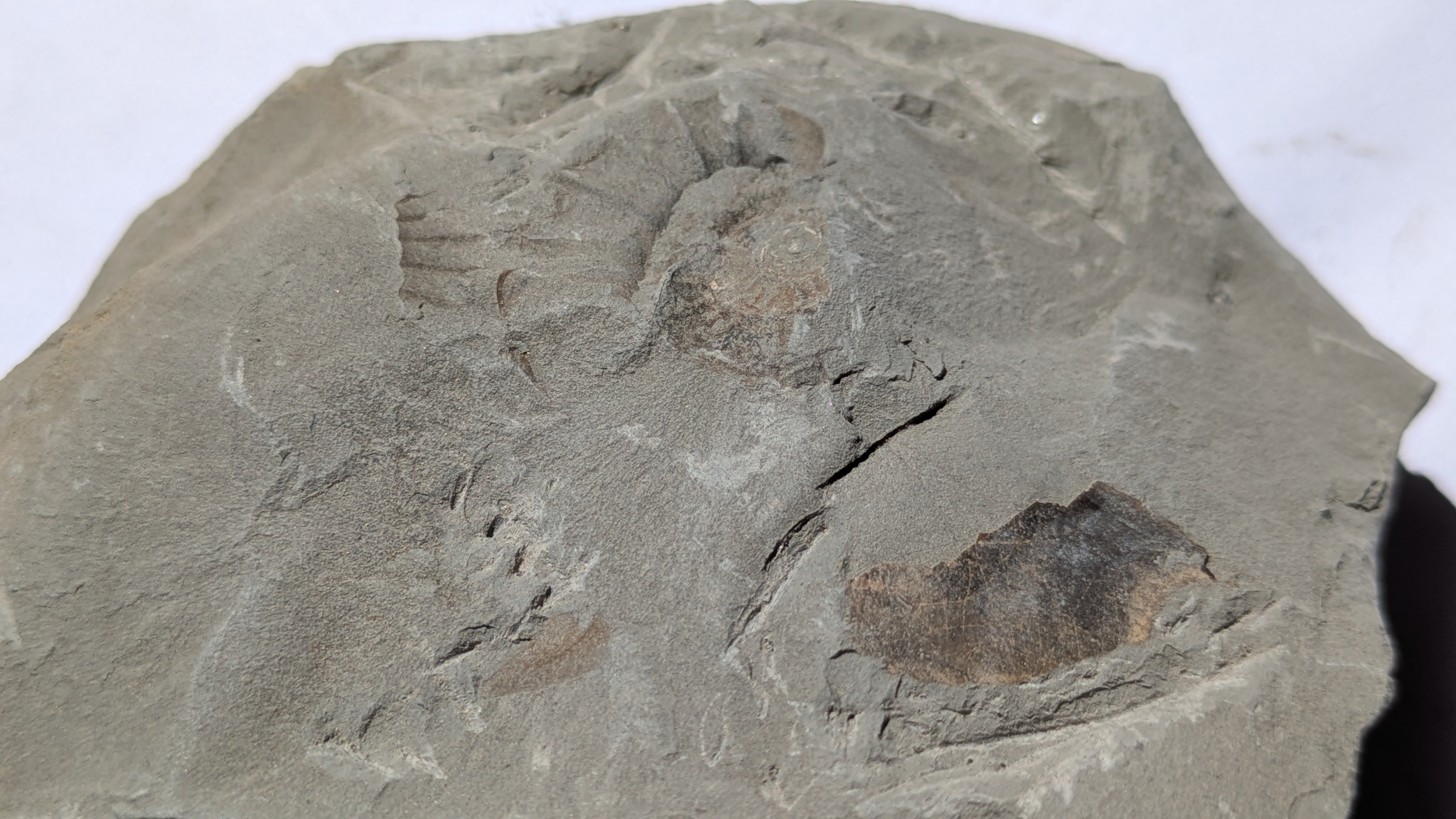
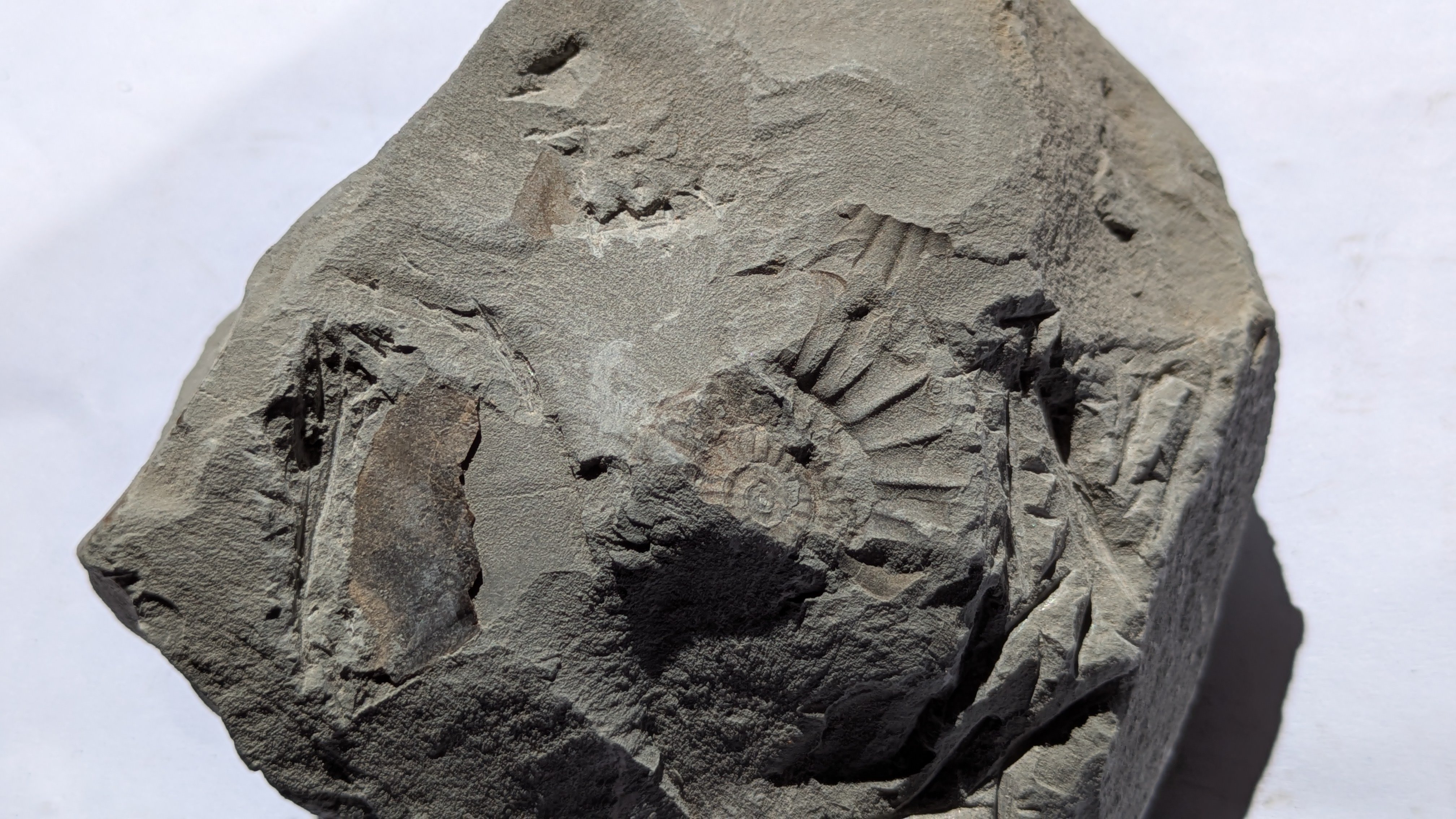
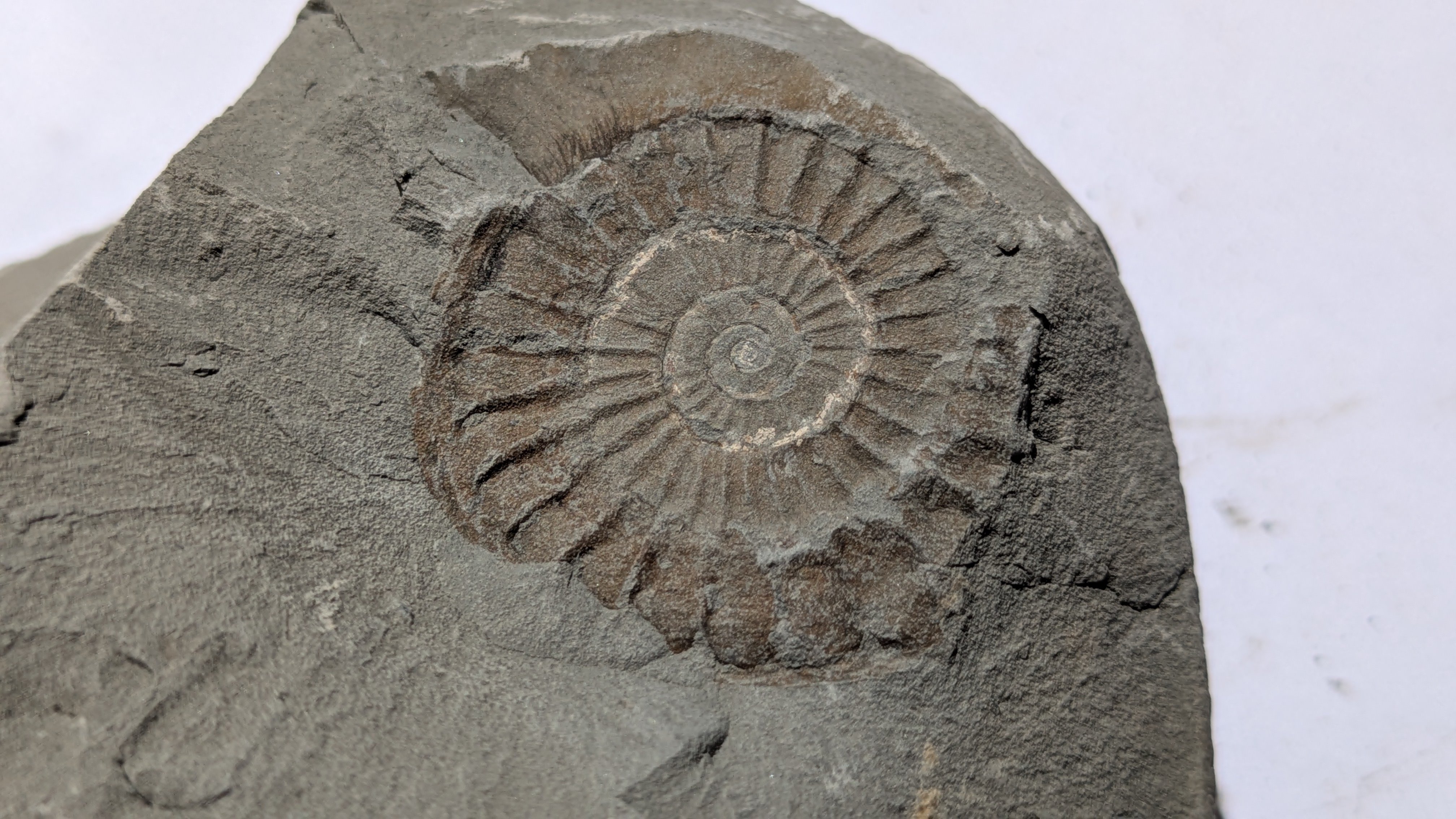
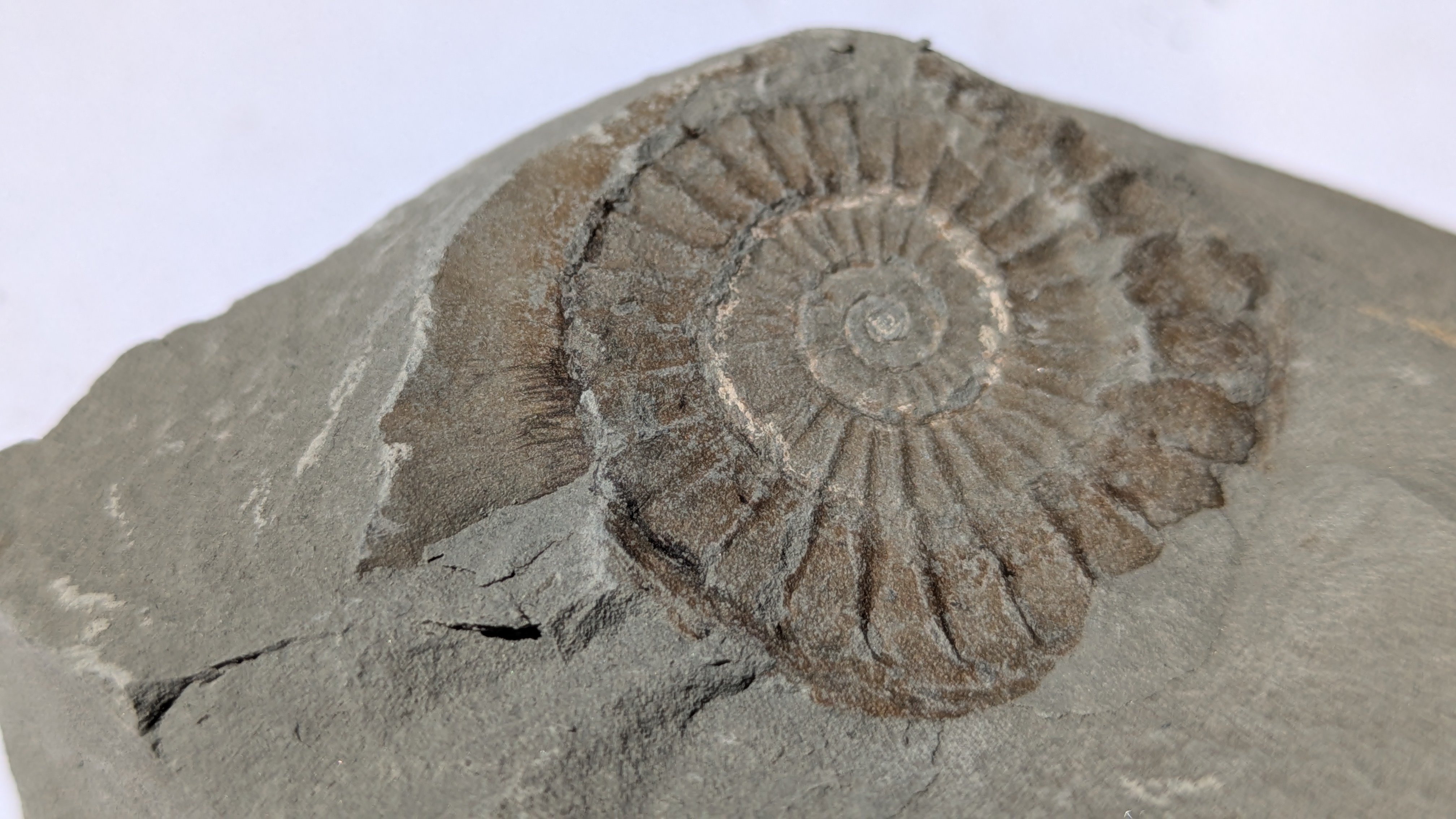
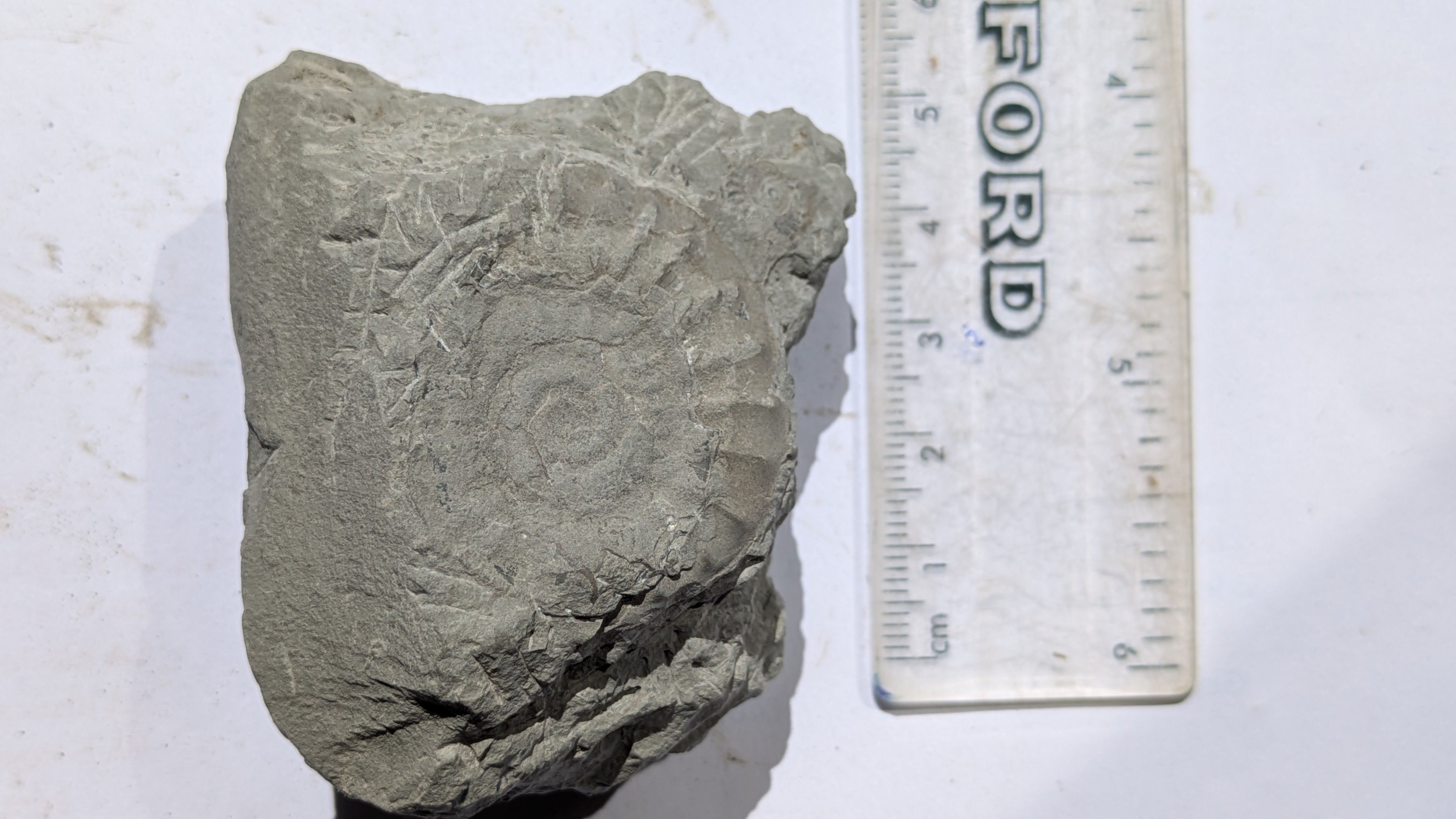
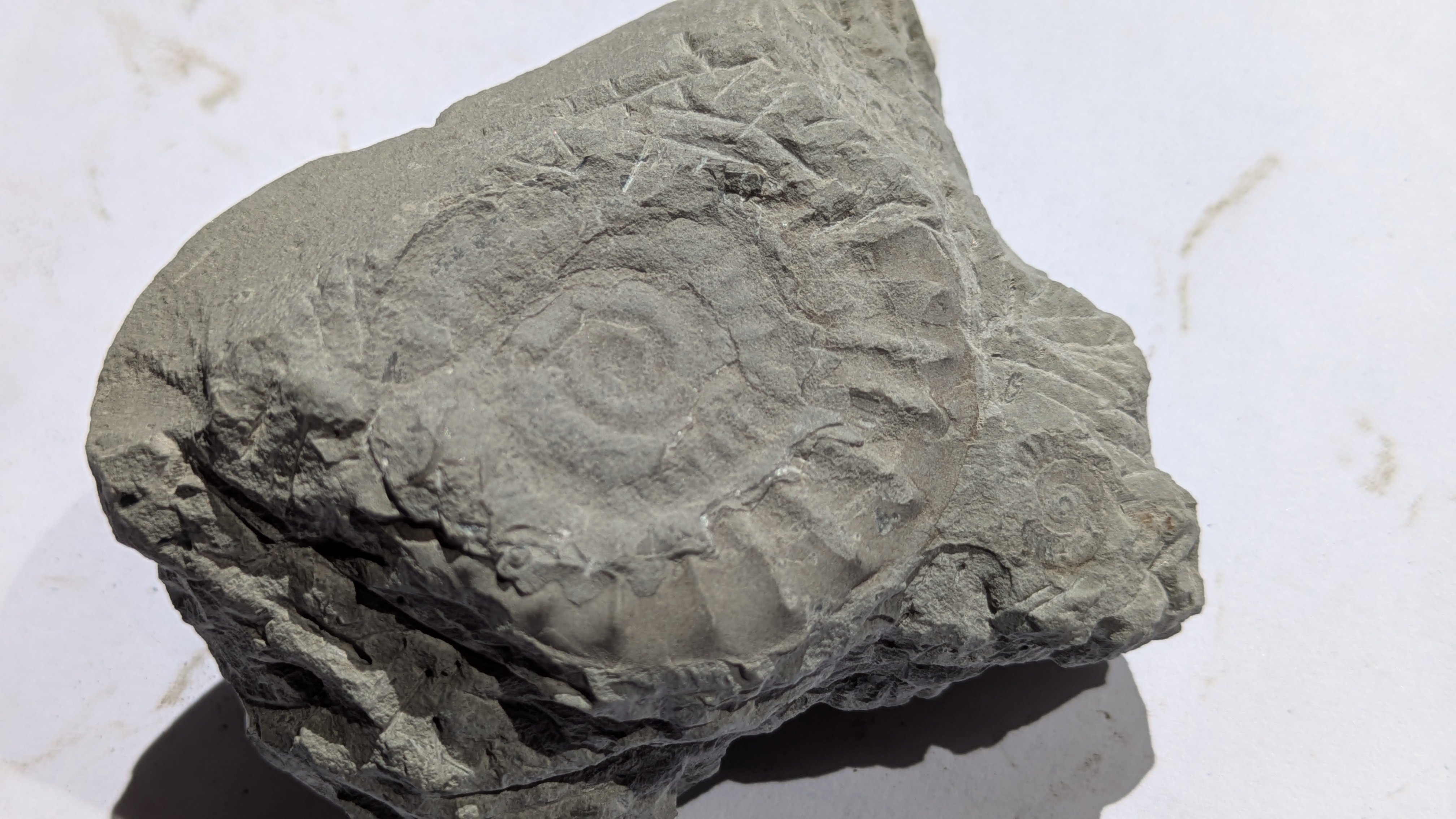
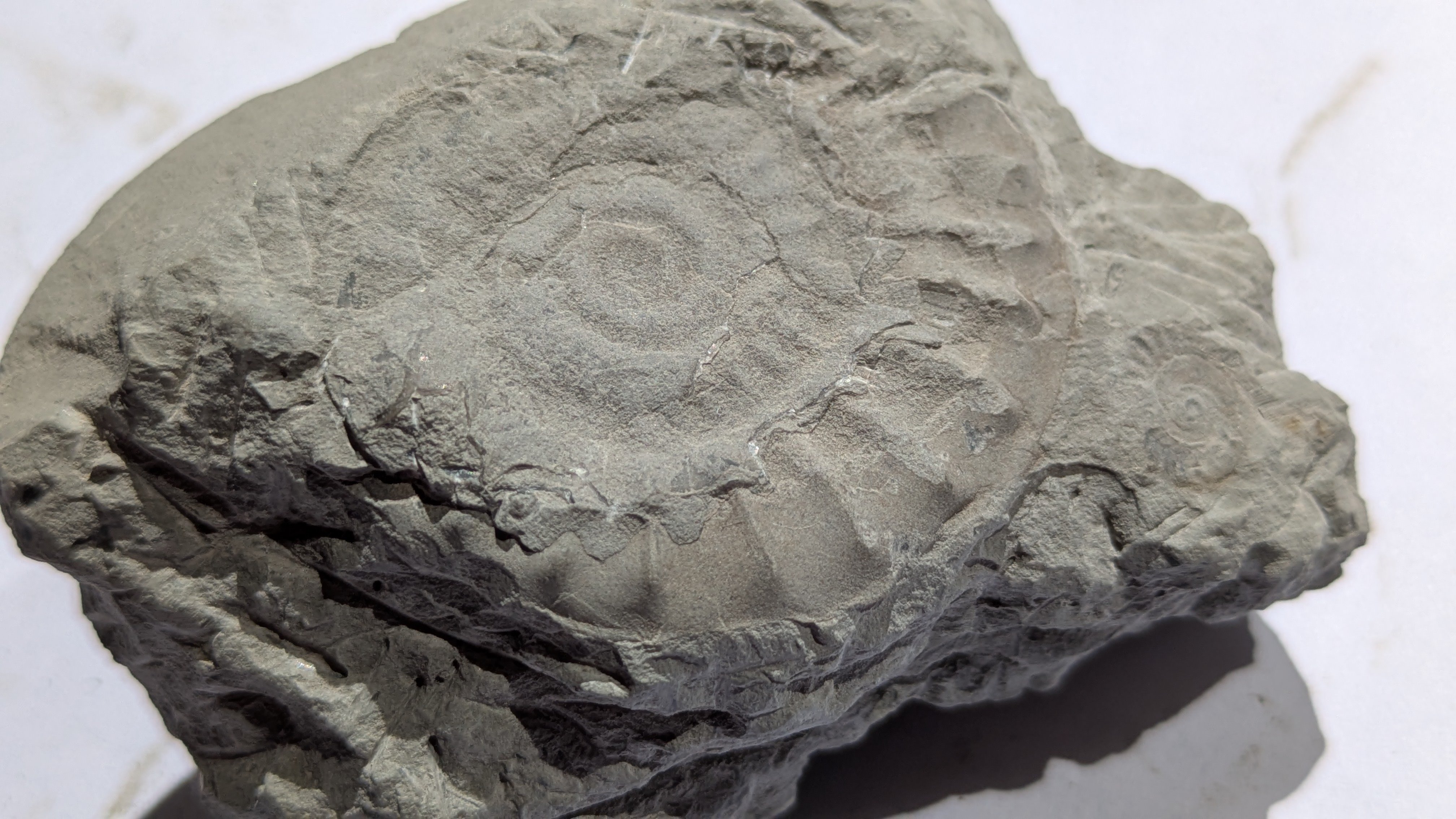
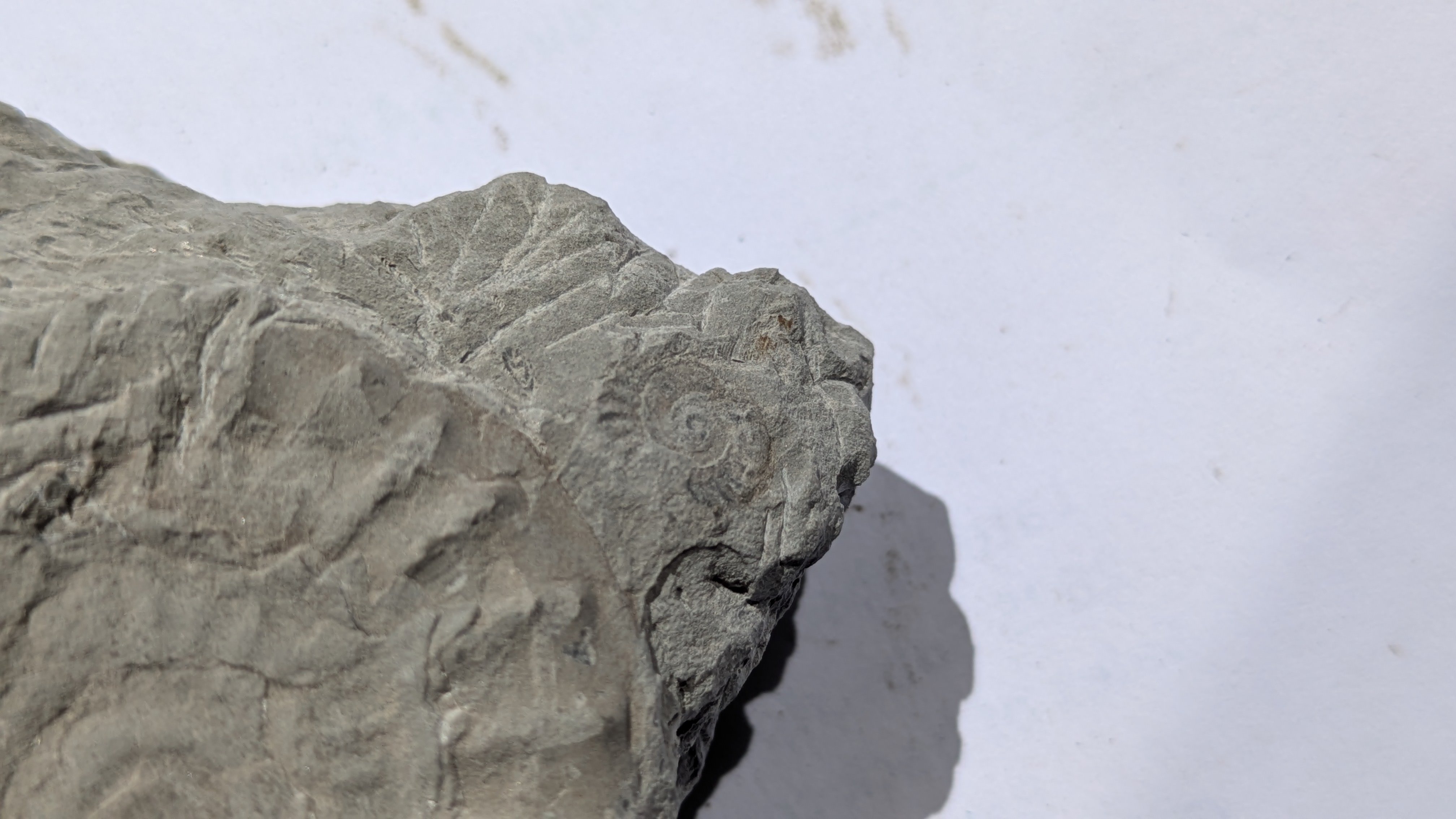
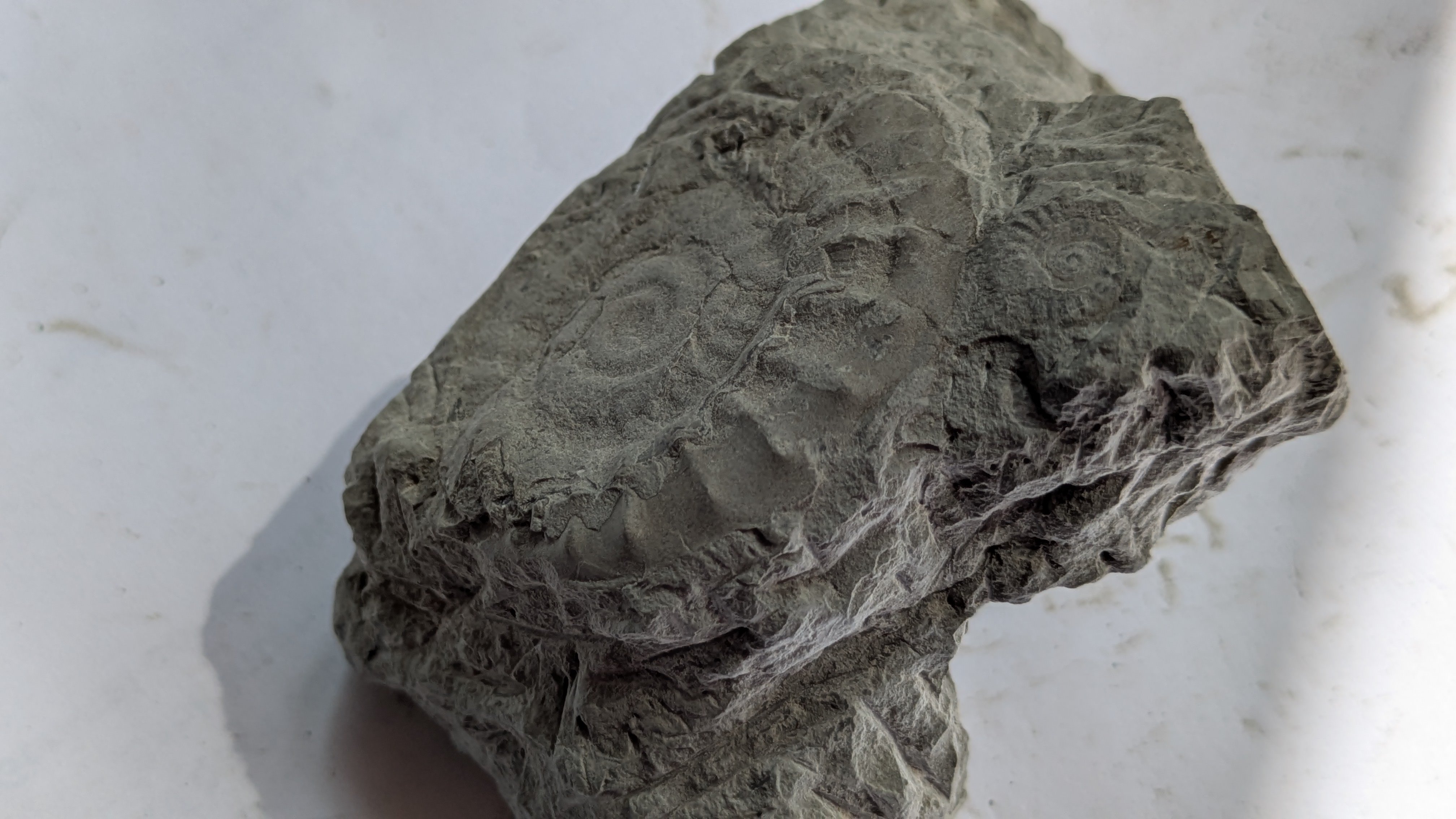
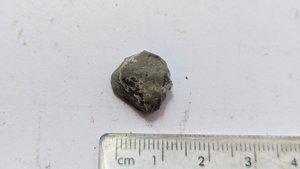
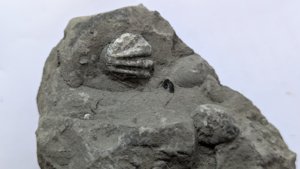
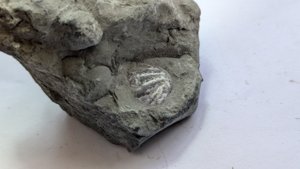
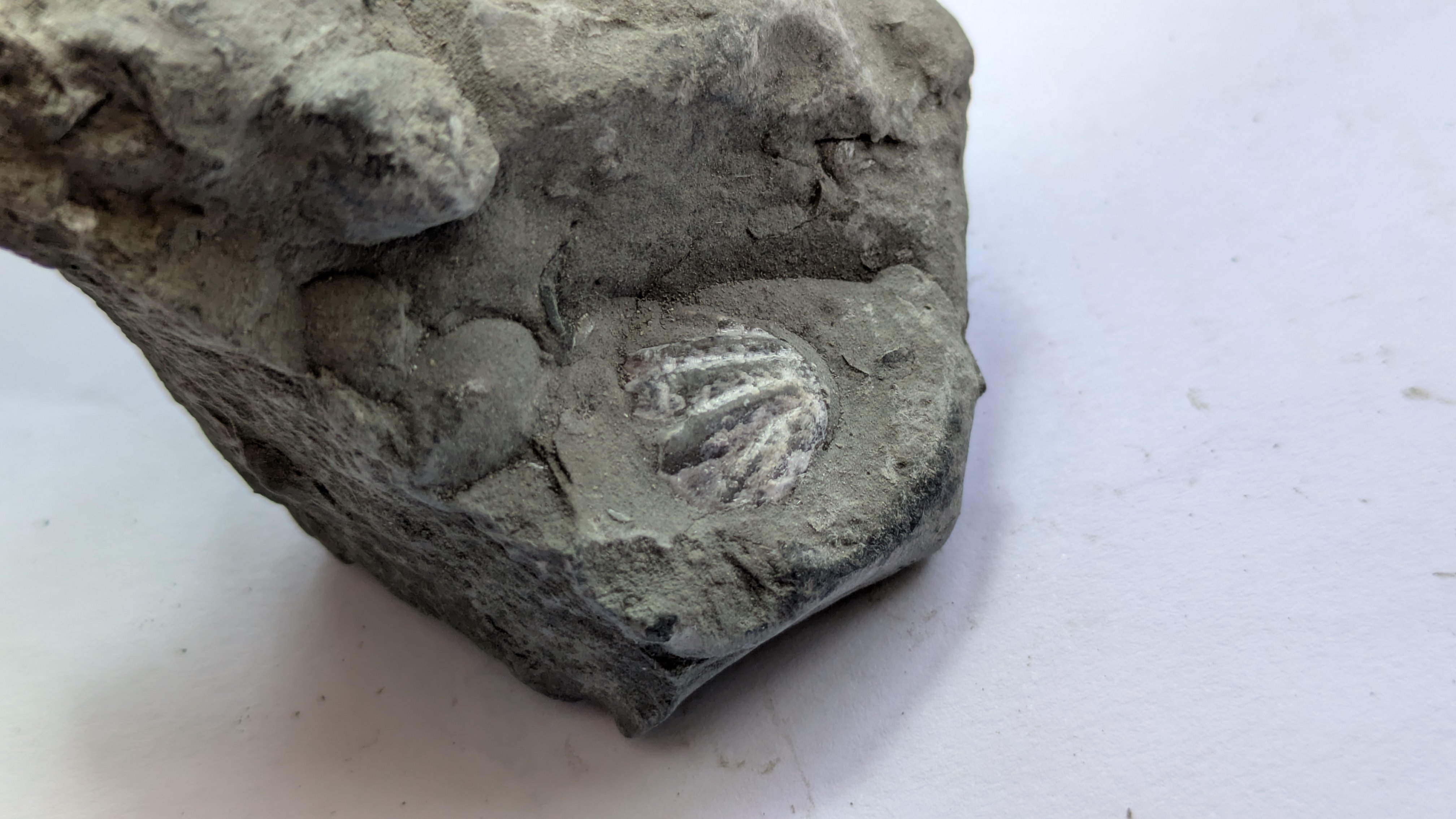
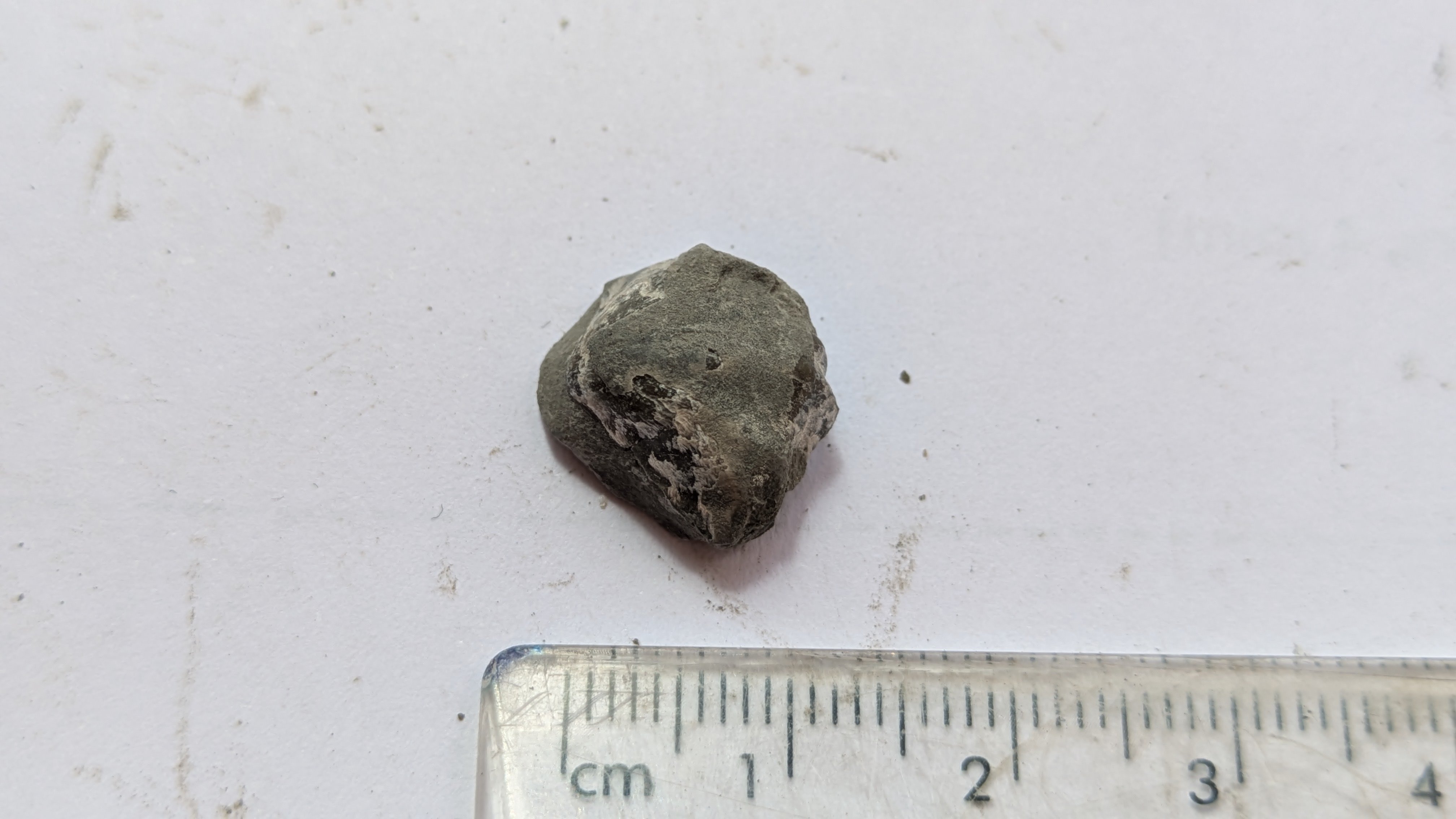
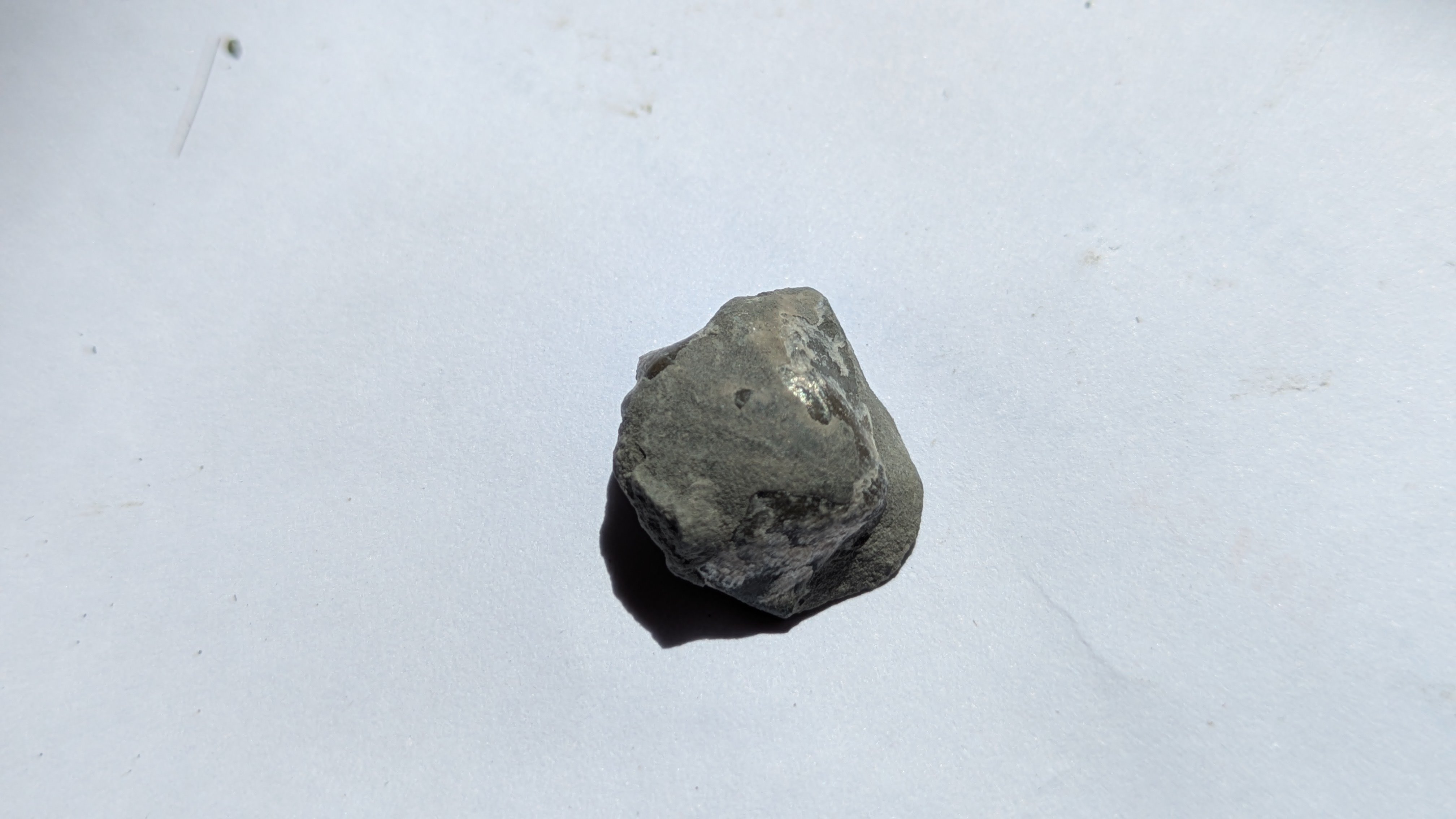
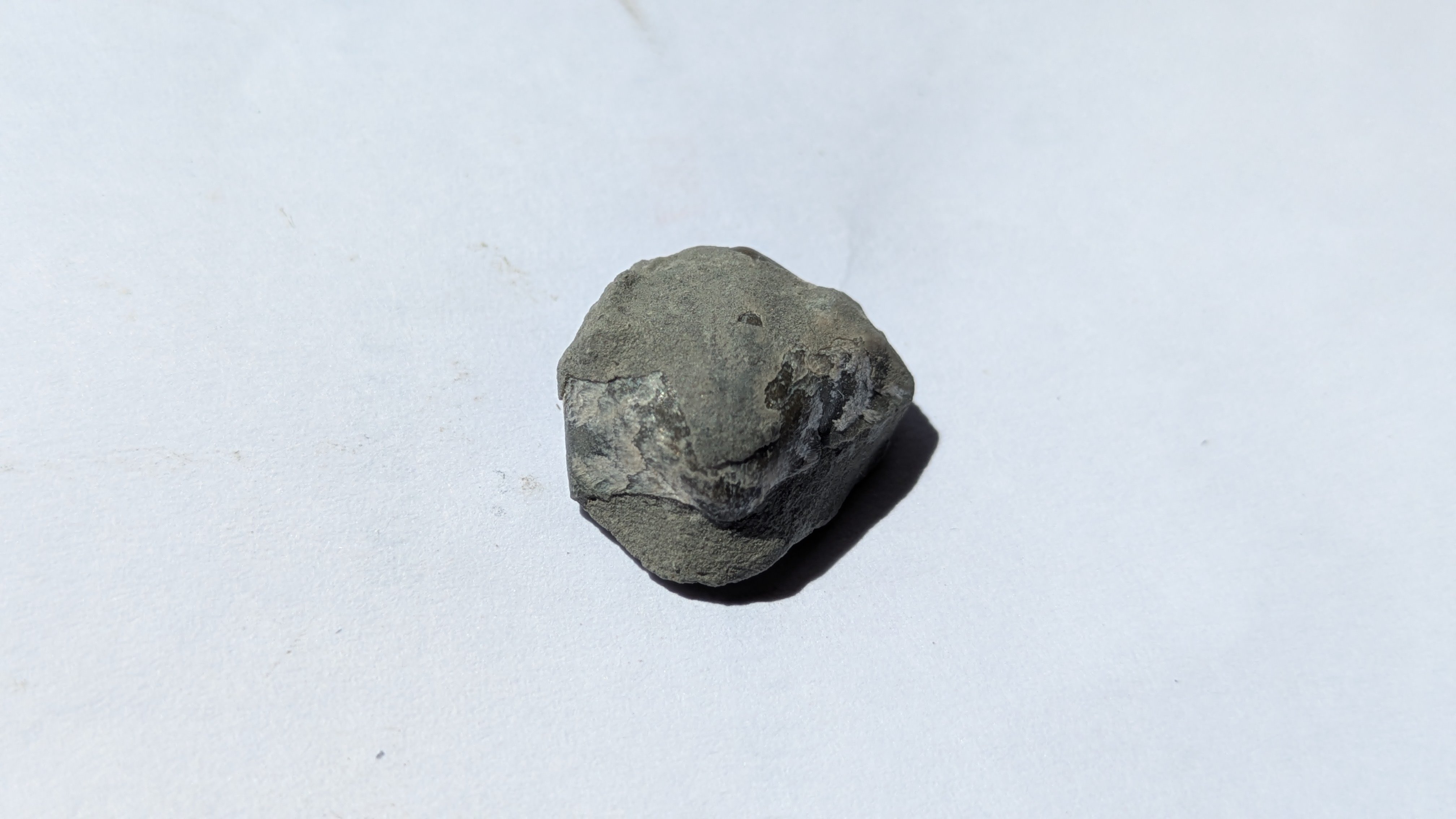
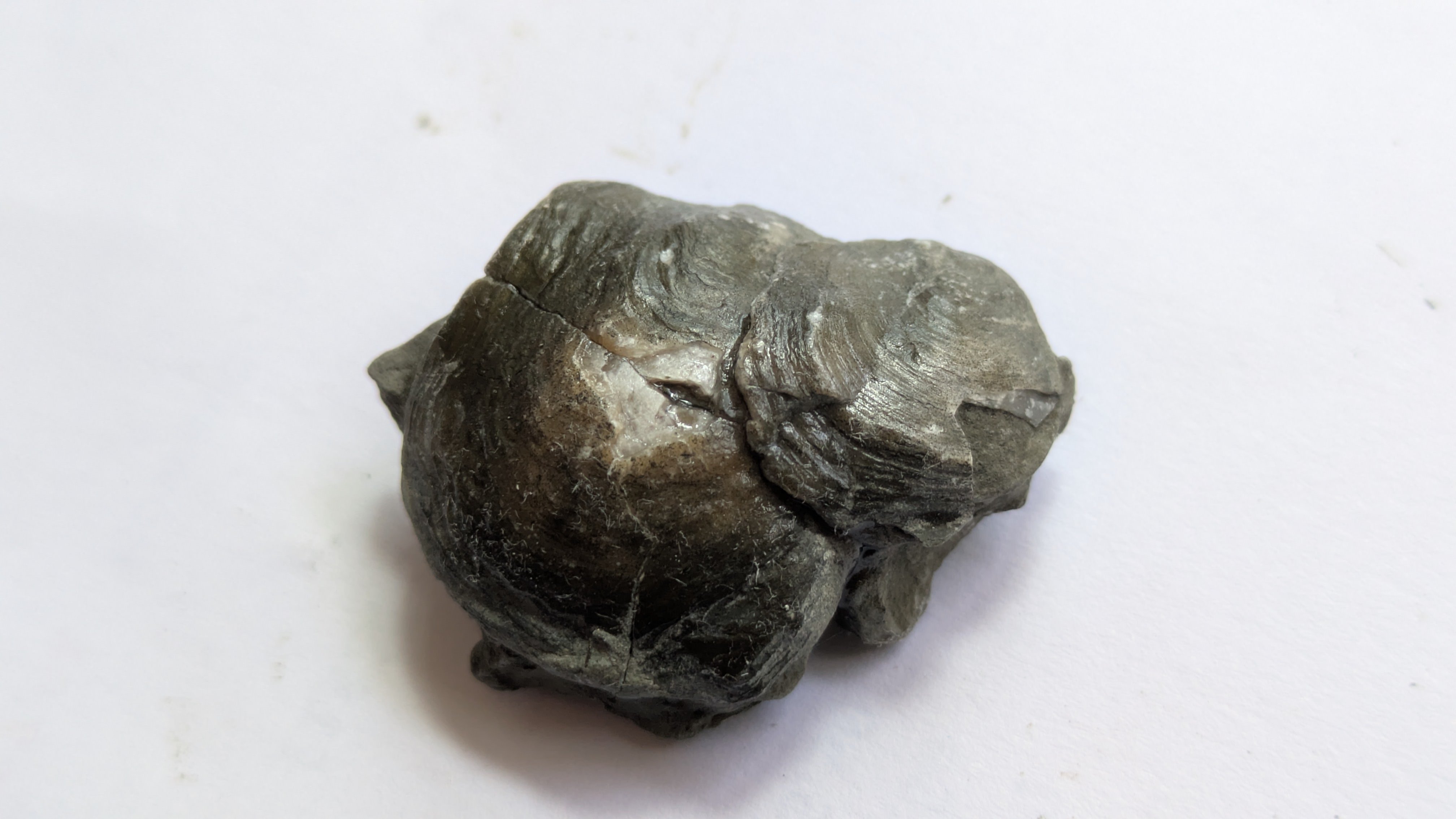
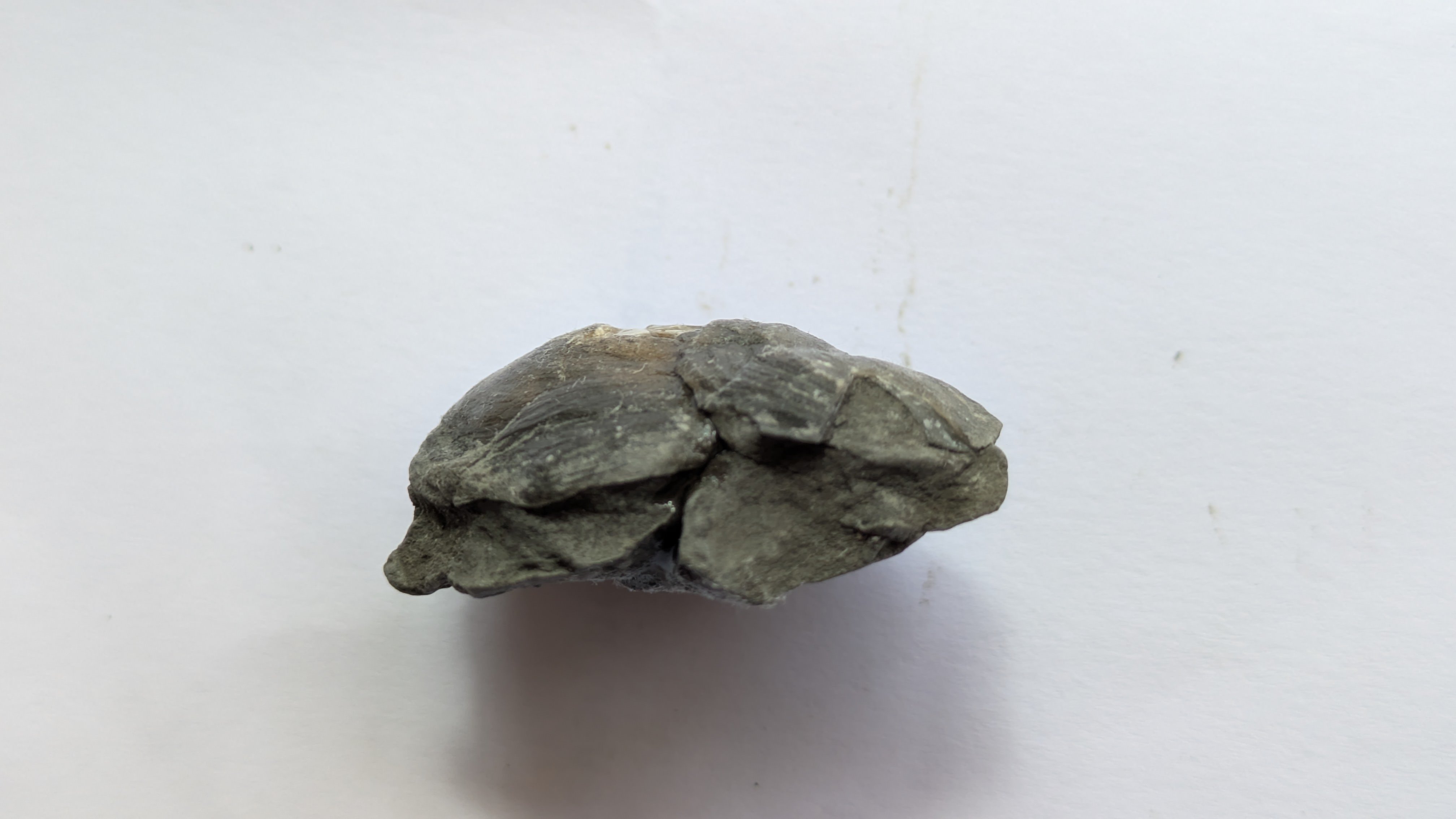
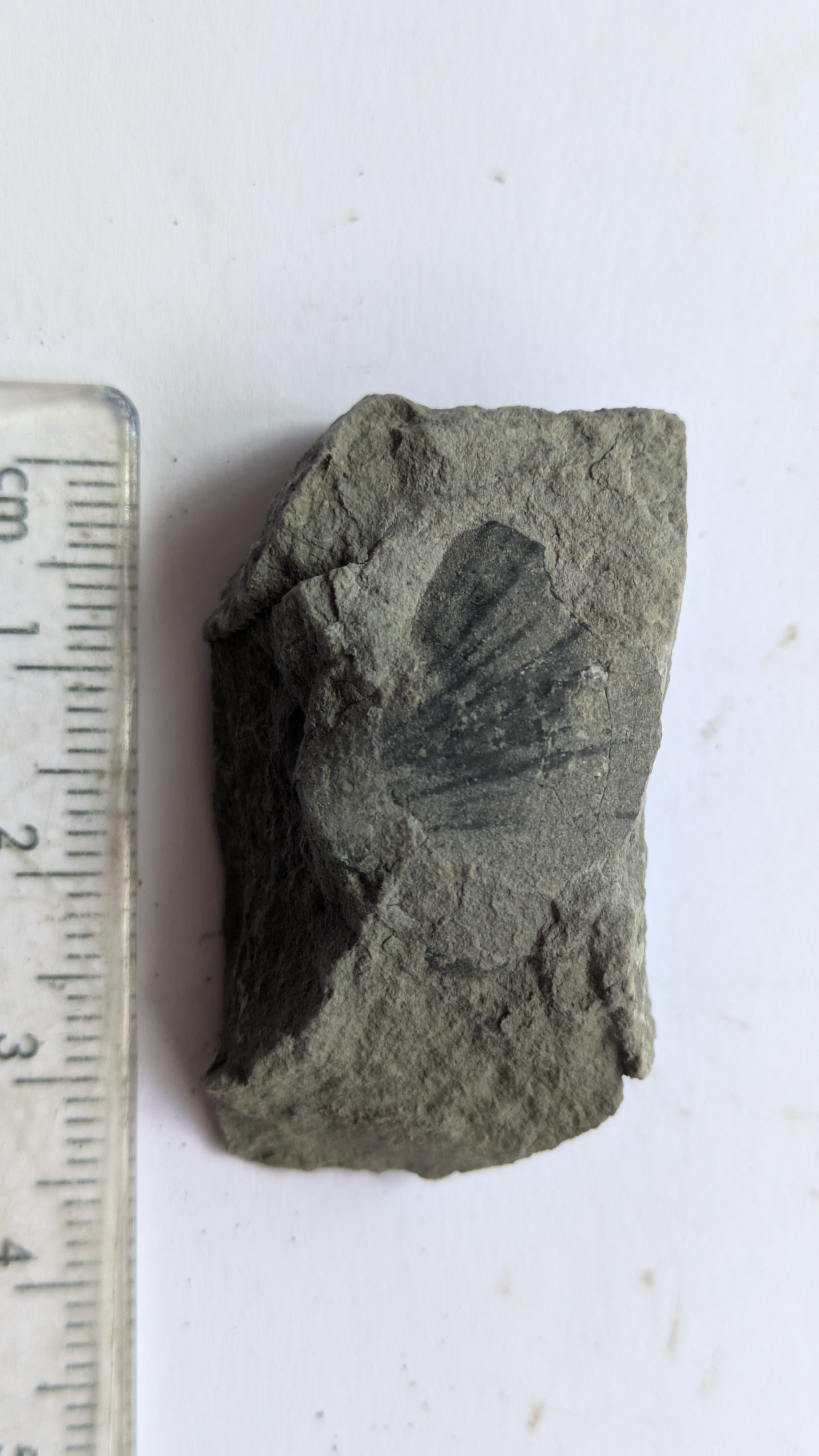
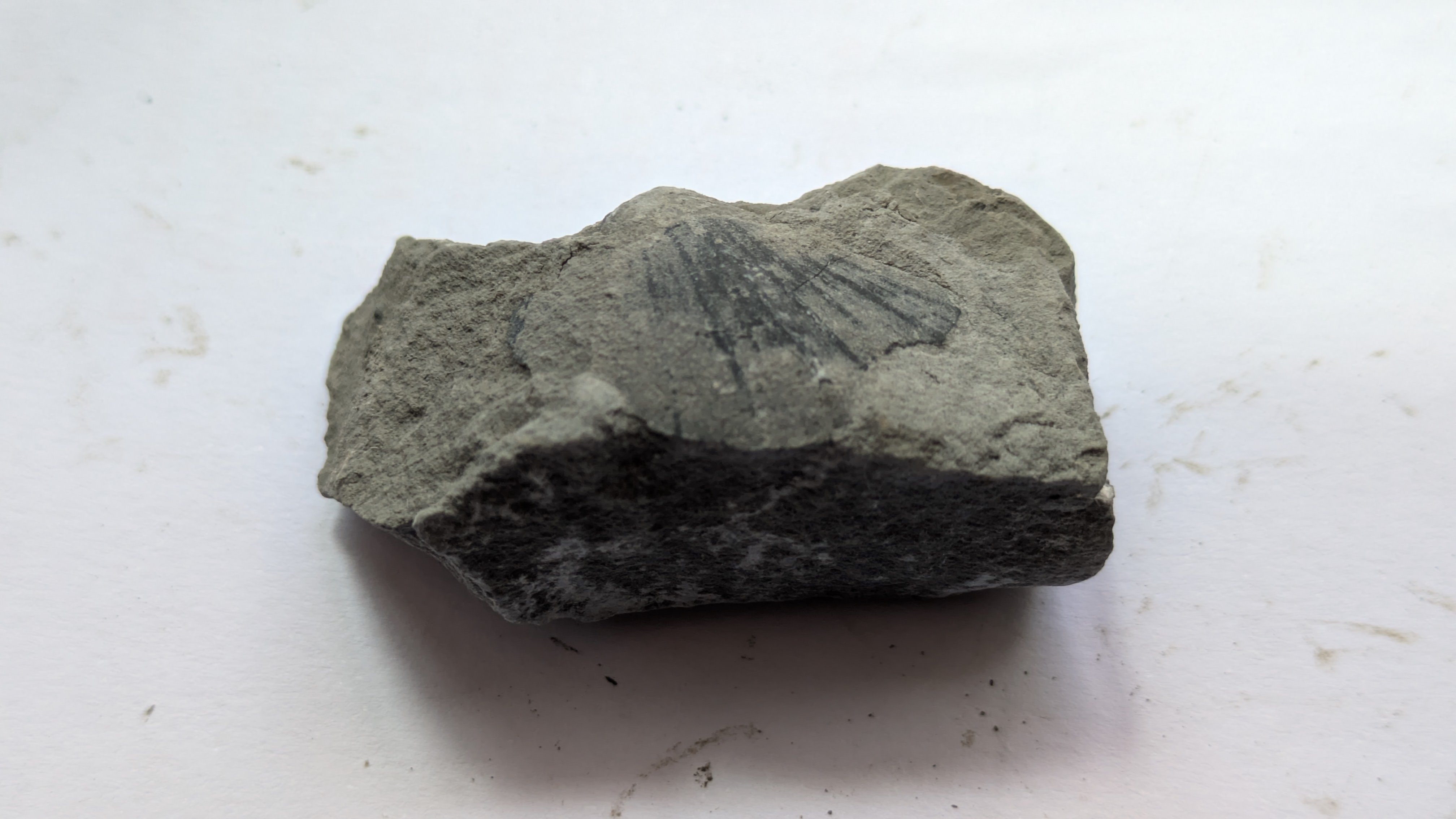
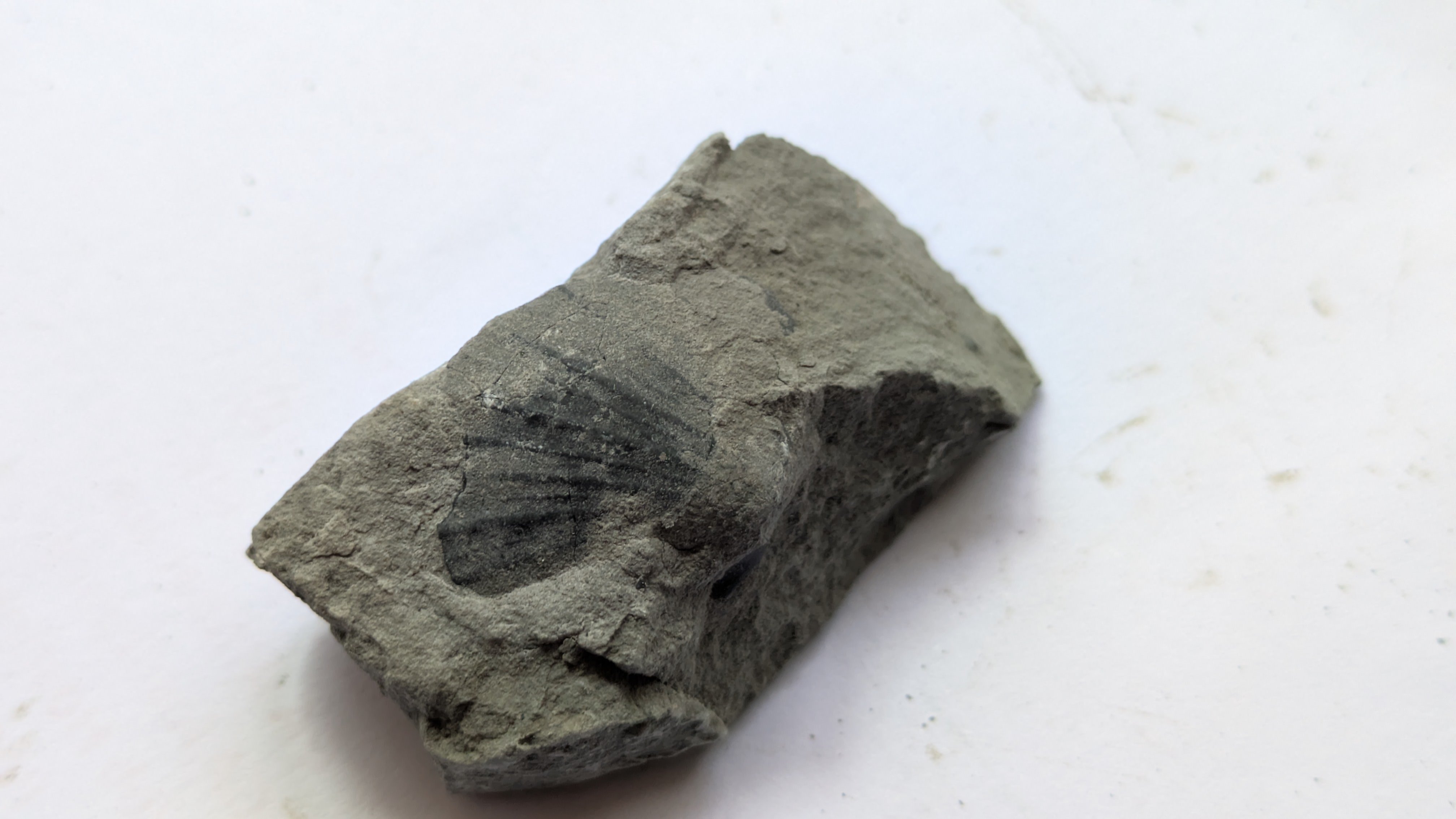
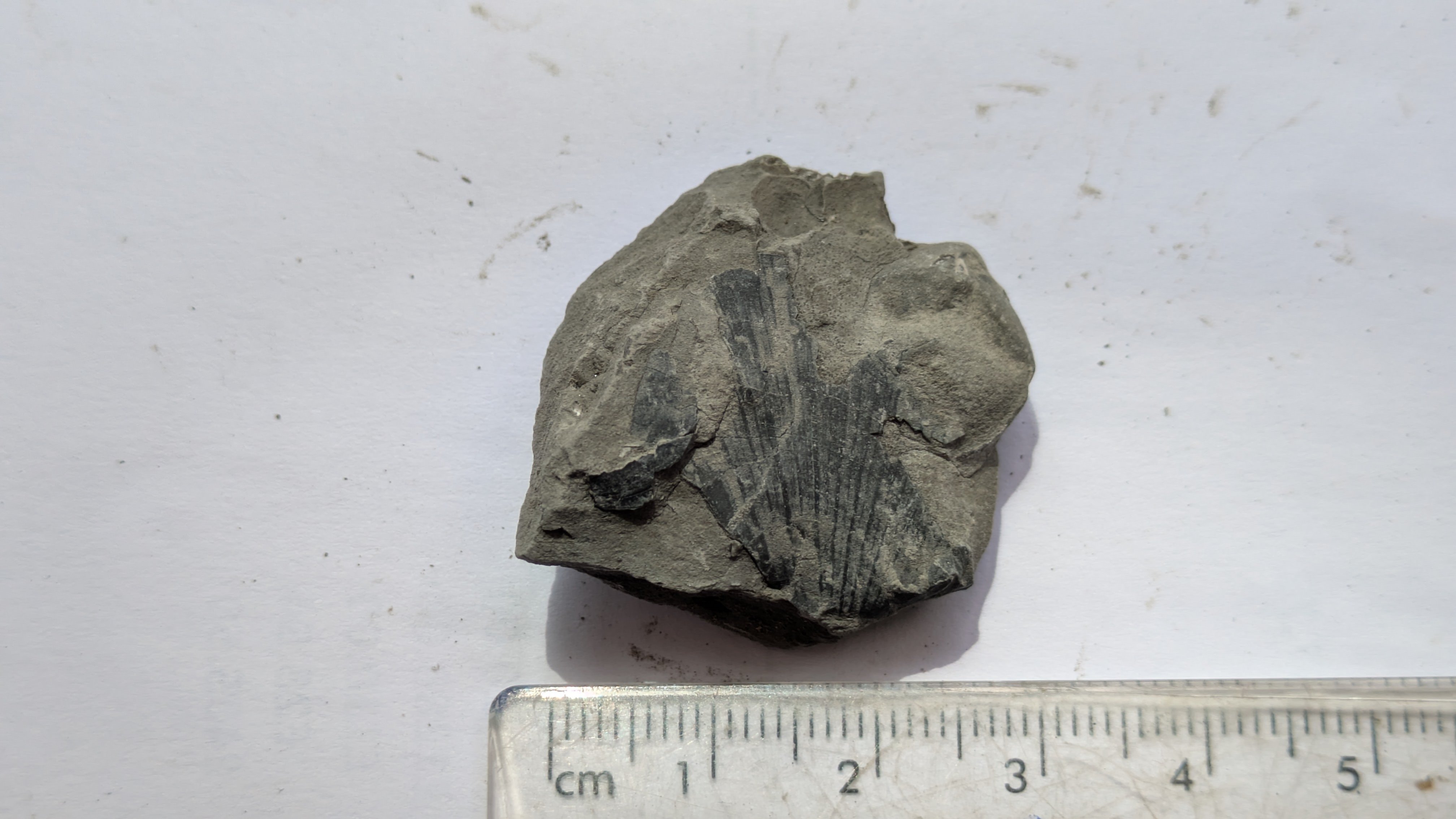
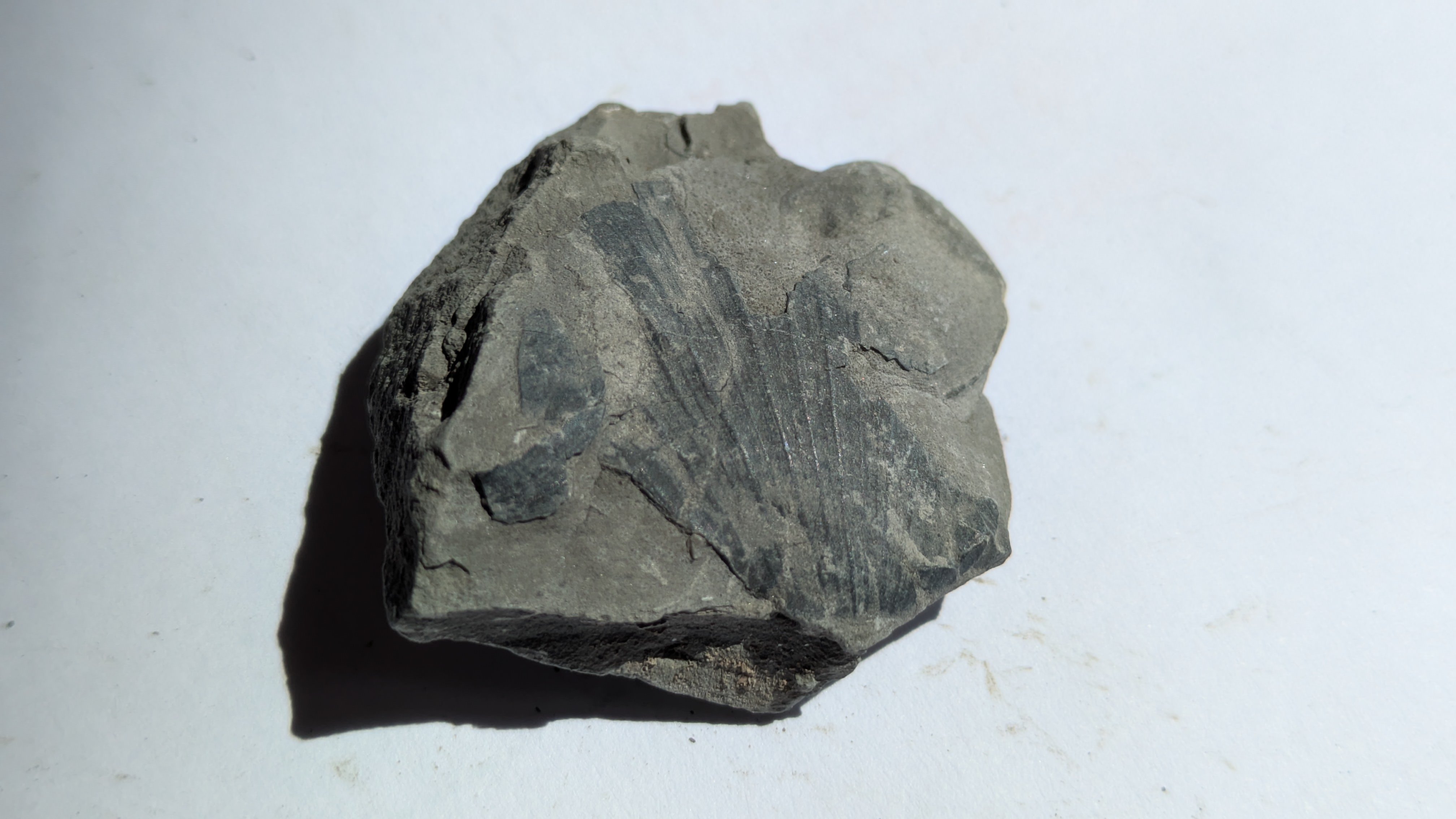
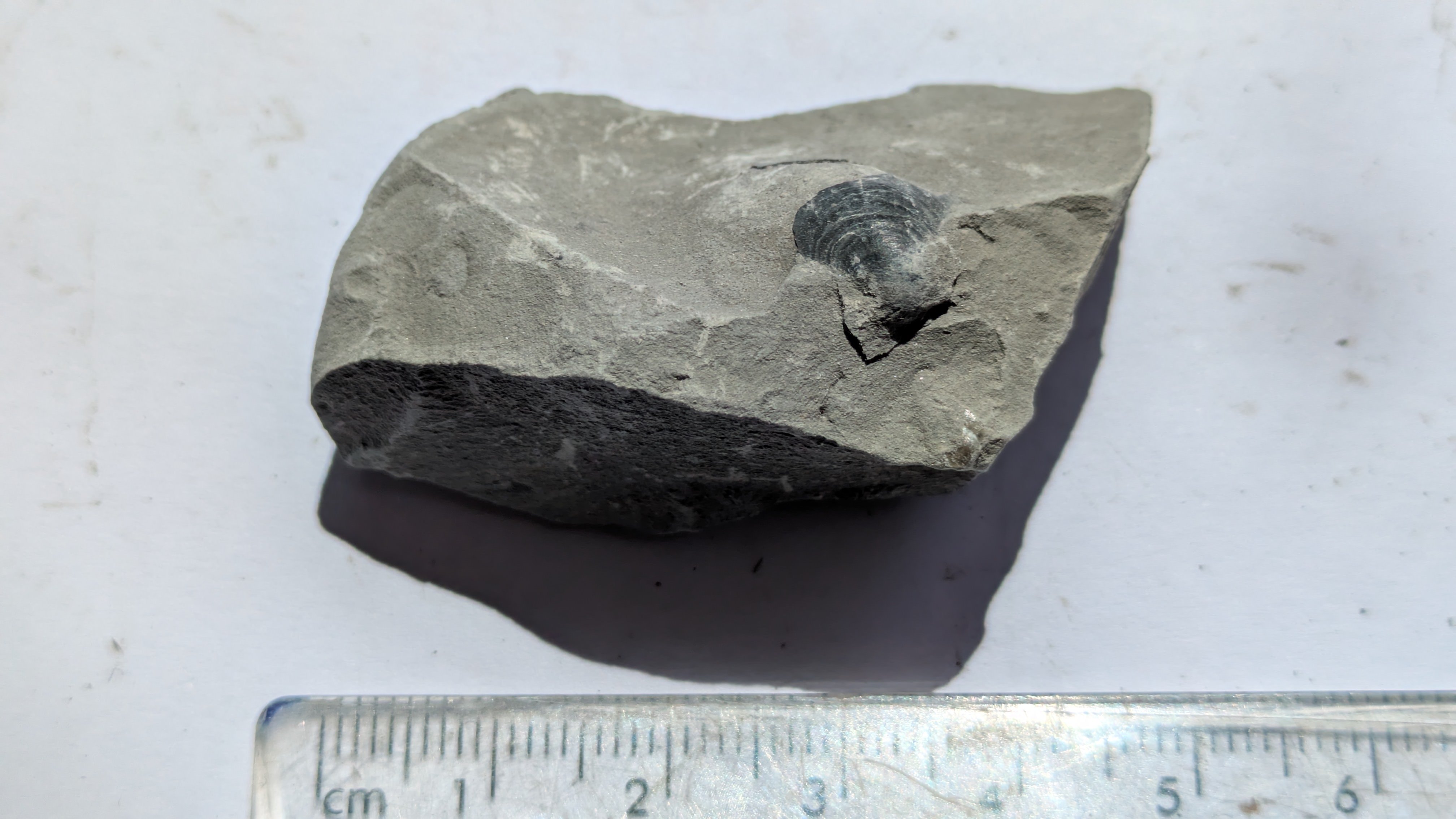
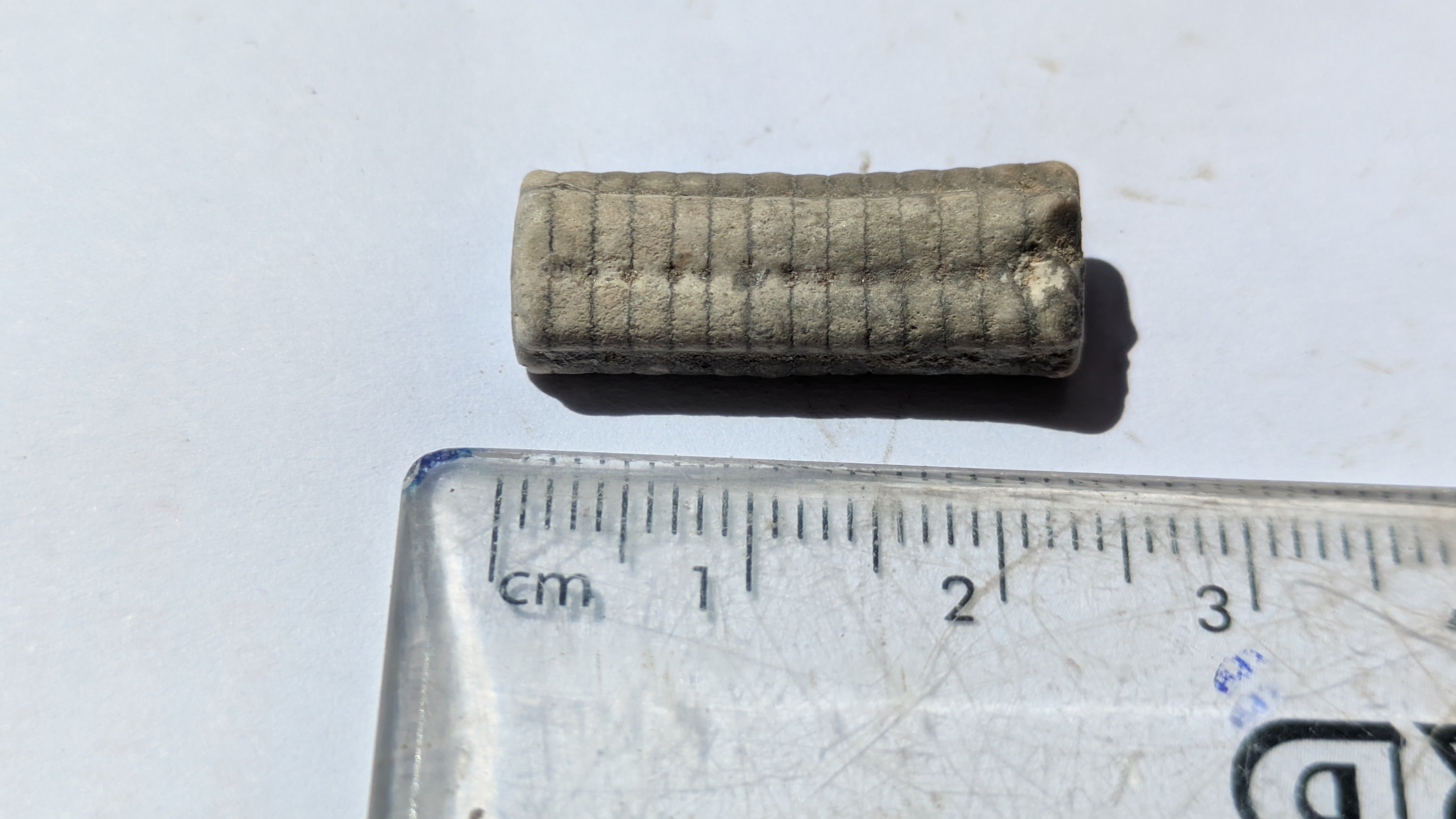
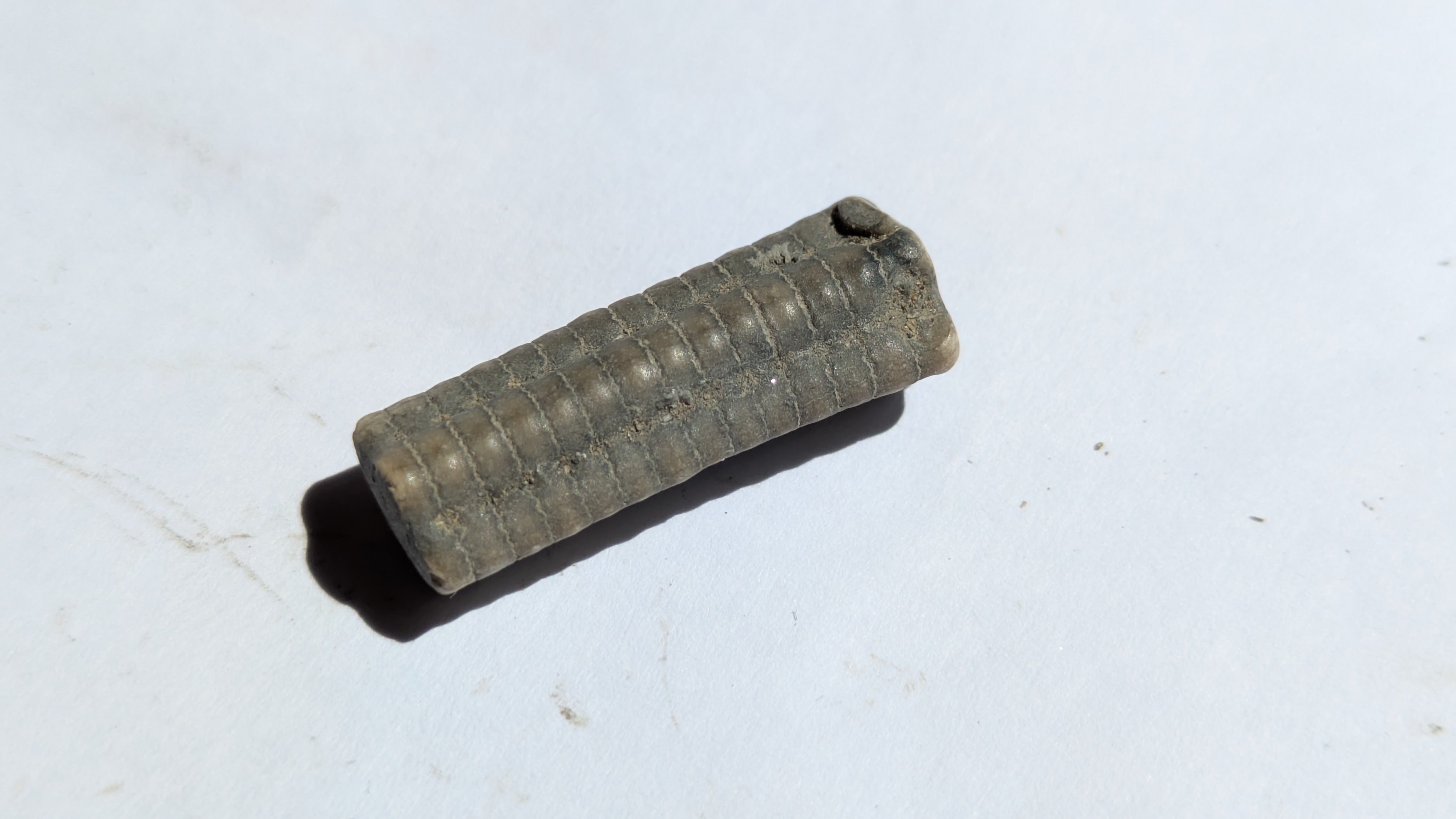
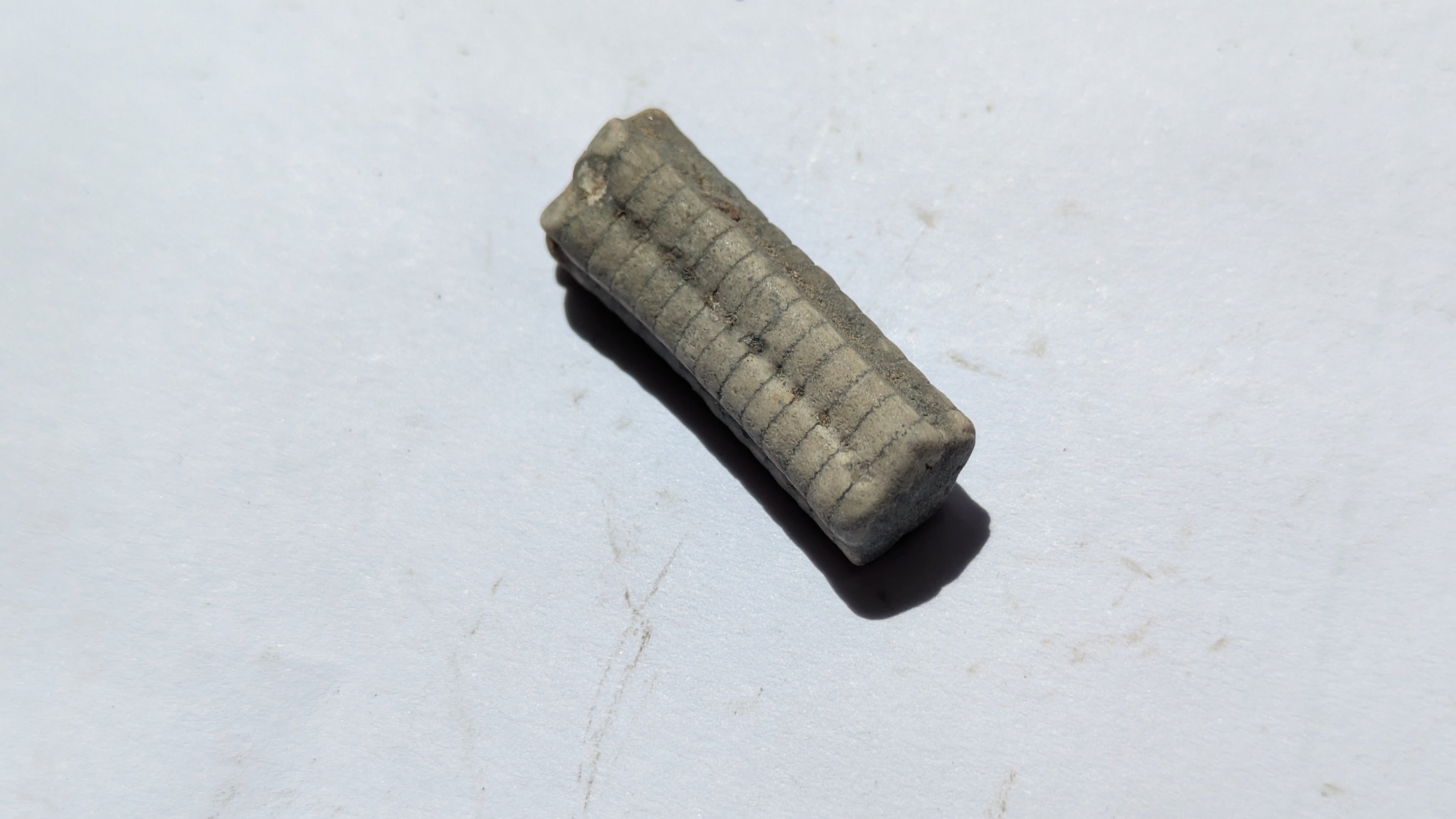
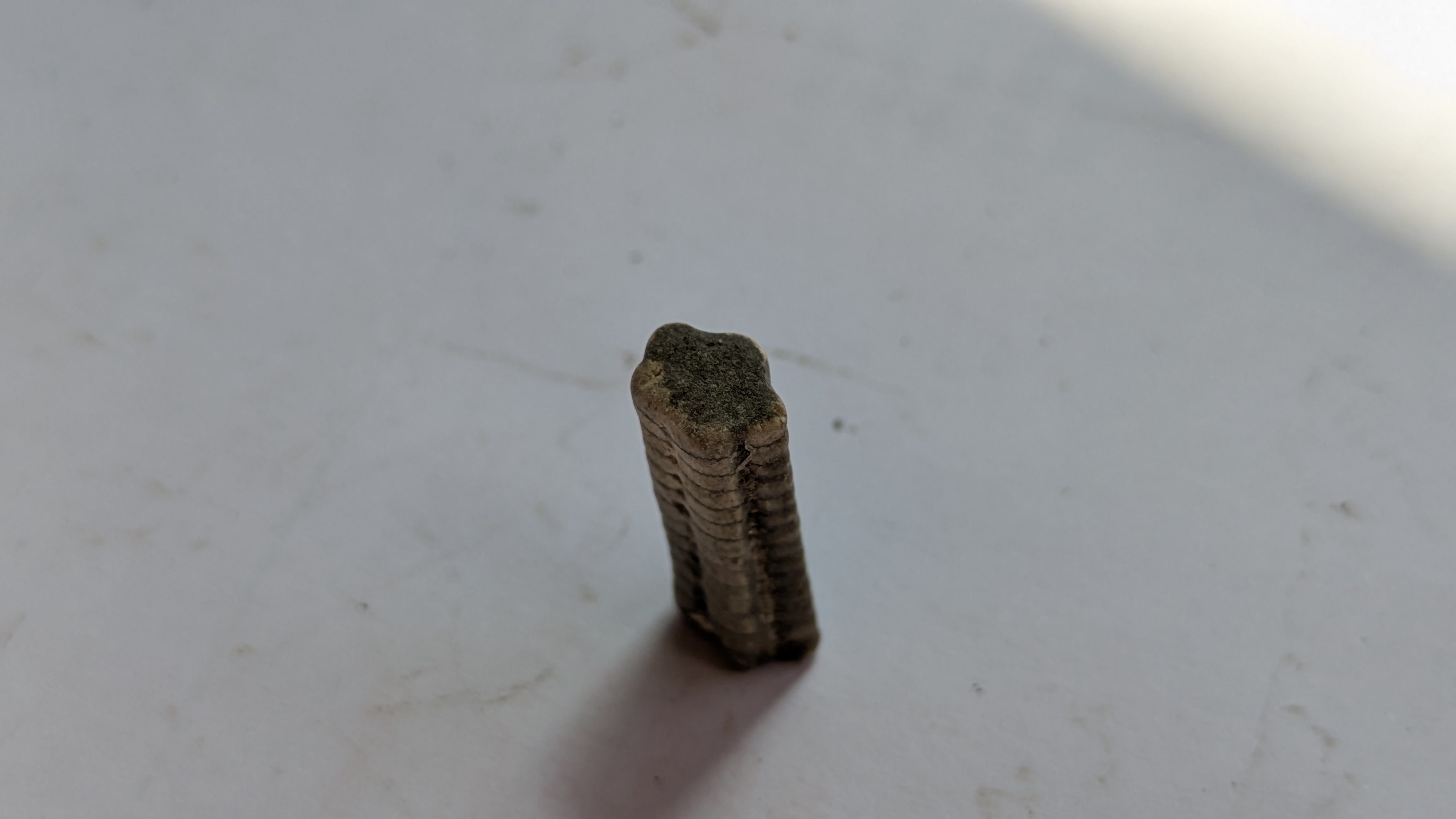
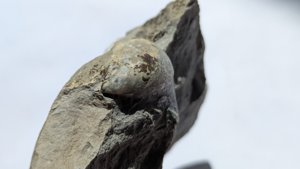
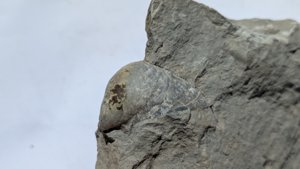
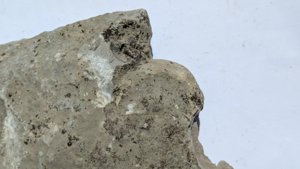
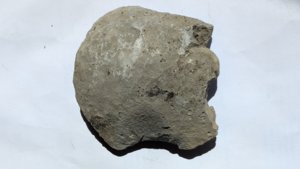
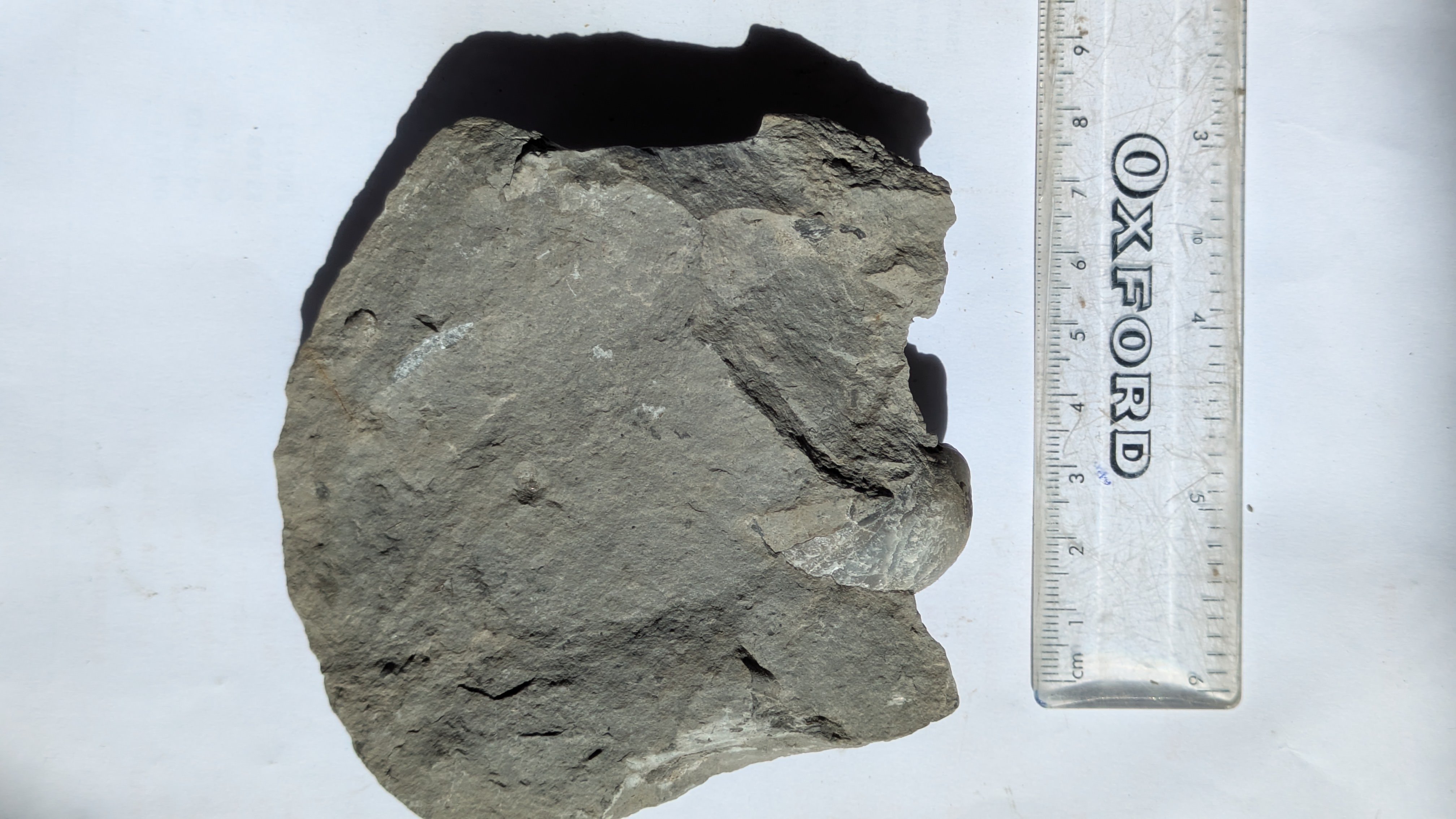
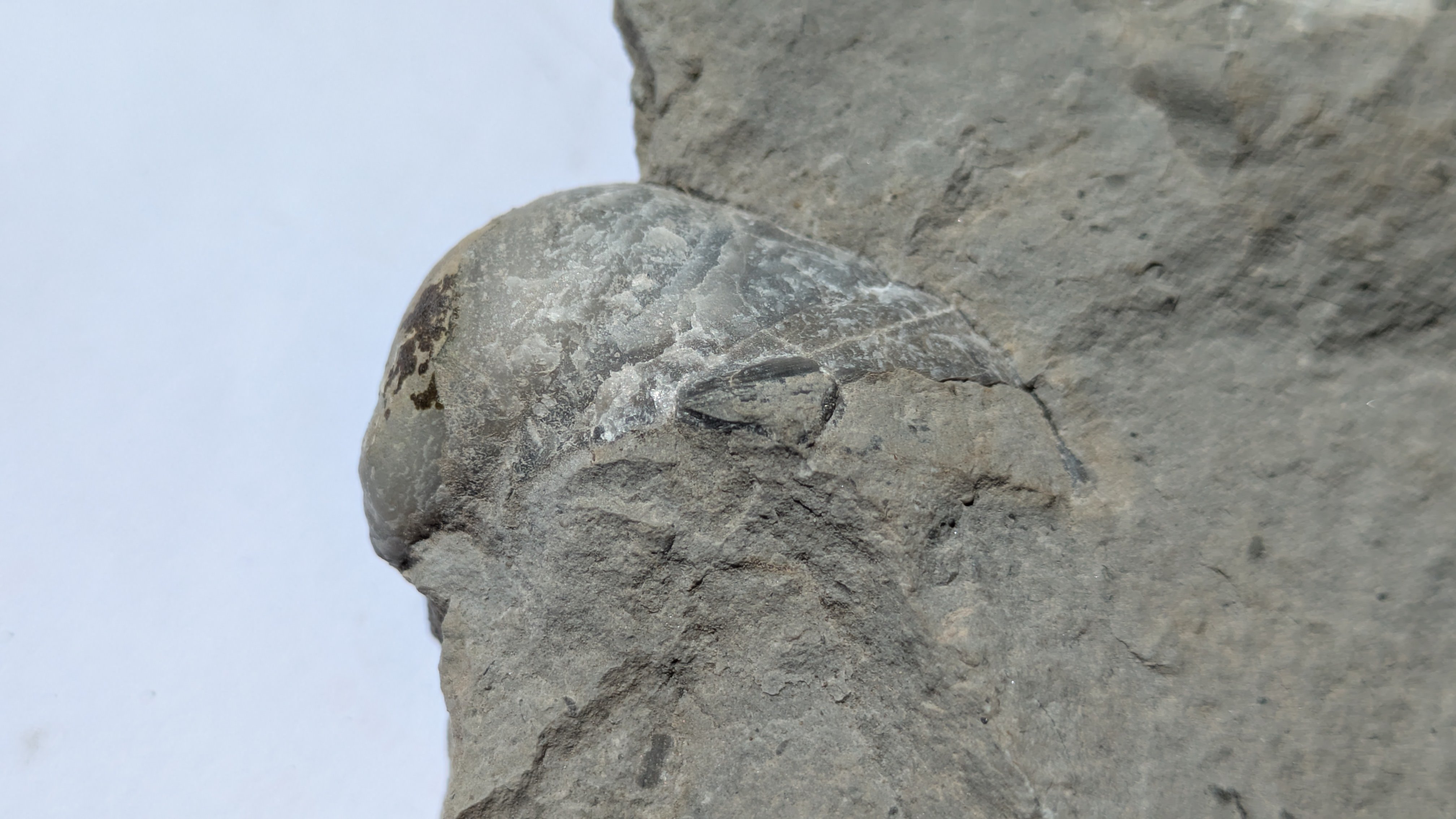
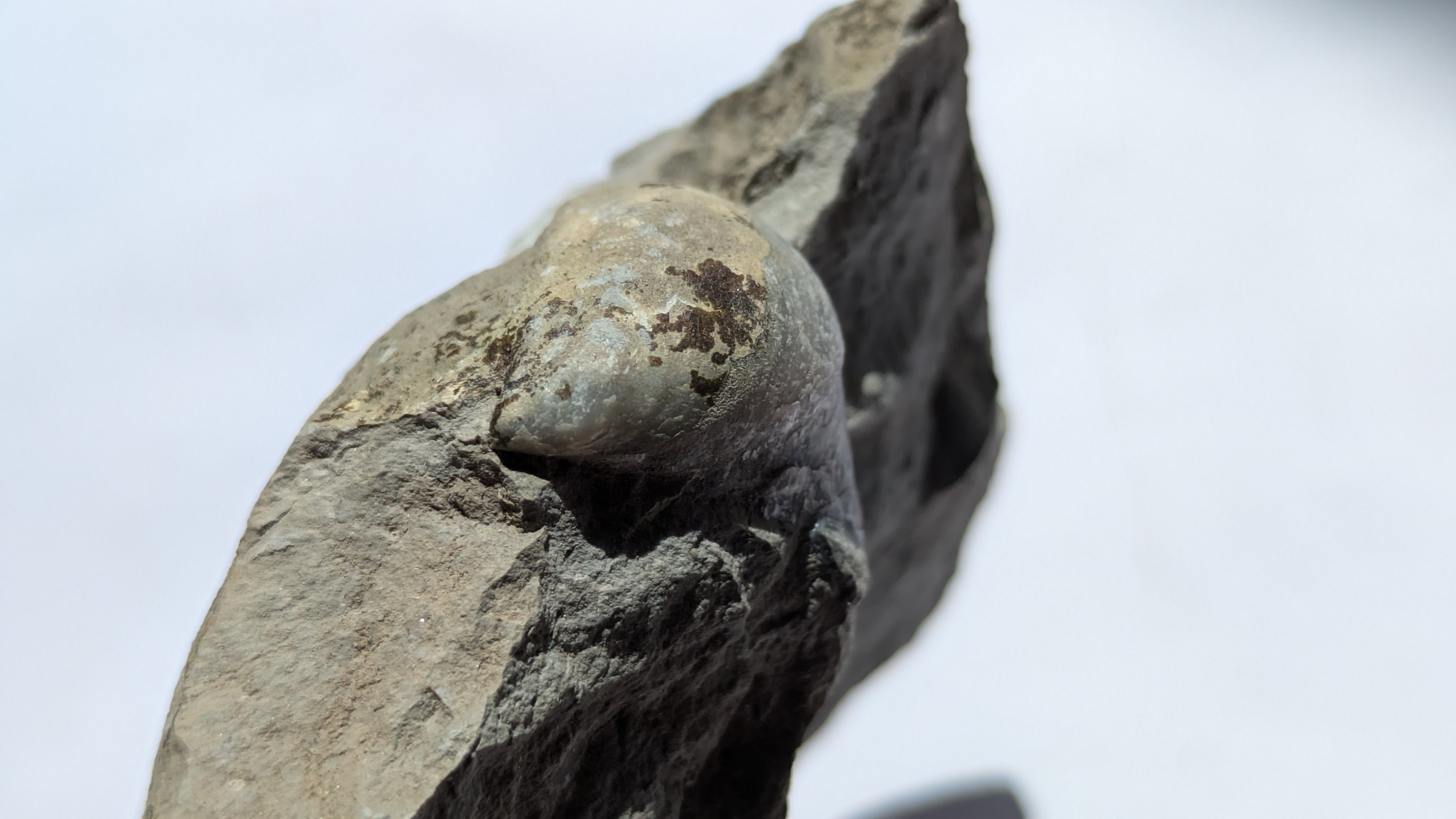
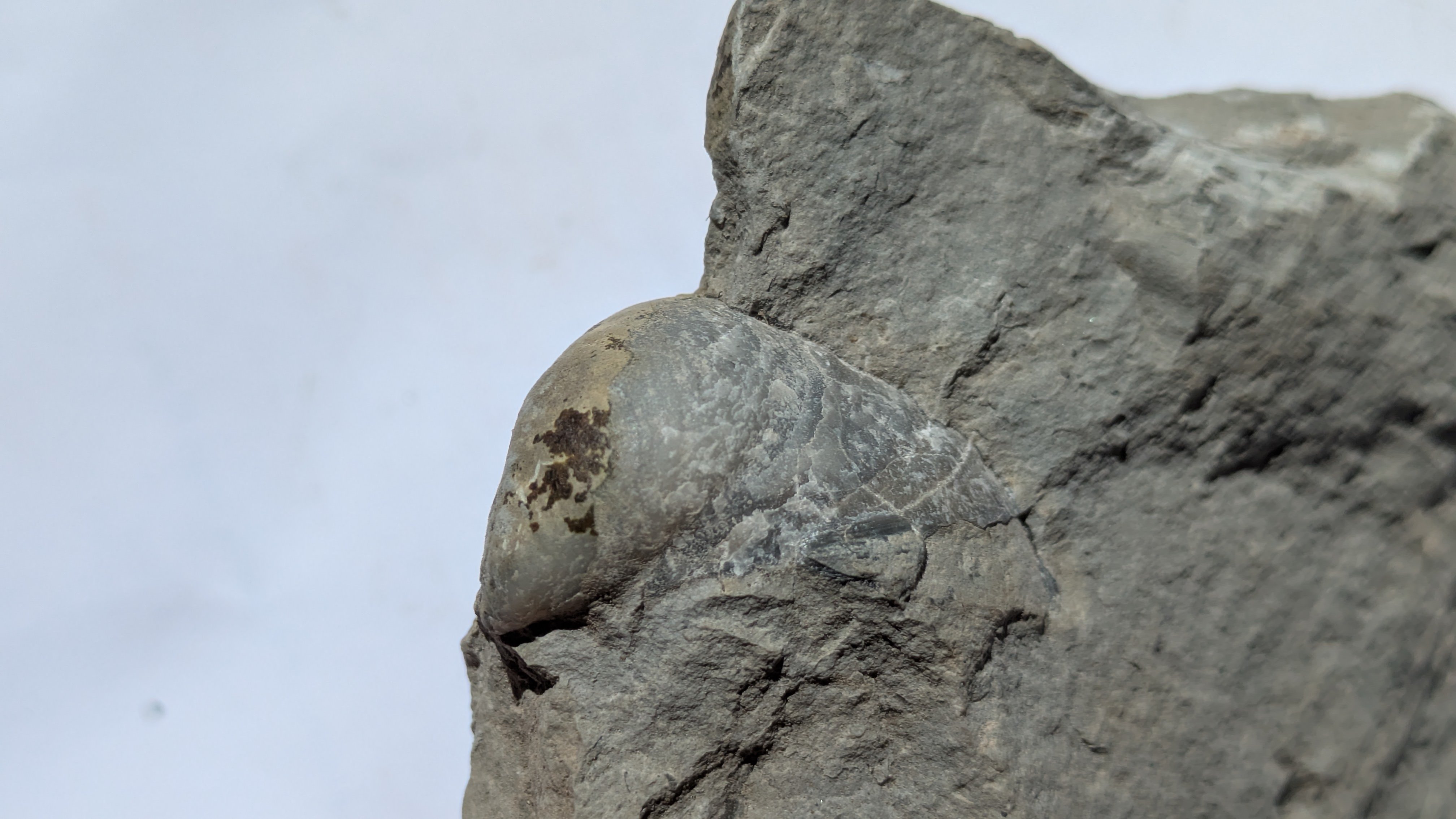
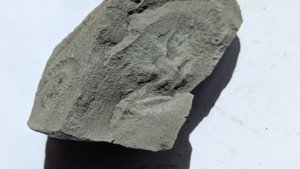
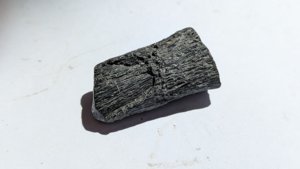
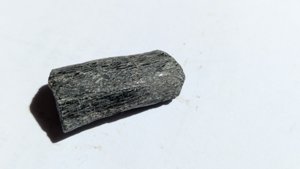
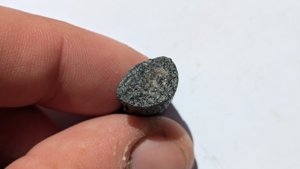
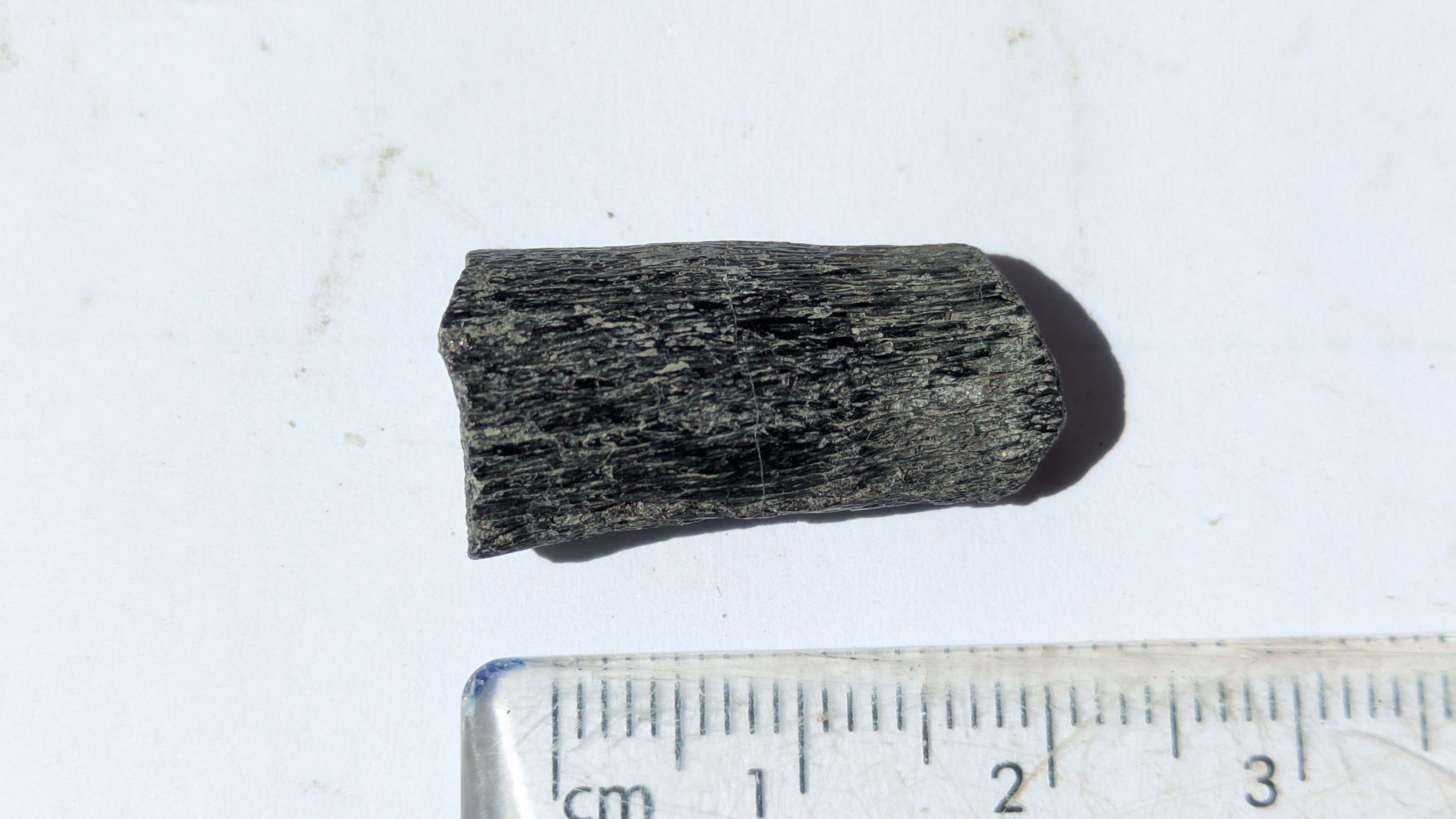
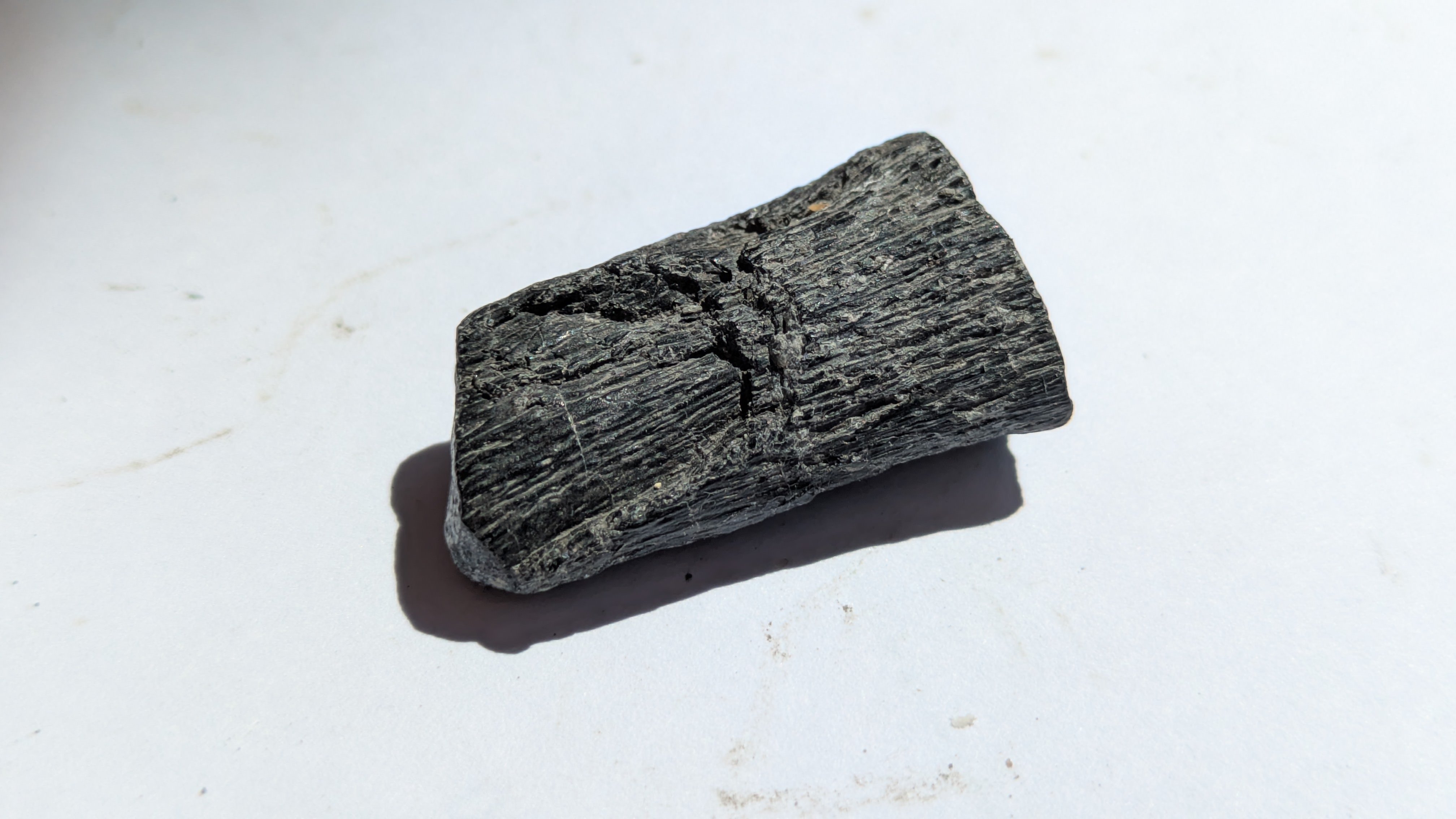
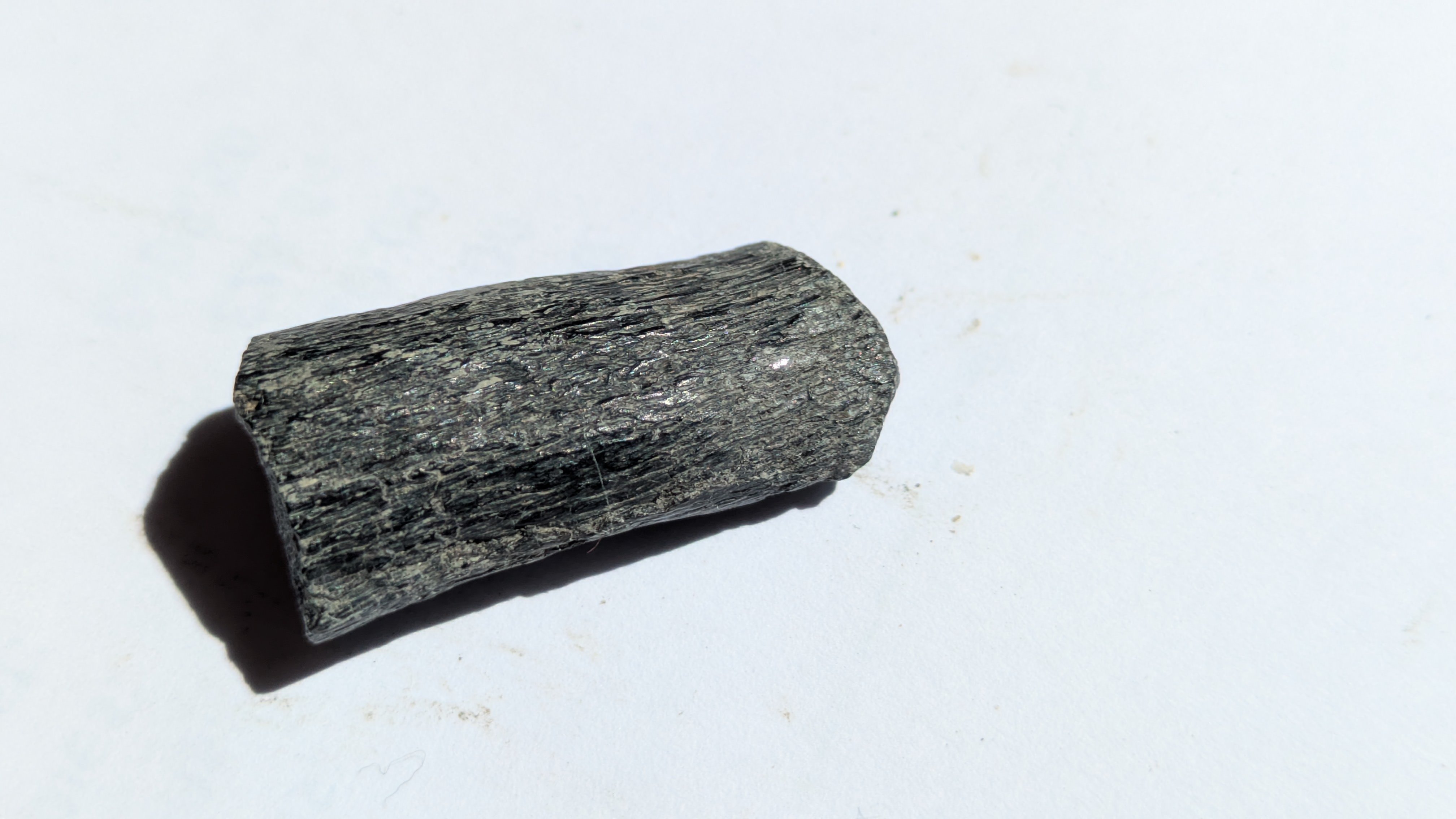
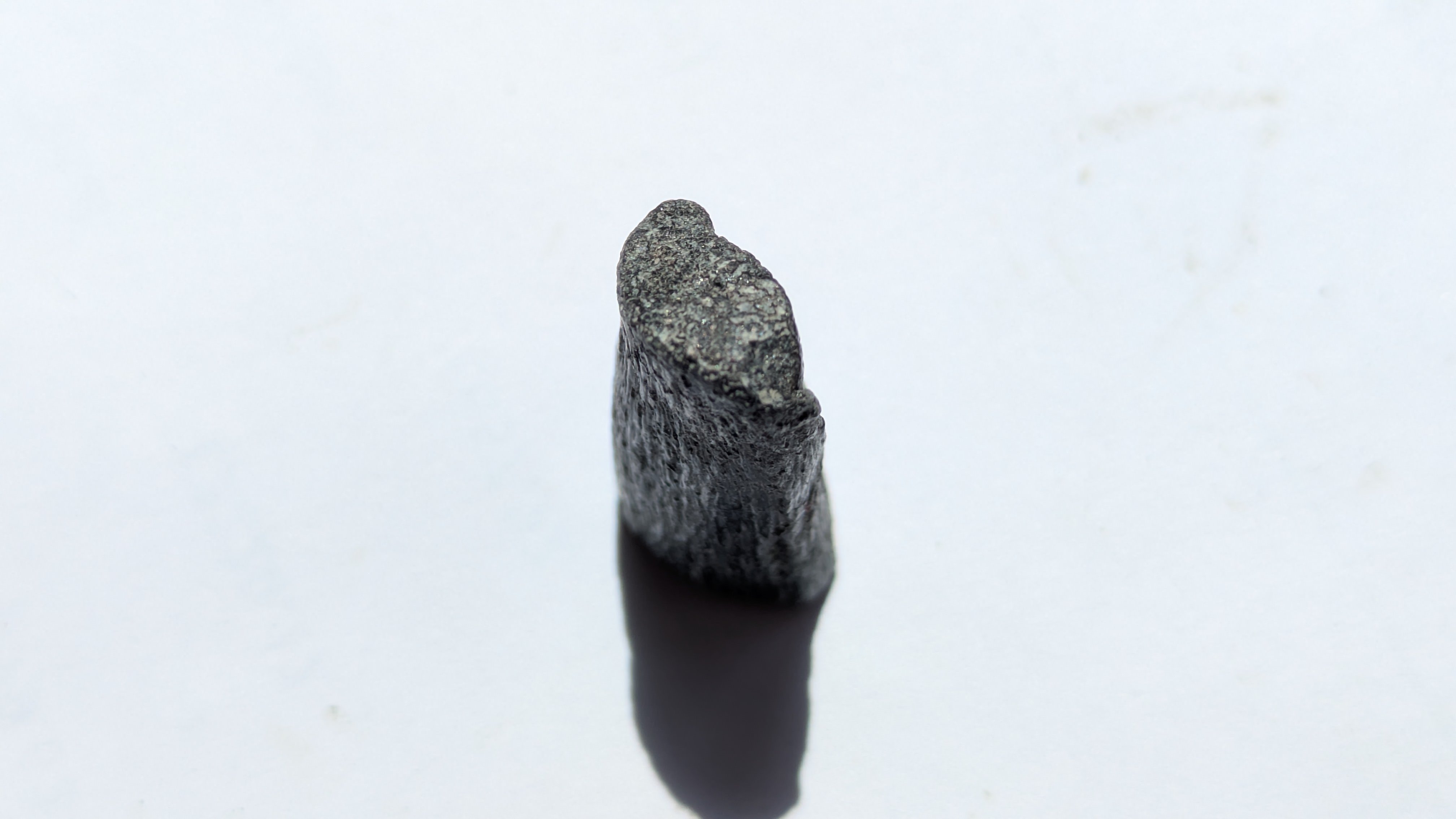
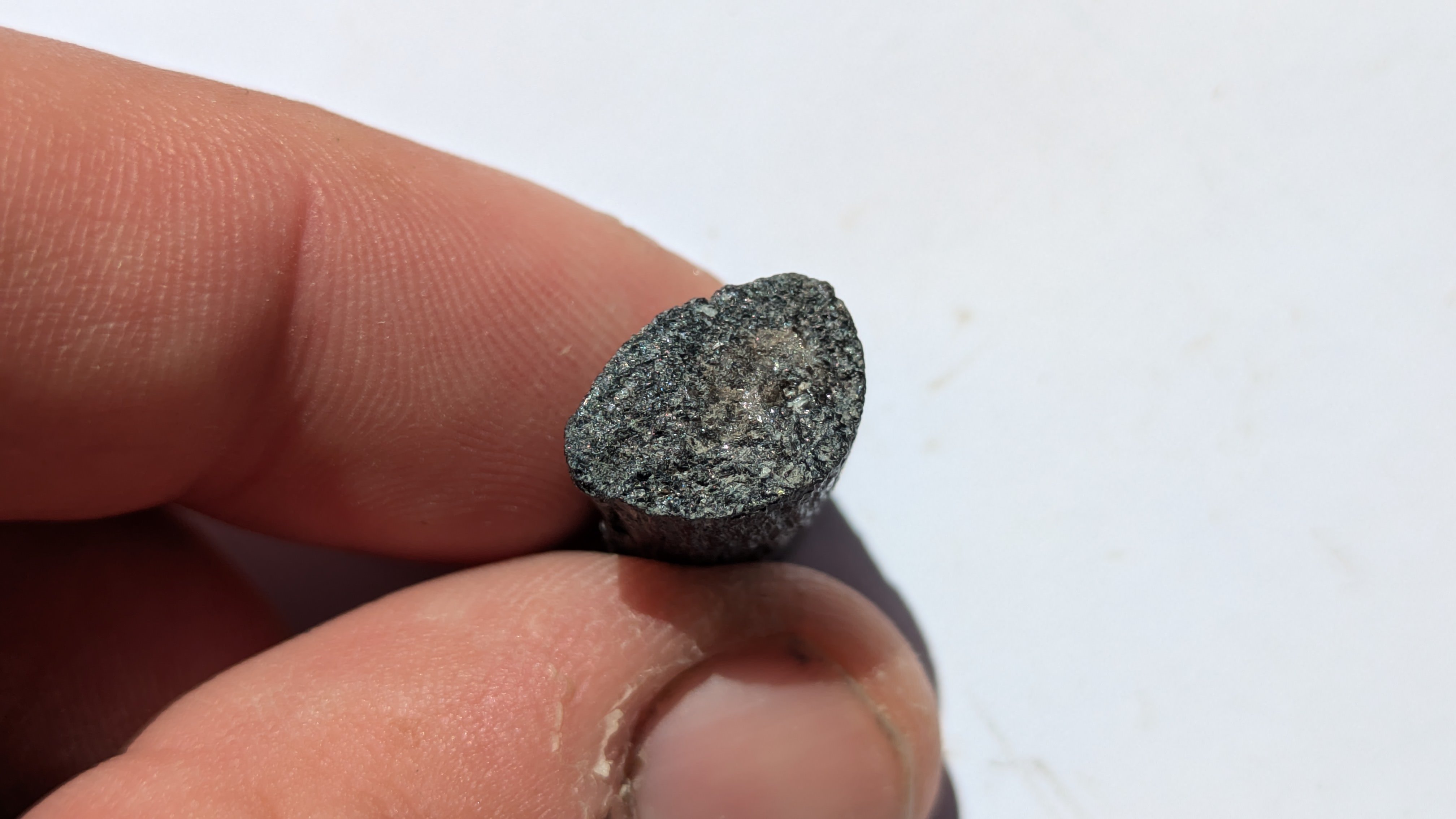
Blue Lias Formation and lower Charmouth Mudstone Formation
Depositional environment
Shallow marine shelf with alternating limestone, marl, and mudstone, fluctuating seafloor oxygen levels, and occasional terrestrial material carried from nearby land
Fossil types
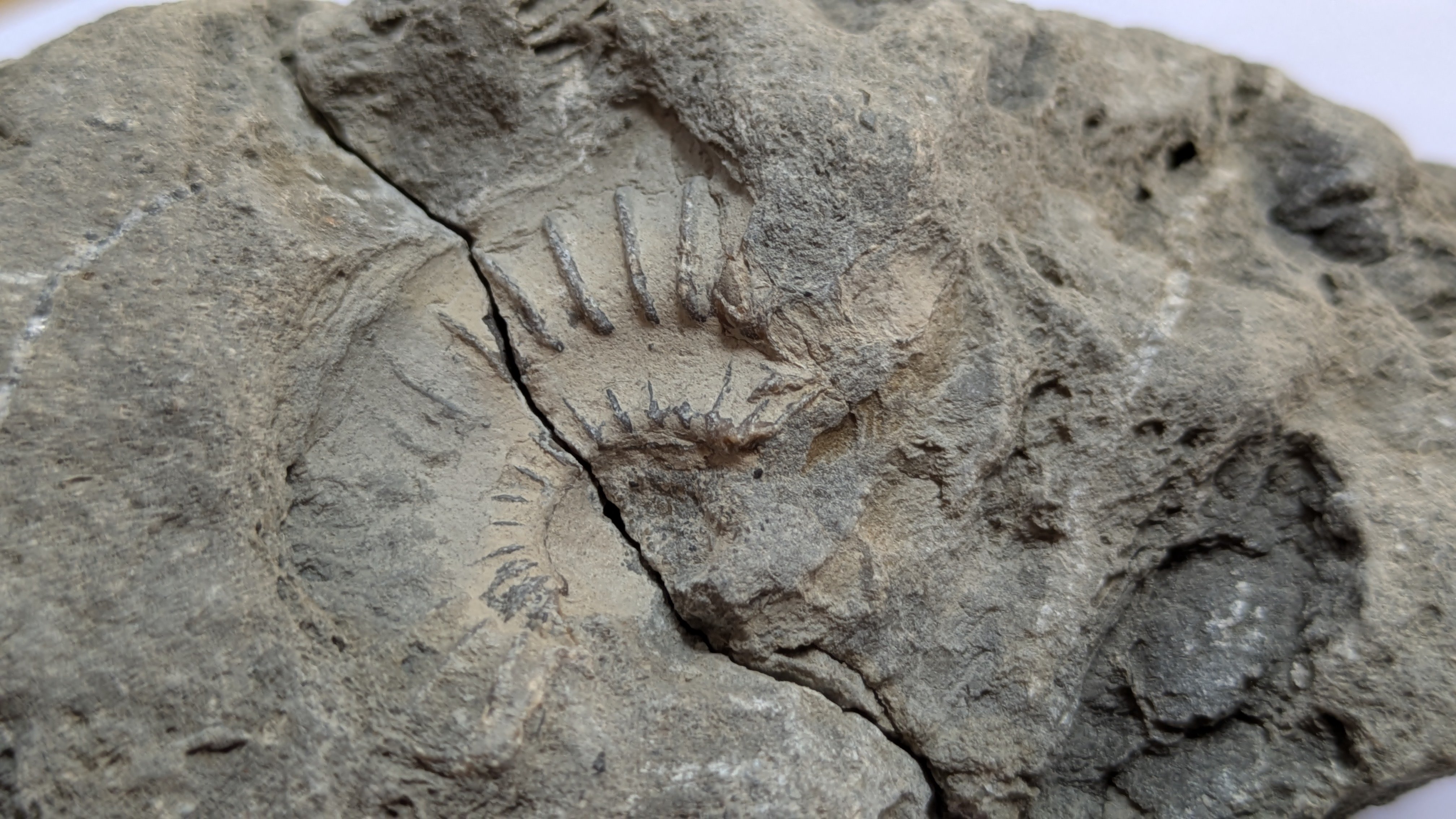
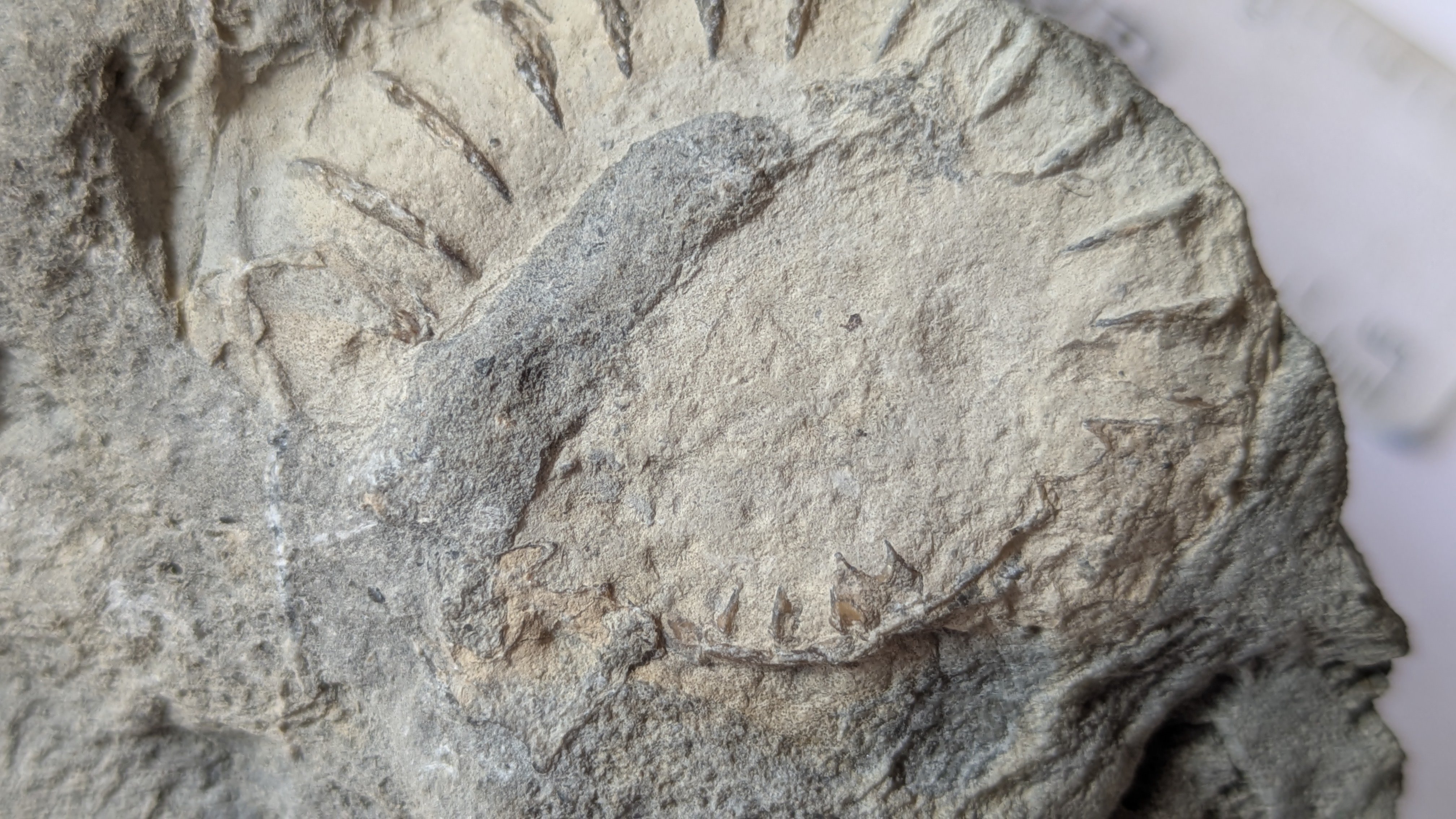
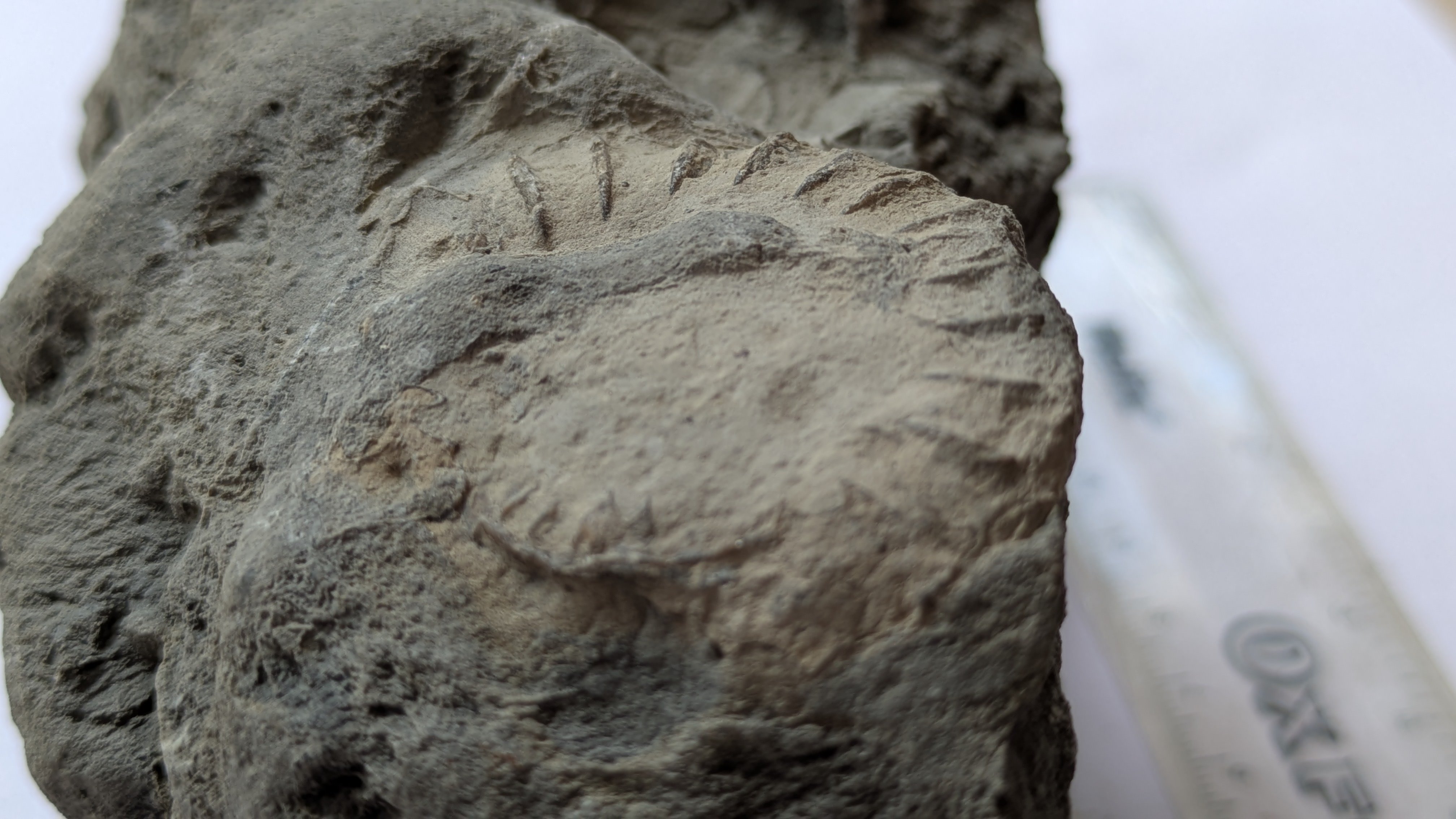
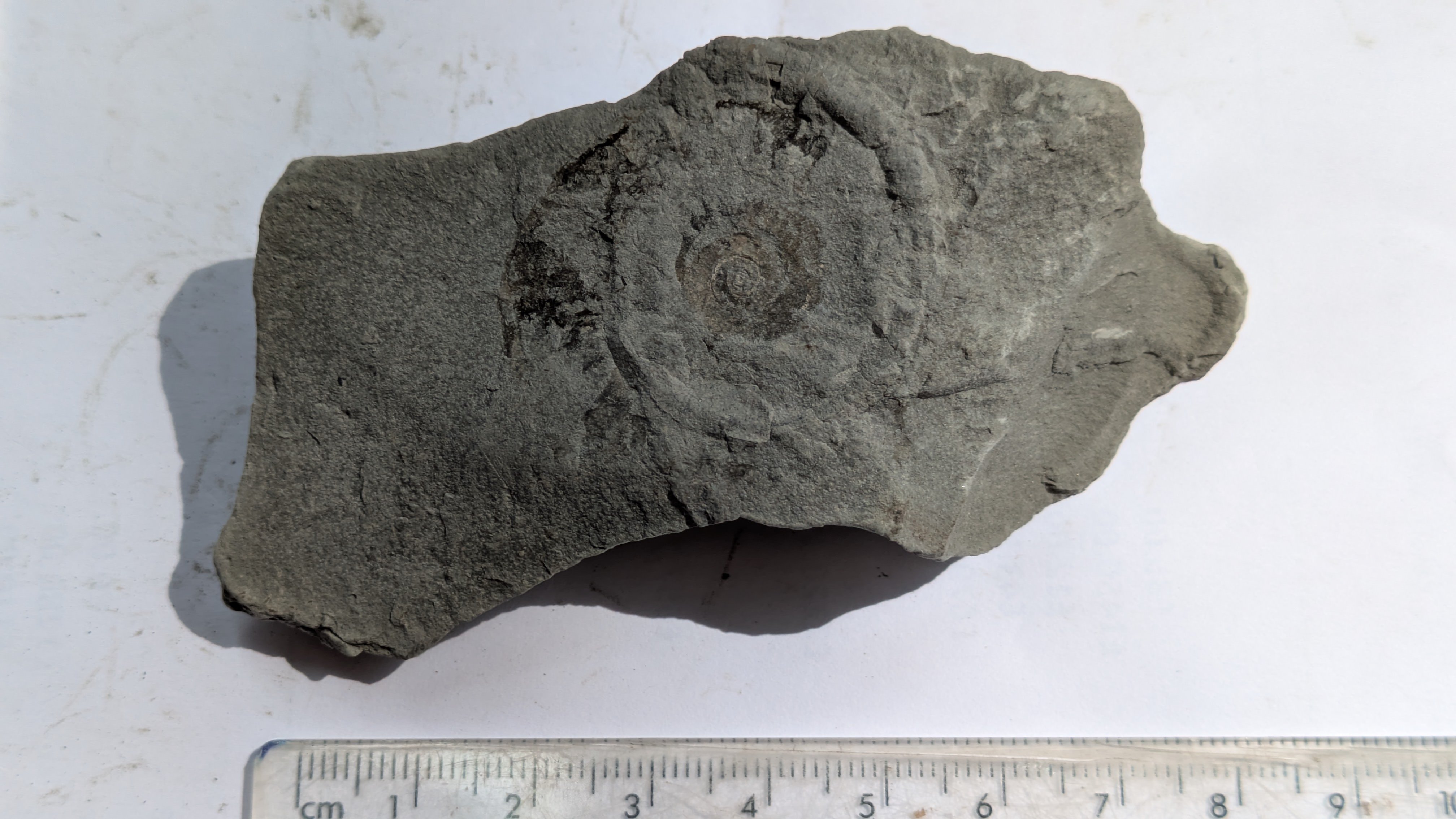
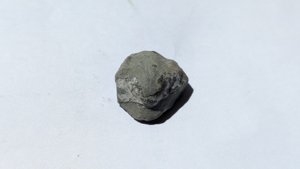
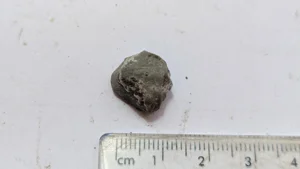
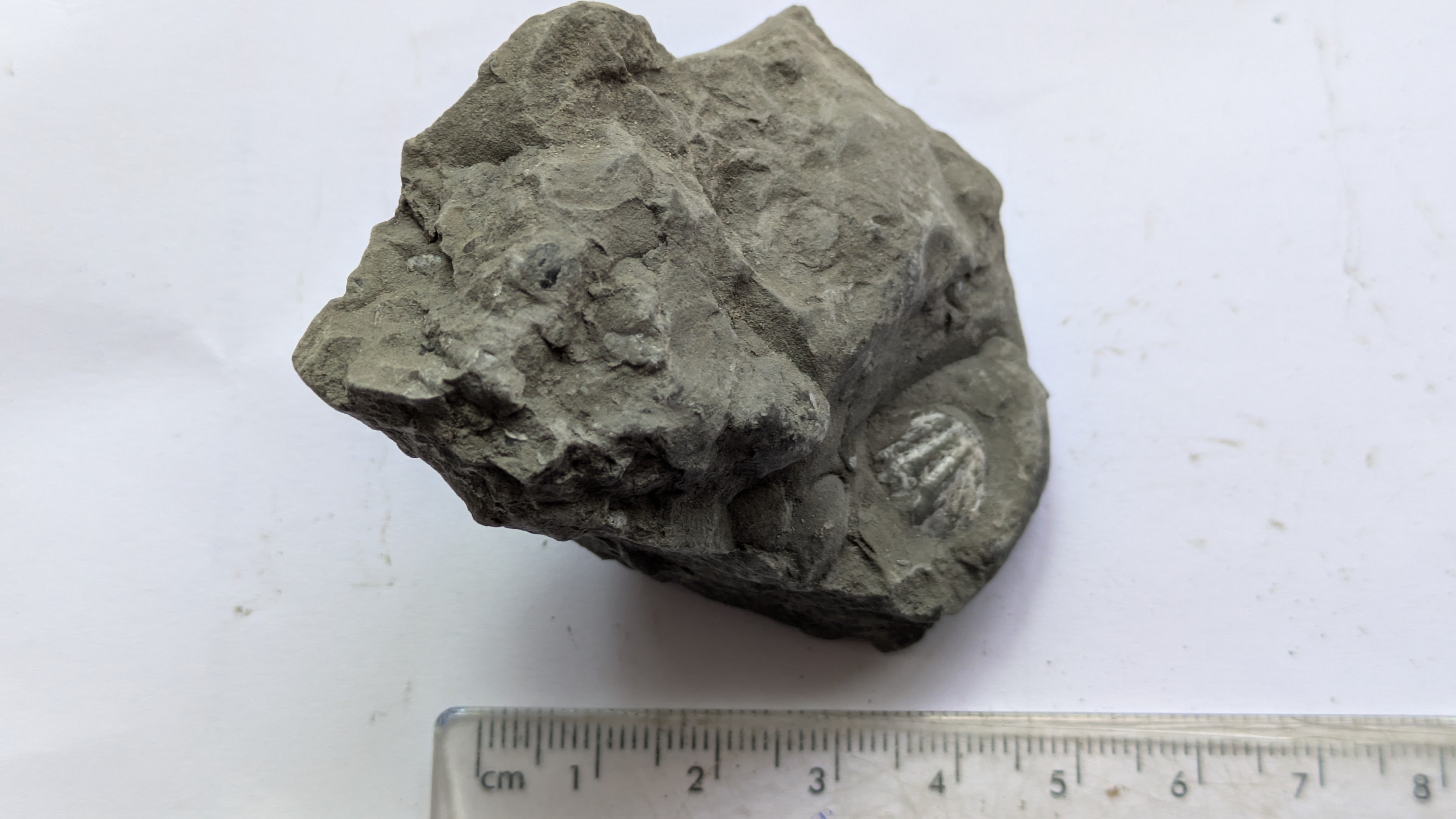
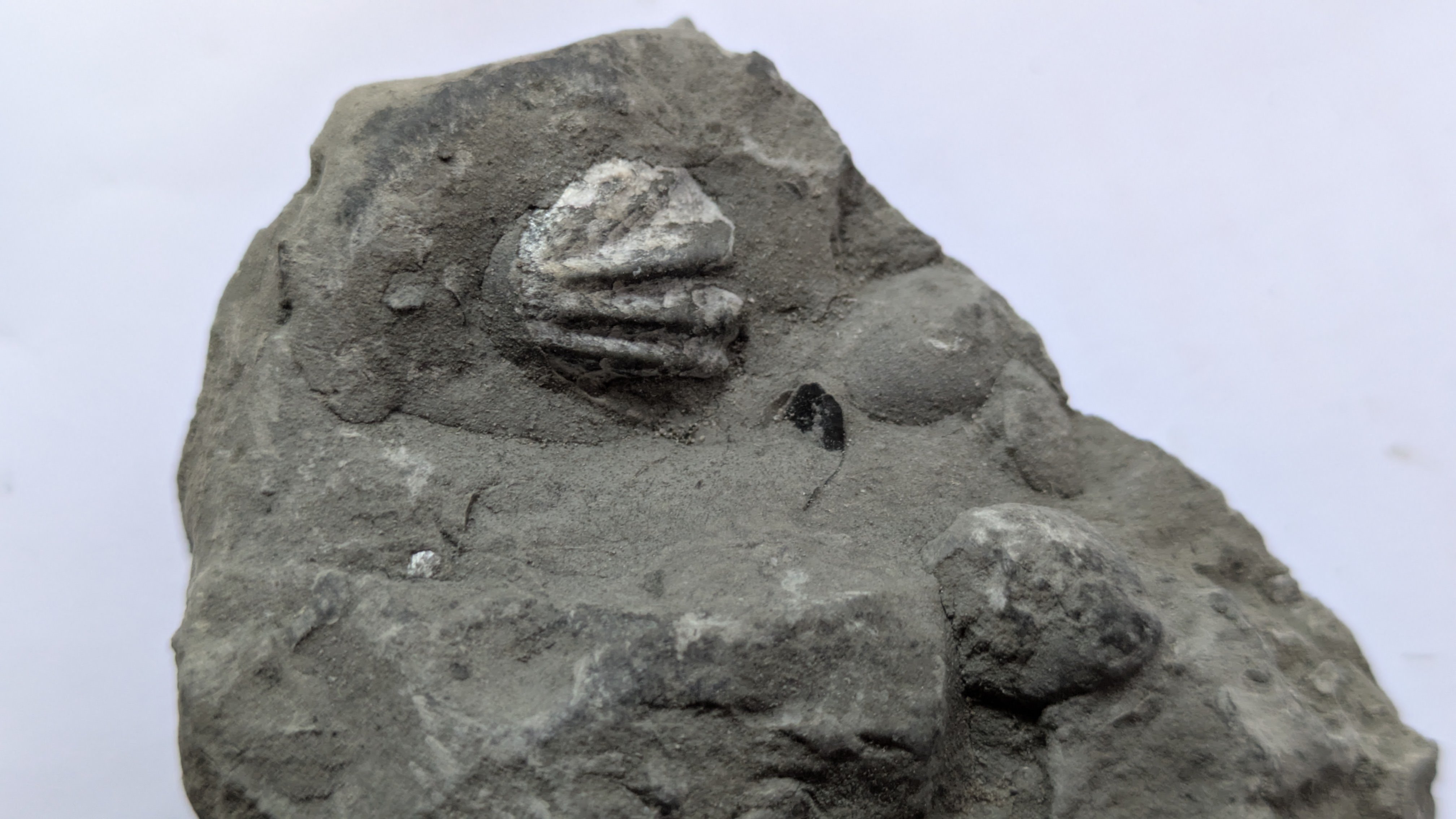
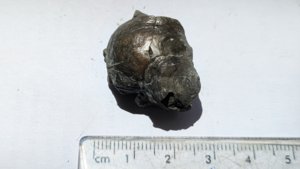
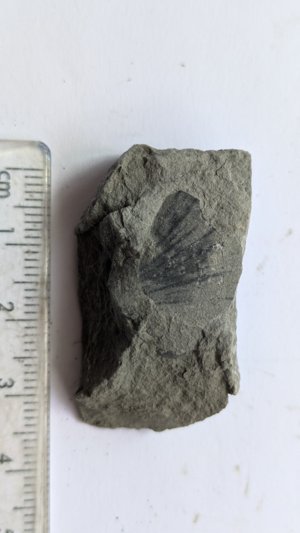
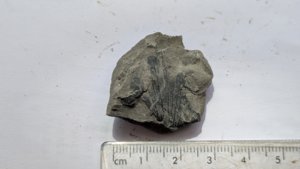
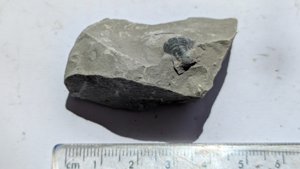
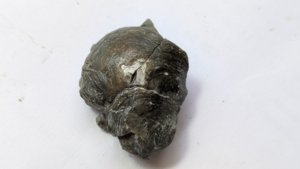
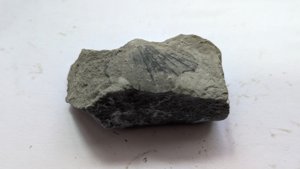
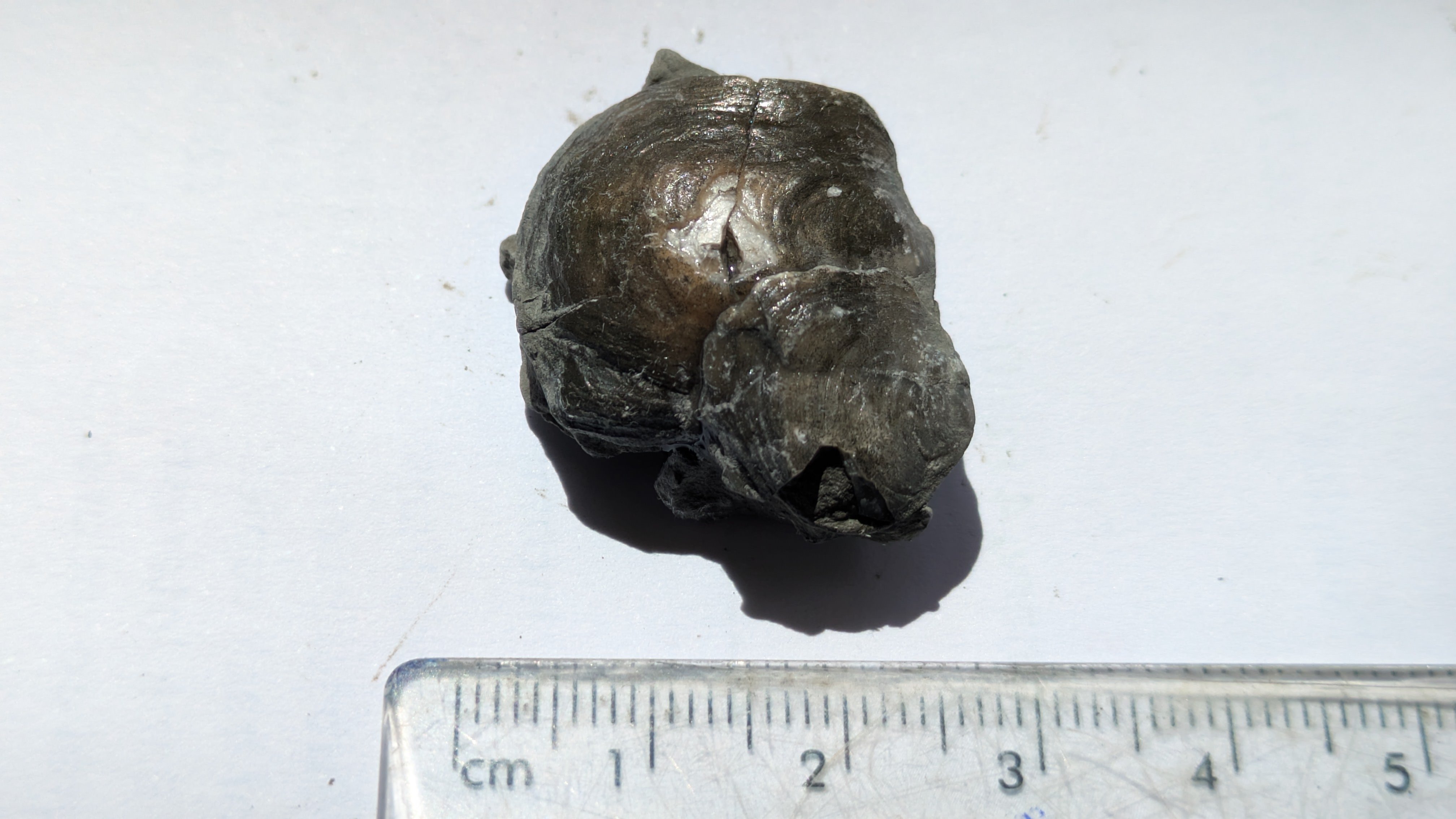
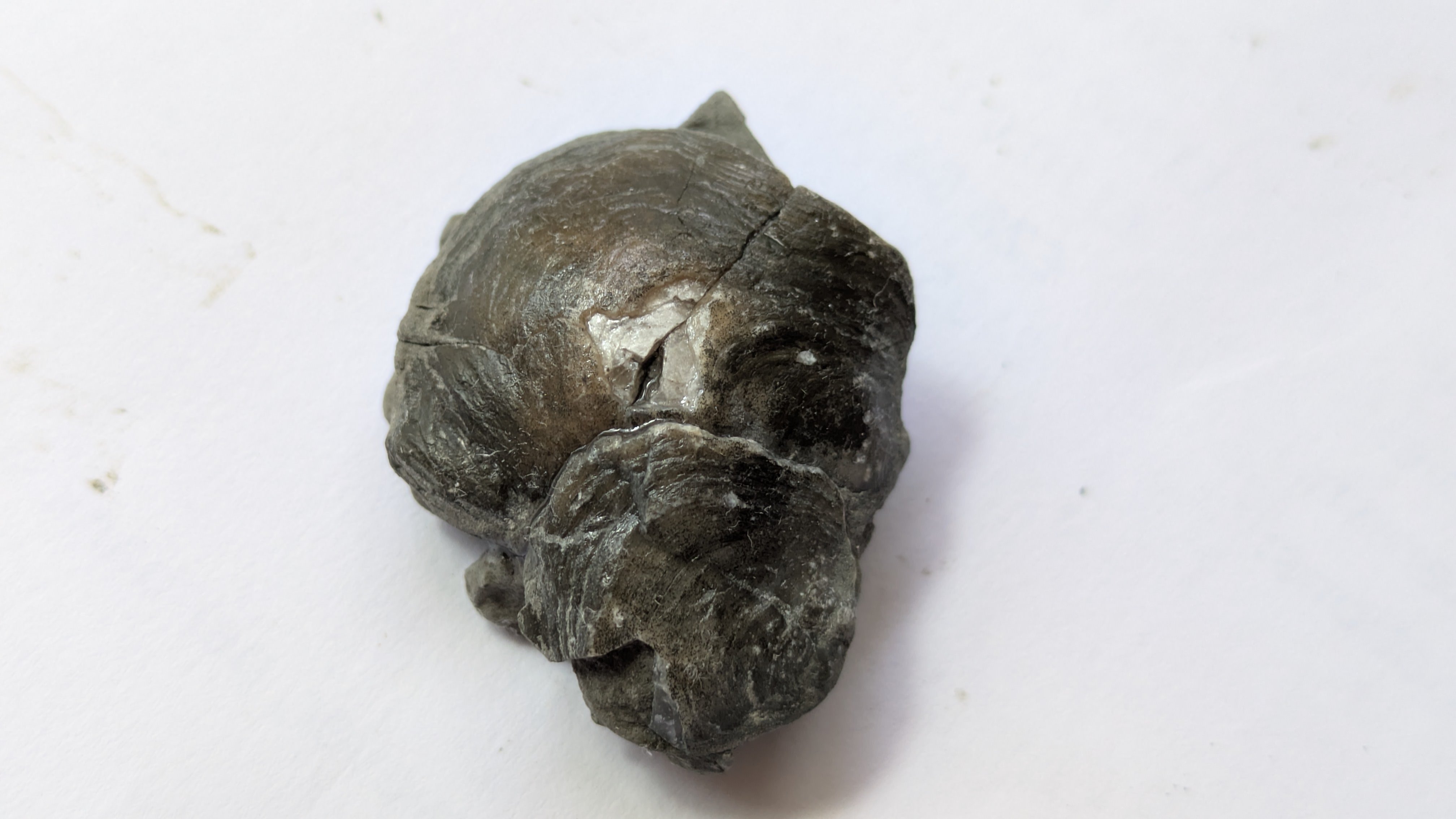
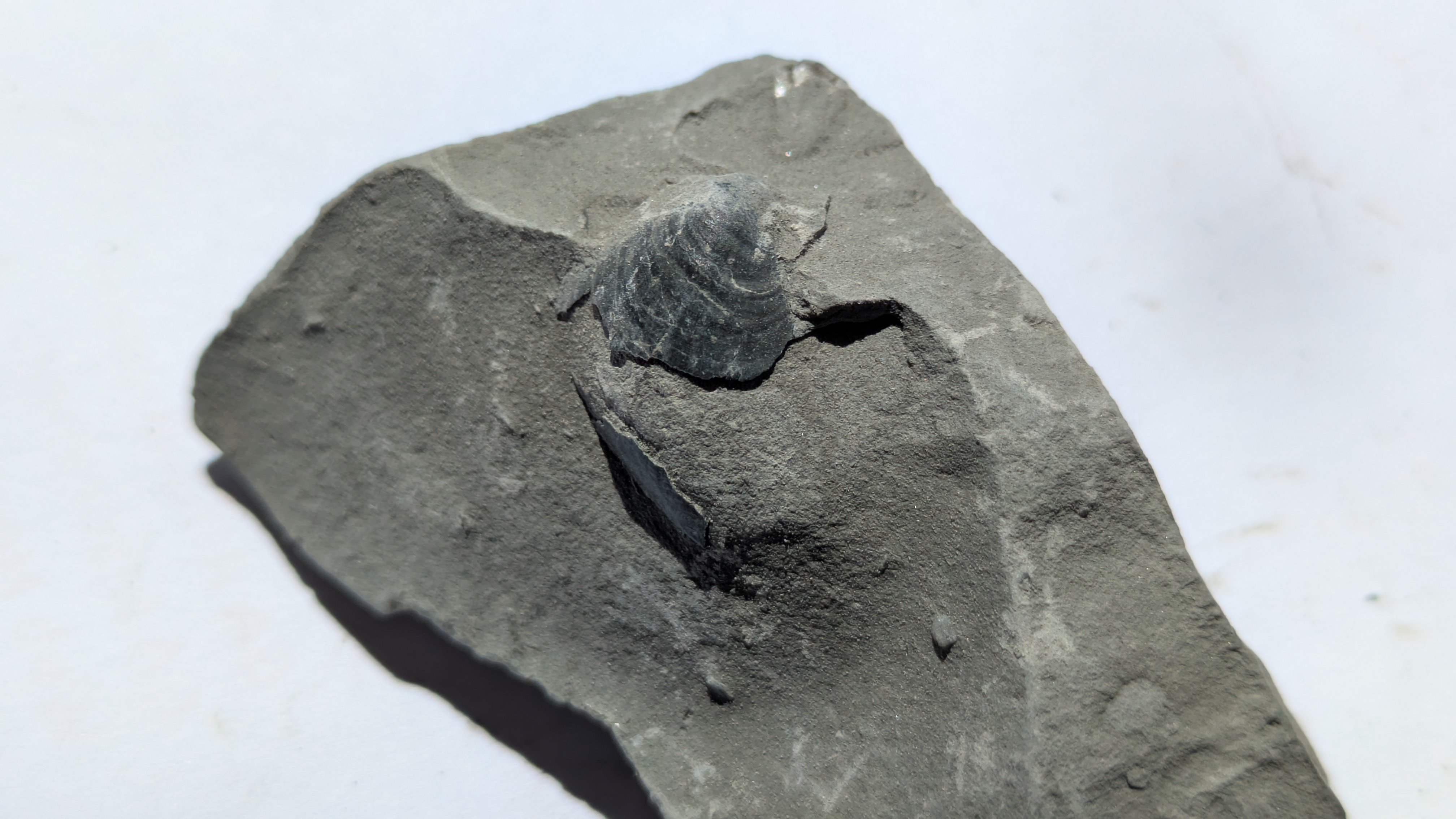
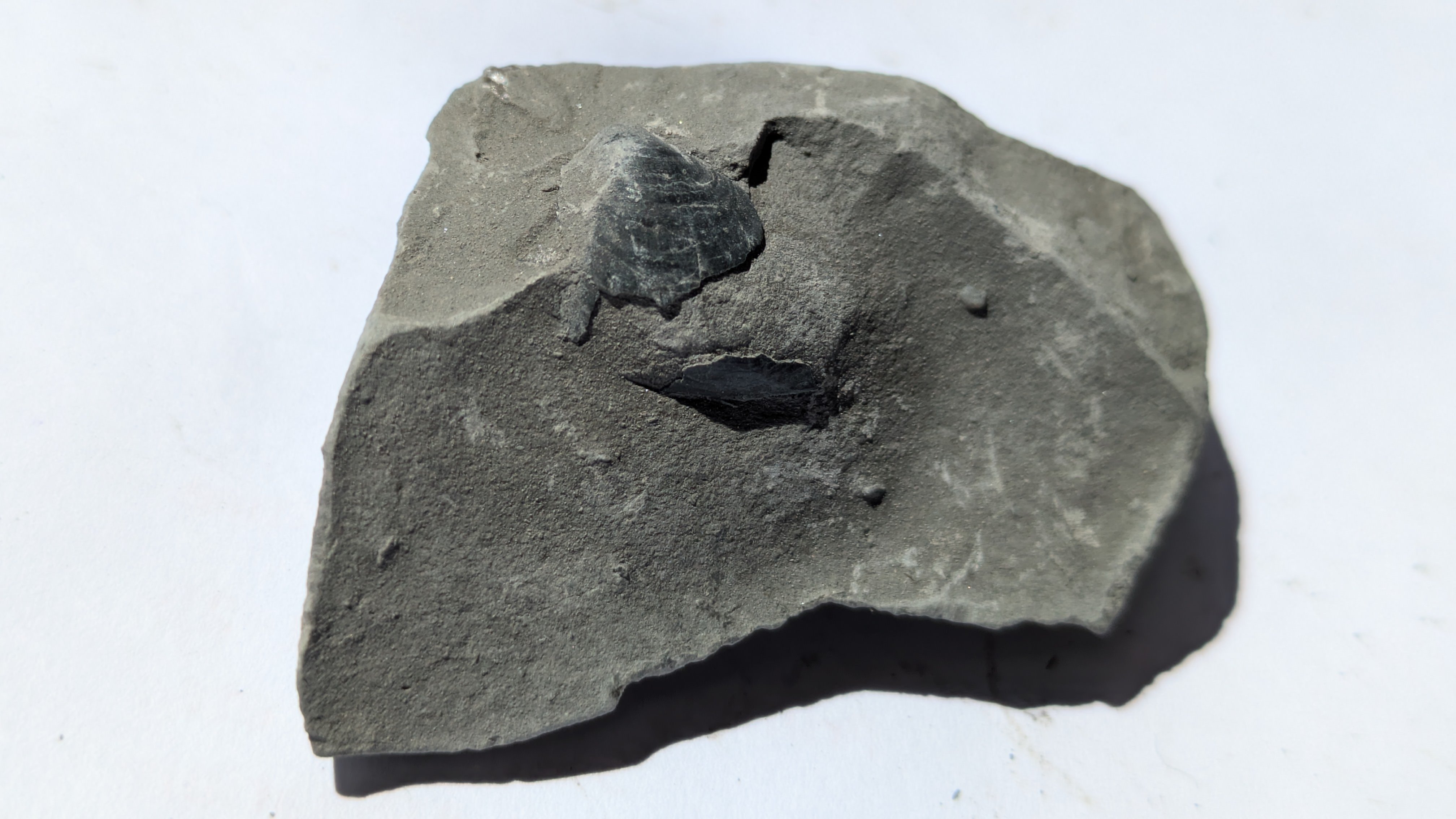
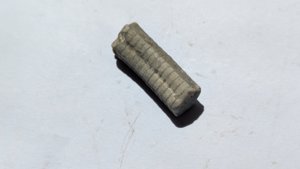
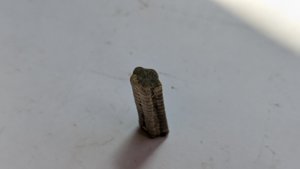
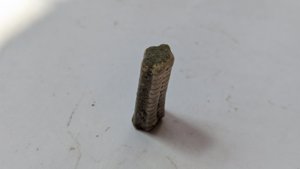
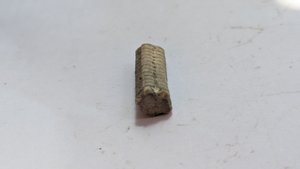
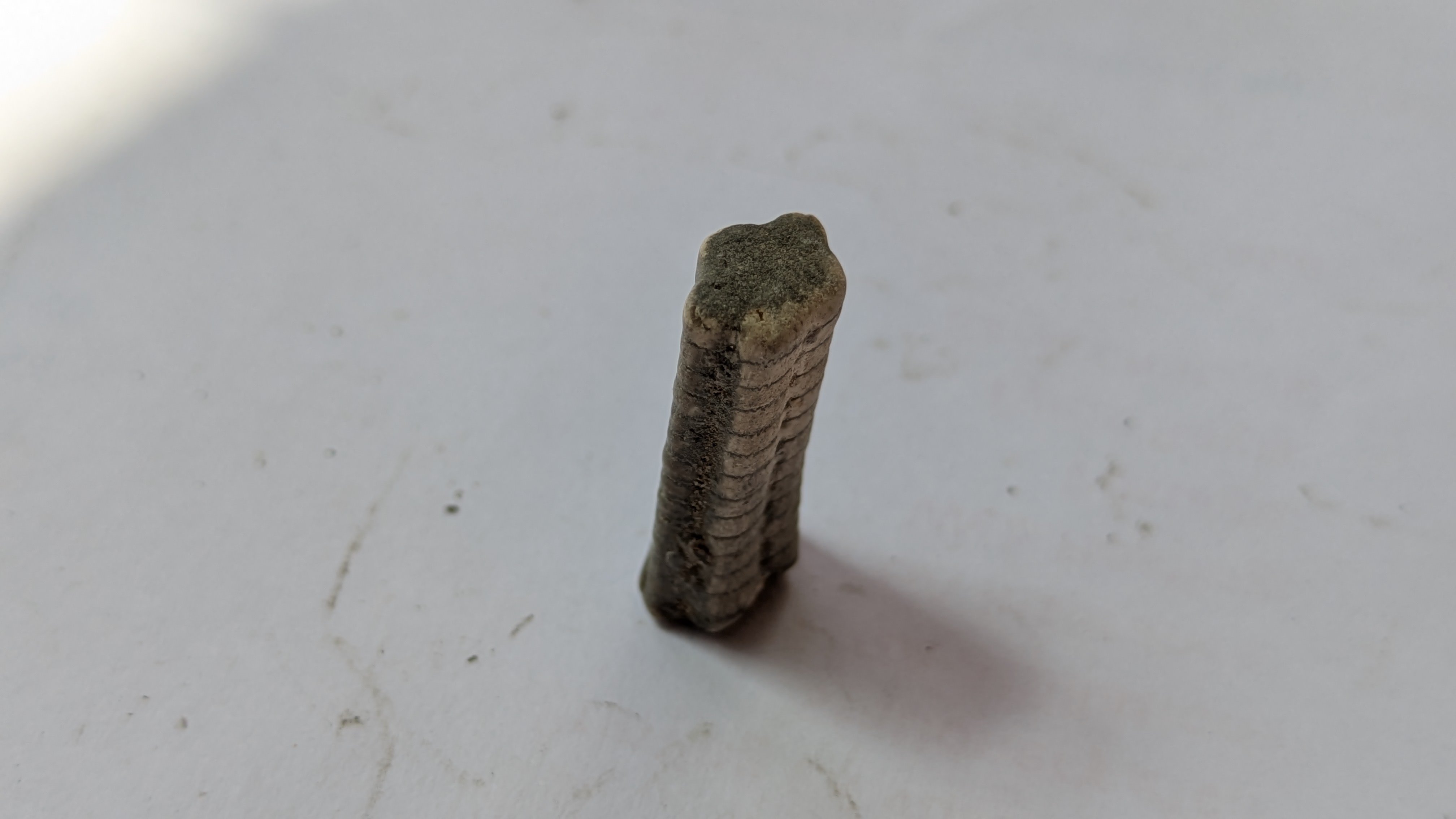
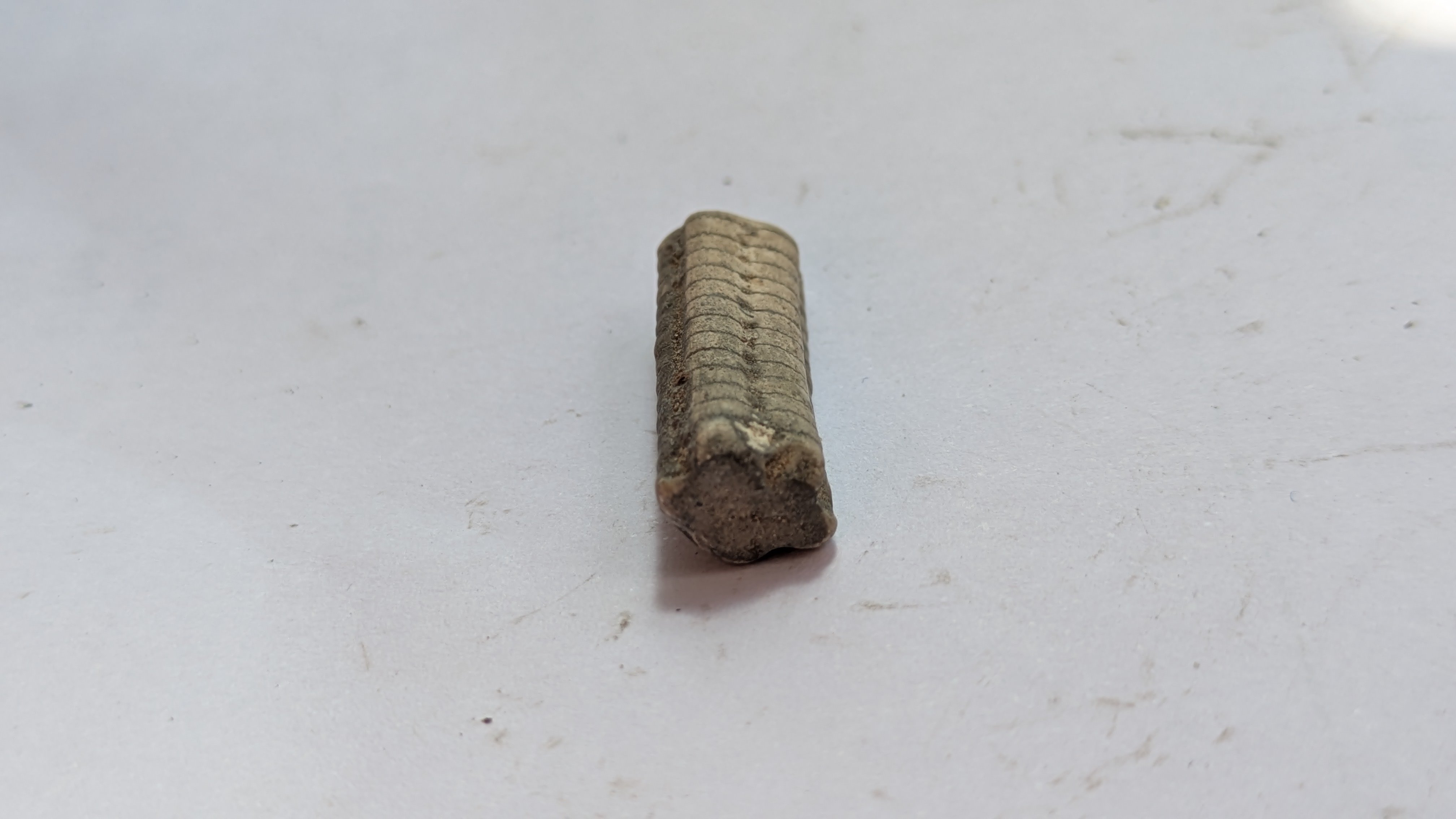
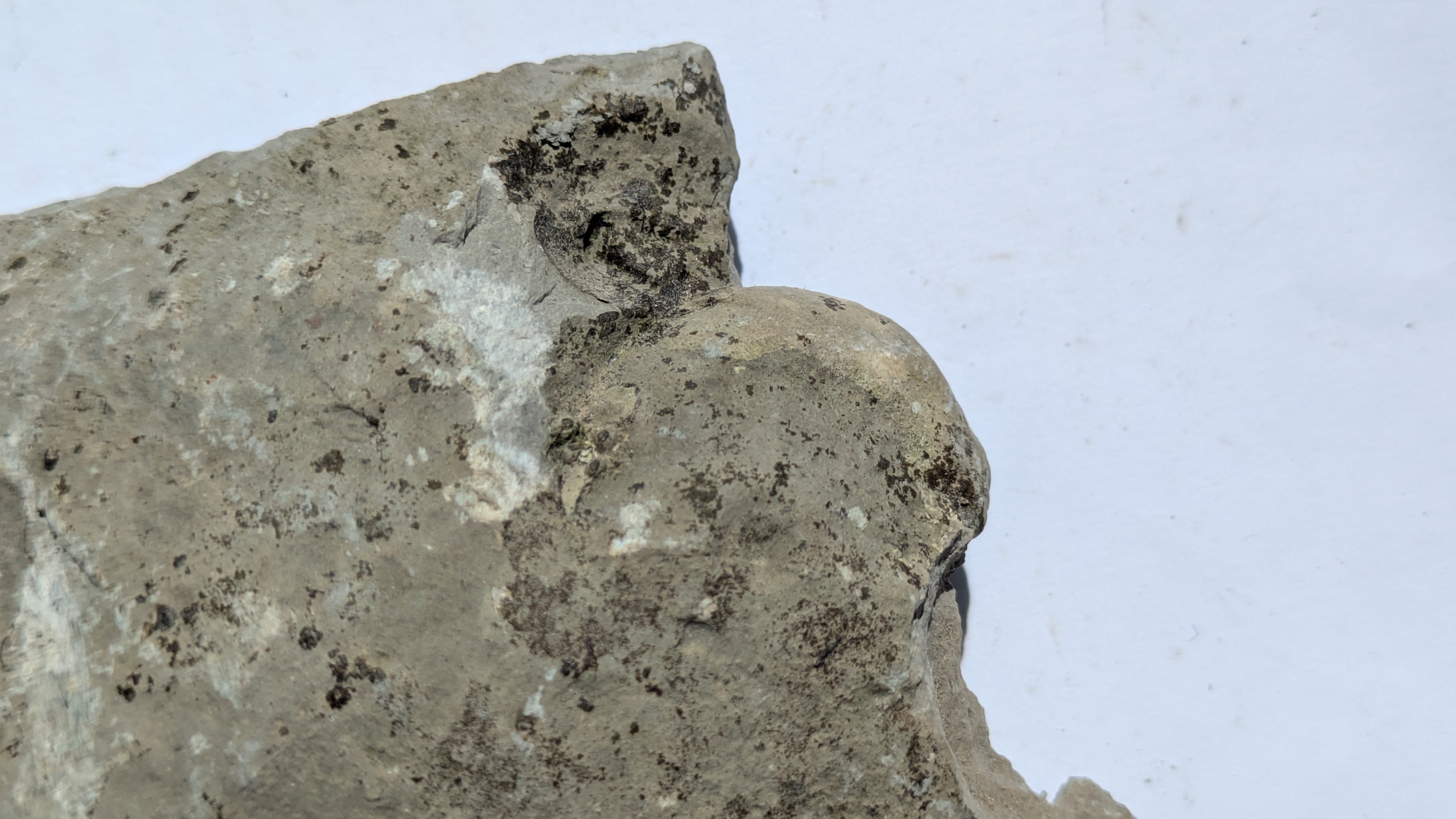
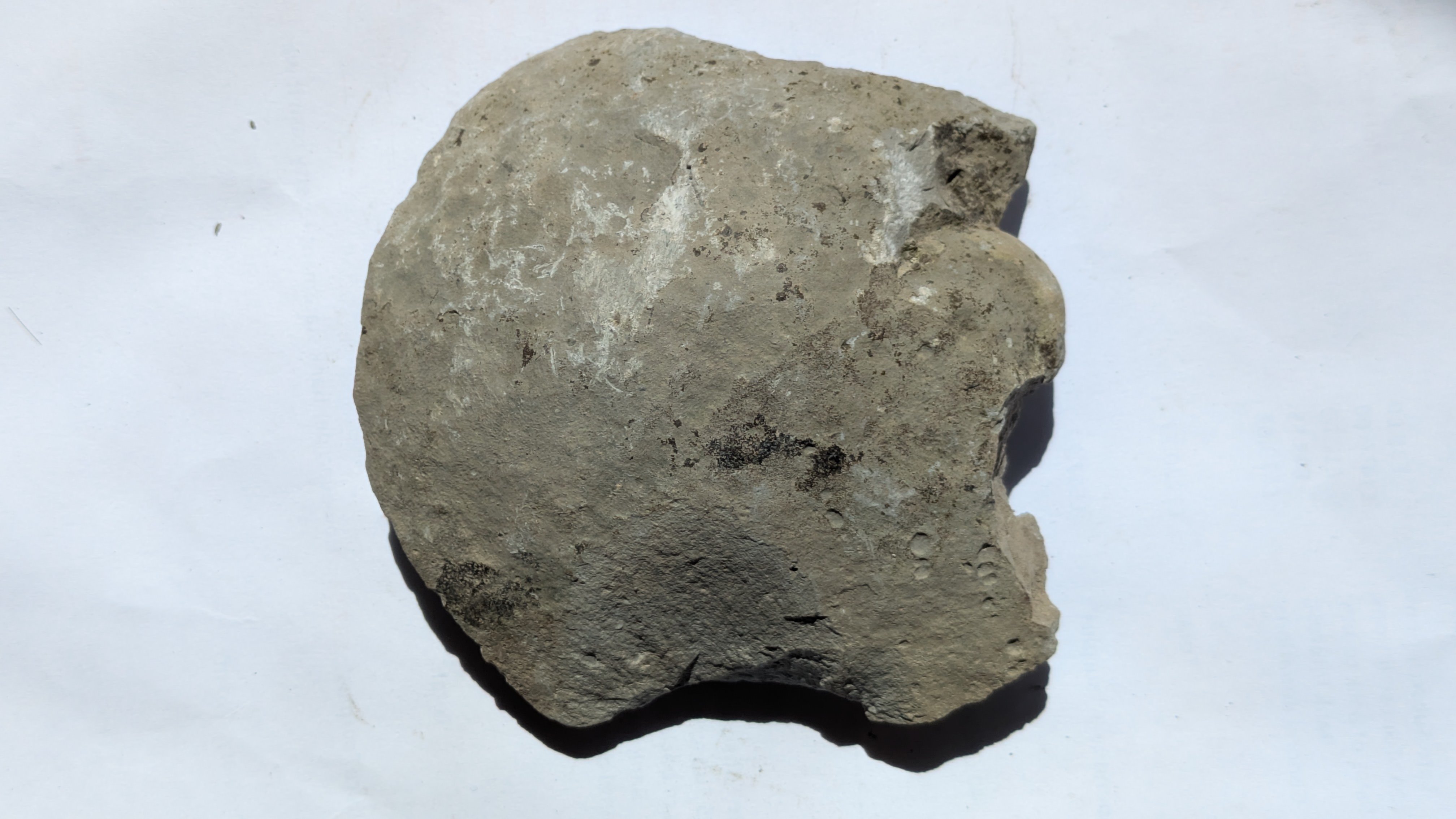
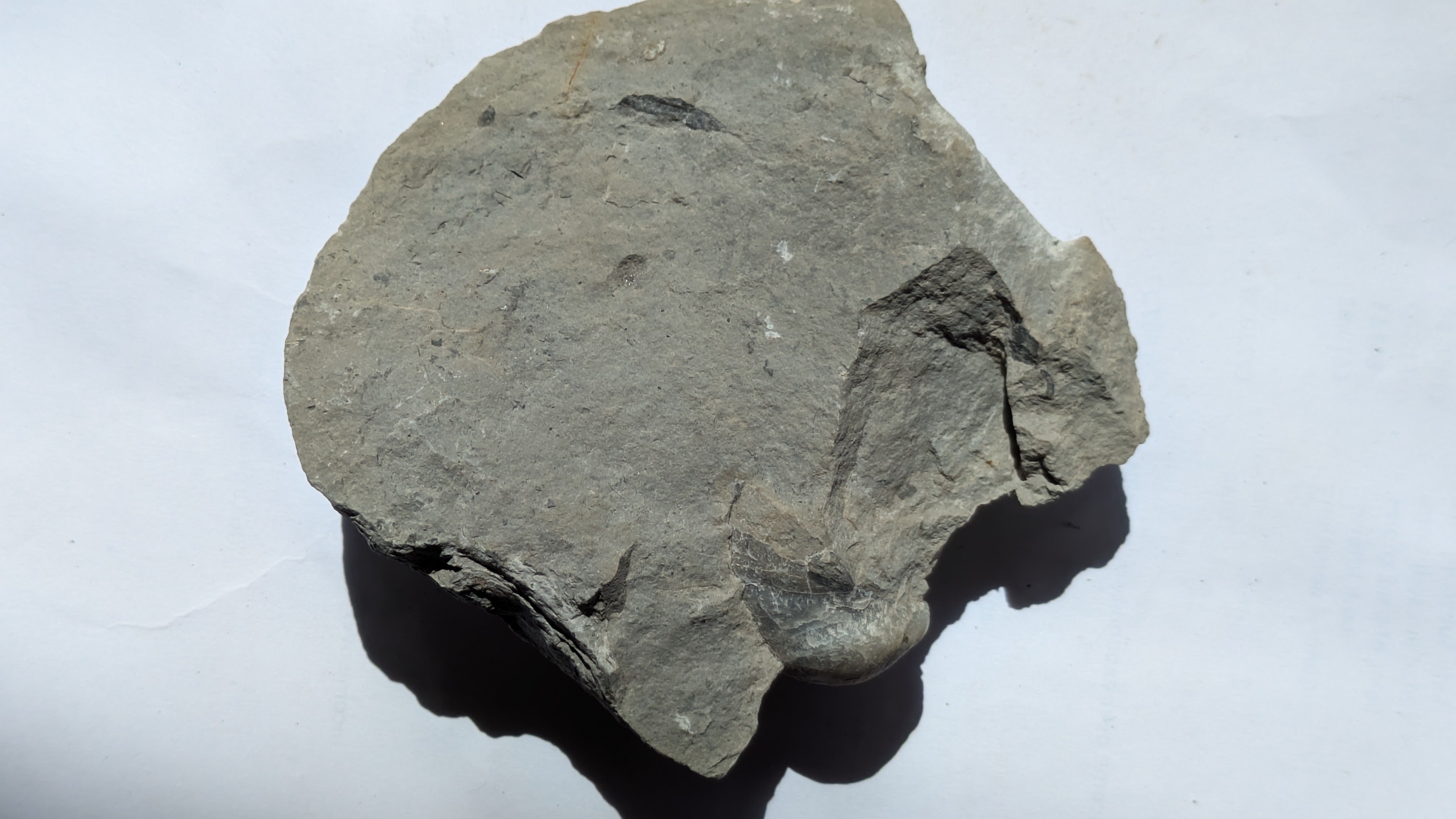
Ammonites, belemnites, bivalves, brachiopods, fish, sharks and rays, ichthyosaurs, plesiosaurs, pterosaurs (Dimorphodon), fossil insects, leaves, and plant debris
Paleoecology highlights
A shallow Early Jurassic shelf sea spread across the area after marine flooding of the former Triassic landscape; shell-rich and burrowed beds alternated with darker oxygen-poor muds, preserving fish and marine reptiles exceptionally well; ammonites and belemnites were abundant, while insects, leaves, and terrestrial animal remains such as dinosaurs were washed in from nearby land
Imagine a broad Early Jurassic sea stretching over what is today Lyme Regis, green-grey under warm skies and broken only by low swells. At times the bottom waters are well enough oxygenated for burrowing animals and shell beds to thrive; at other times the seabed turns quieter and more oxygen-poor, allowing delicate skeletons and fine sedimentary laminae to survive undisturbed.
Somewhere beyond the horizon lies nearby land. It is close enough that leaves, insects, driftwood, and the occasional carcass from the shore can drift out into the basin, mingling with ammonites, belemnites, fishes, and the great marine reptiles that patrol the water column.
 Ελληνικά
 English
 Ἑλληνική ἀρχαία
 Κυπριακά